Oct 23, 2025
This was our first stop on the South American continent. After six days of crossing the sea, here is Salvador de Bahia!
The first capital of Brazil was our first stop on the South American continent.
After six days at sea, the humid heat of Salvador de Bahia welcomes us. Indeed, we found ourselves under a sweet blend of tropical rain and warm air.
In Europe, rain signals the cold. Here, it sticks to the skin, dances with the music, and never makes excuses.
Our first discoveries in Brazil!
We arrive in the early morning, our bodies a bit stiff from being cramped for almost a week, with a bag full of dirty clothes.
Before even exploring the city, our top priority: find a laundromat (since laundry service is very expensive on the boat, we preferred to forgo it and manage on our own).
Easy in theory, less so in practice…
So here we are in a laundromat downtown, facing a machine that stubbornly refuses our card.
Here, everything goes through the CPF “Cadastro de Pessoas Físicas”, a personal tax identifier of which we were unaware.
The terminals do not always recognize foreign cards, and ours stubbornly refuses the transaction. Fifteen minutes of hassle later, a Brazilian couple decides to pay for us. When we offer to reimburse them, they refuse and leave.
A simple gesture, but it takes us out of the clichés about Brazil and its inhabitants.
We come out with our arms loaded with clean laundry, our hearts a little lighter.
At around 11 o'clock, we get into a taxi towards the Historic Center, listed as a UNESCO World Heritage site.
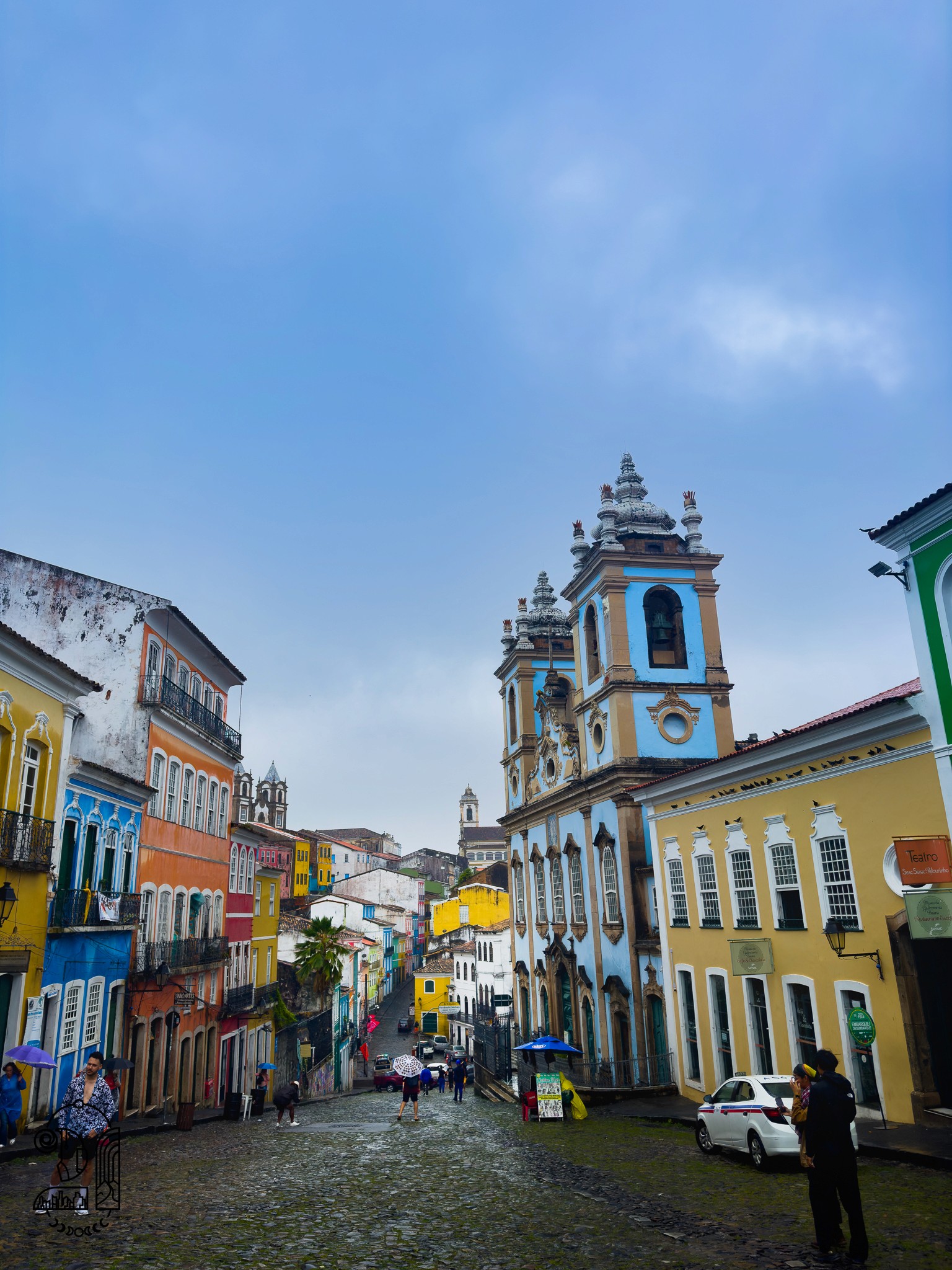
In the rain, the colorful streets of the Pelourinho are brightened up.
Pelourinho, the beating heart of Salvador
This is a neighborhood steeped in the heavy history of colonization and the slave trade. Yet today it shines, and its inhabitants tell us they are proud of its appearance and the history it carries. The yellow, pink, or pastel blue facades, the rhythms of samba, and the smells of frying create a harmony, a lifestyle.
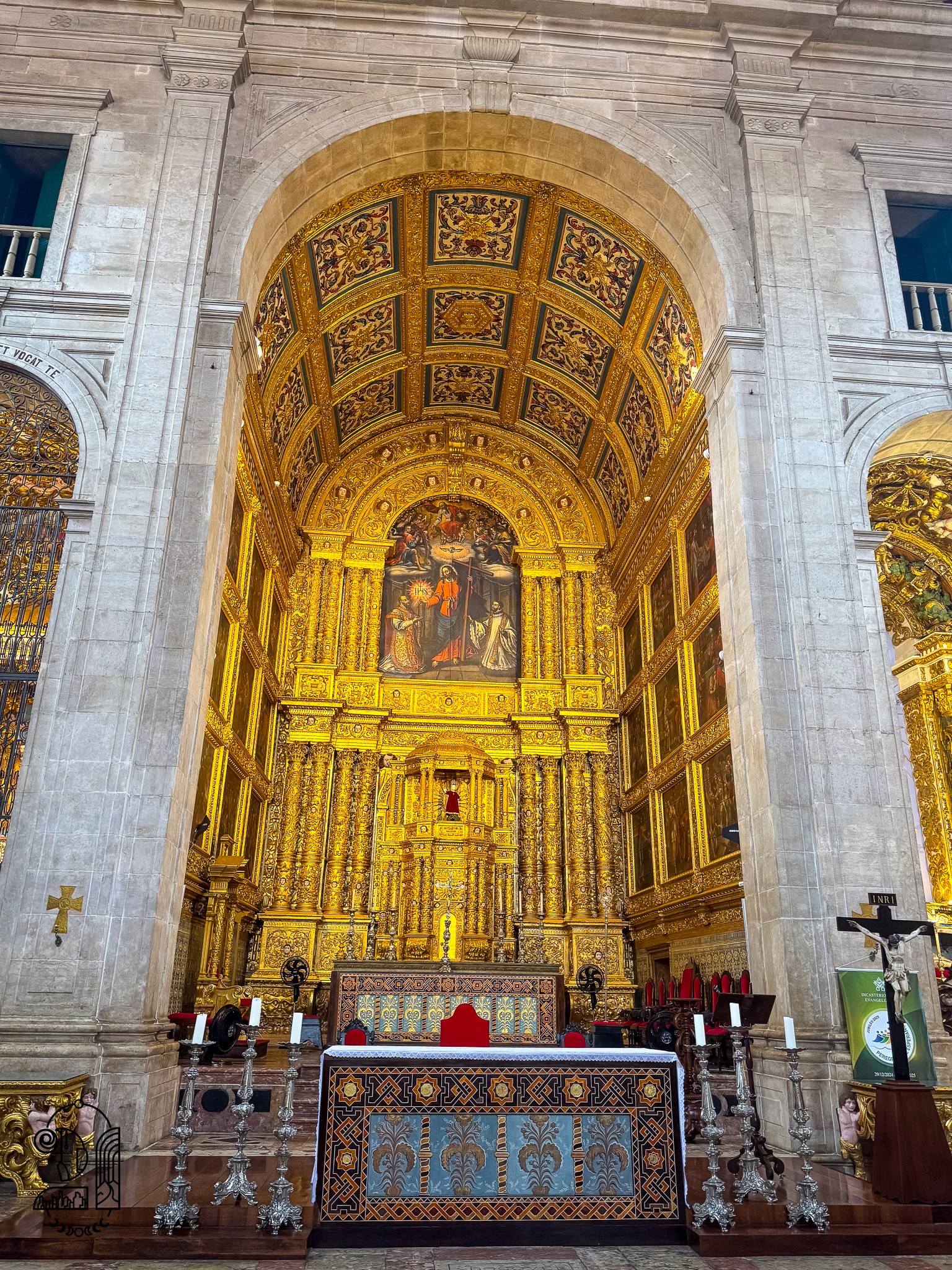
We visit the Catedral Basílica de Salvador (for 10 R$), where we admire the sculptures covered in gold. Just across the street is the Church and Convent of São Francisco, probably one of the richest buildings in the country: every wall, every ceiling, every pillar seems covered in gold.
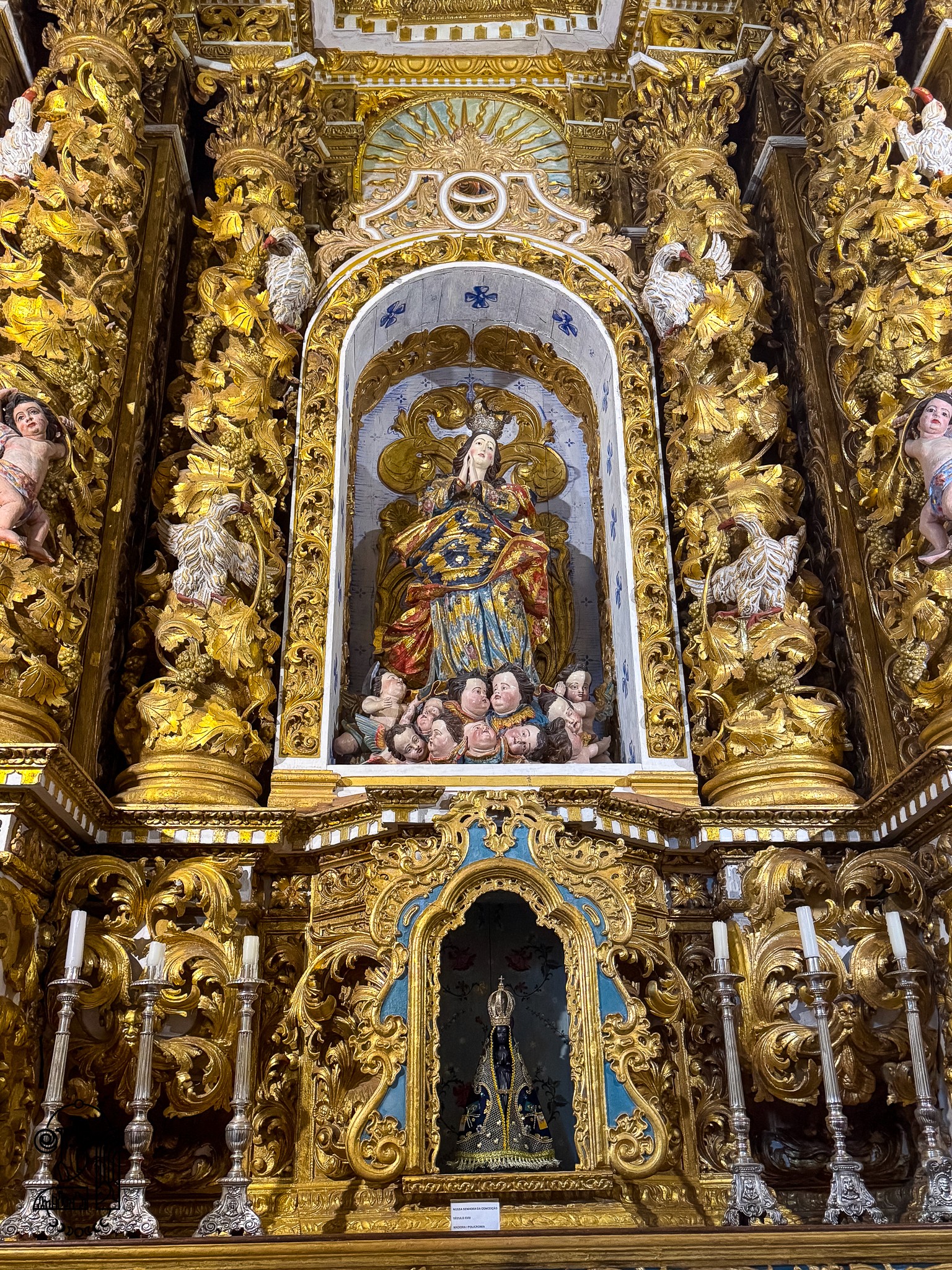
The historic center filled with cultural richness
A little further away is the Church of Our Lady of the Rosary of Blacks, built in the 17th century. This church was the only one that black people and freed slaves could attend. Its history reminds us of that of the city, but also of the cosmopolitan spirit that reigns here today. Even if you are not Catholic, we recommend visiting these buildings (all classified as UNESCO World Heritage) for their beauty, their history, and to better understand the city.
The surrounding streets are an explosion of colors and music. Street vendors, children dancing, and always the sound of drums in the distance.
It’s a living chaos, a raw emotion.
We recommend seeing:
Where to eat:
Cafelier Restaurant (Google Maps link), historic café with a view of the bay
Boteco Agada Restaurant, small local spots at reasonable prices
The entry prices for museums are low, 10R$ or 1.60€.
Watch out for guides who charge you more on GetYourGuide, for example!
Visit duration: 3 to 5 hours to wander leisurely through the alleys.
From the Upper Town to the Lower Town
After crossing the Pelourinho, we reach the Praça da Sé, the landmark of the old town.
The sun breaks through the clouds for a moment, illuminating the facades and making the drums resonate from the nearby square.
We then go down via the Elevador Lacerda, one of the world's first urban elevators. Inaugurated in 1873, it connects the upper city to the lower city. Once, it separated social classes; today, it daily connects the residents.
At the bottom, the air becomes more humid and saltier.
The Mercado Modelo welcomes us with its stalls: crafts, jewelry, drums, colorful fabrics... a true tropical Ali Baba's cave.
Behind the market, a large esplanade pays tribute to capoeira, the danced martial art born right here in Salvador. The majestic statue overlooks the bay.
Even in the rain, the city retains its warmth and pride.
End of Day and Departure
At the bottom, the air becomes more humid and saltier.
The Mercado Modelo greets us with its stalls: crafts, jewelry, drums, colorful fabrics… a true tropical Aladdin's cave. Behind the market, a large esplanade pays tribute to capoeira, this danced martial art was born right here, in Salvador. The statue, majestic, overlooks the bay.
Even in the rain, the city retains its warmth and pride.
The sky closes in, the light becomes golden, almost melancholic. We take one last look at the façades of Pelourinho from the quay before boarding the boat. The street music accompanies us for a few more minutes, like an echo of Brazil that we have just begun to discover.
Now: Heading to Búzios.