What’s the difference between llamas, alpacas, vicuñas, and guanacos?
Llama, alpaca, vicuña, or guanaco? Here’s a quick guide to the differences between the four South American camelids: size, wool, behavior, and their fascinating history.
What’s the difference between llamas, alpacas, vicuñas, and guanacos?
The 4 South American camelids
Before getting into the details, here’s something many people don’t know: there aren’t 3, but actually 4 species of camelids in South America. Two are wild (the vicuña and the guanaco) and two are domesticated (the llama and the alpaca). And each one has its own very distinct characteristics.
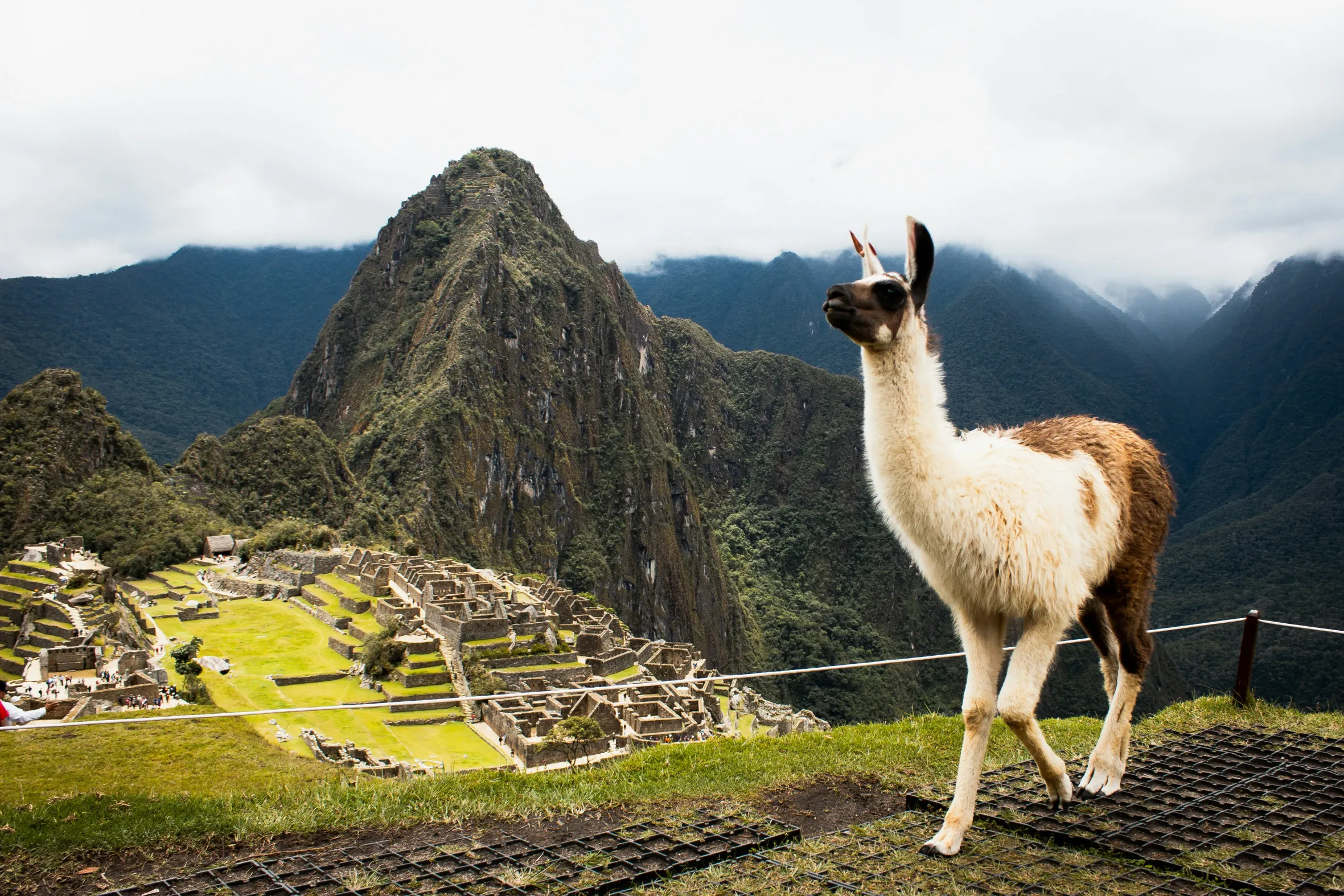
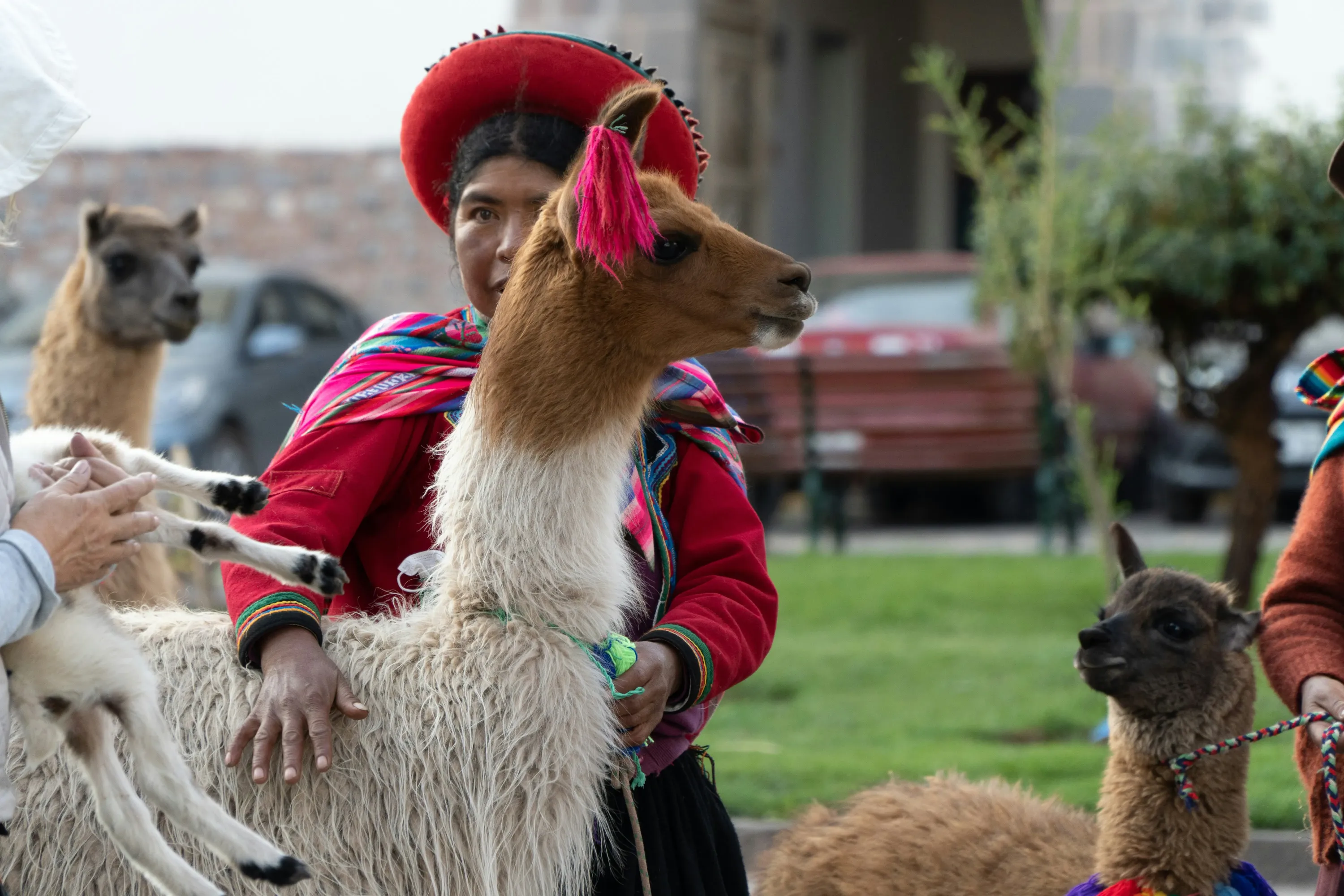
The llama: the largest
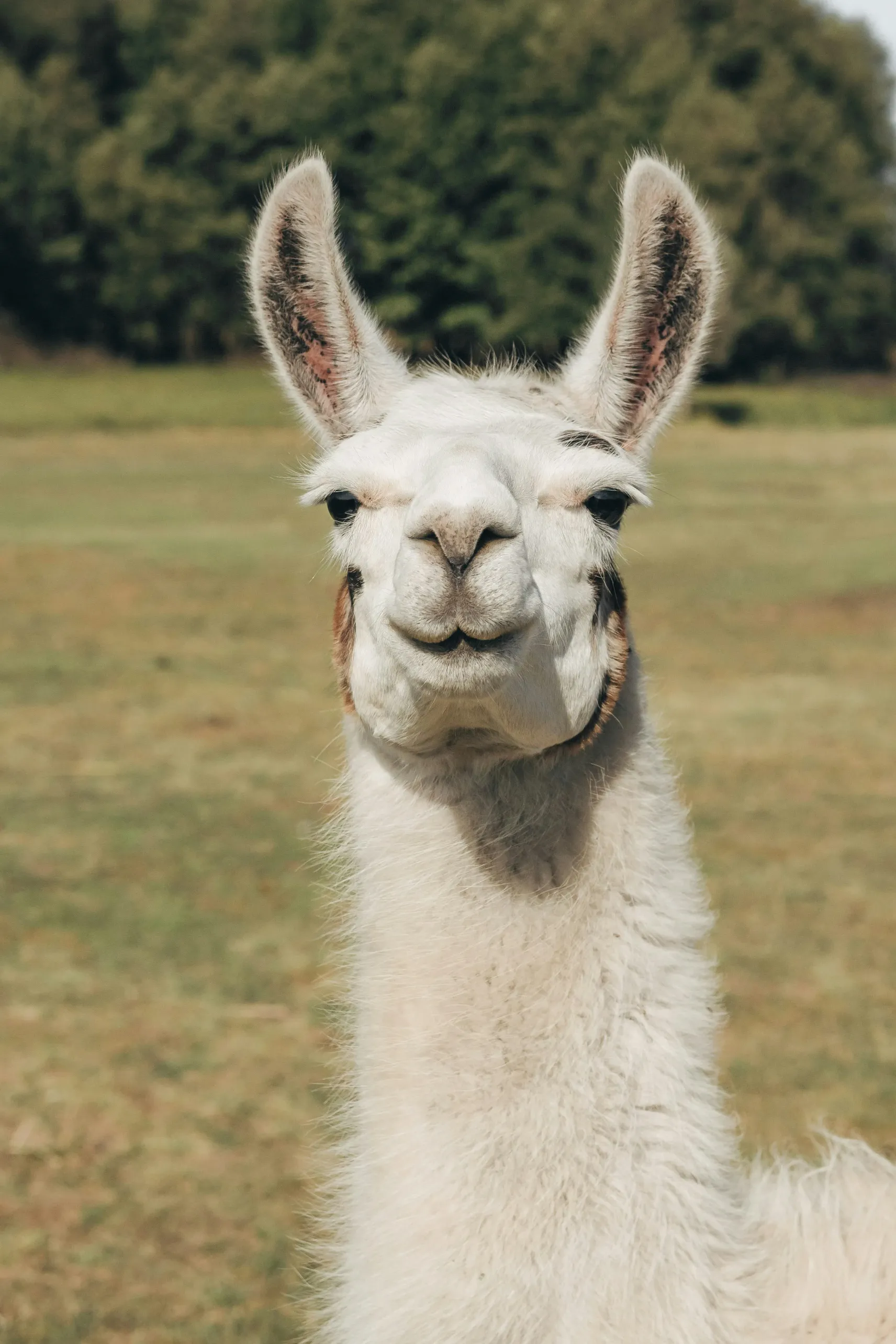
Oh yes! Members of this species can measure up to 1.90 m. Of the four, it is the largest. But you can also tell it apart by its slightly curved, banana-shaped ears.
The llama is the only South American camelid used as pack animal thanks to its large size. Capable of carrying up to 50 kg, it was the travel companion of Andean civilizations long before the arrival of horses.
It also plays an important role in the traditions and religious rituals of the Andean people. There are, in fact, two varieties of llamas:
The Qara (or "hairless") : with a shorter coat
The Chaku (or "woolly llama") : with a denser coat, used for fiber
Fiber fineness: 19 to 65 microns (quite variable depending on the variety)
Estimated population: around 2.5 million individuals (1 million Chaku + 1.5 million Qara)
Habitat: Peru, Chile, Bolivia, Argentina
Tip: To recognize a llama, look at its ears. They are long, curved, a bit like bananas. That's the easiest sign to spot!
The alpaca: the fluffiest
The alpaca is most often seen as a stuffed toy or in illustrations, and for good reason: it's considered the cutest. Smaller than the llama (up to 1.50 m) and with a thick, dense coat, it really does look like a cuddly toy. Its ears are small, upright, and pointed.
It's the most abundant species among South American camelids, with a population of around 5 million animals, 80% of them concentrated in central and southern Peru. They are found at altitudes between 2,500 and 4,500 m.
The alpaca is mainly known for its wool, also called alpaca fiber. It is of very high quality: warmer than sheep's wool, hypoallergenic, and extremely soft. It's an expensive product and is considered the gold of the Andes.
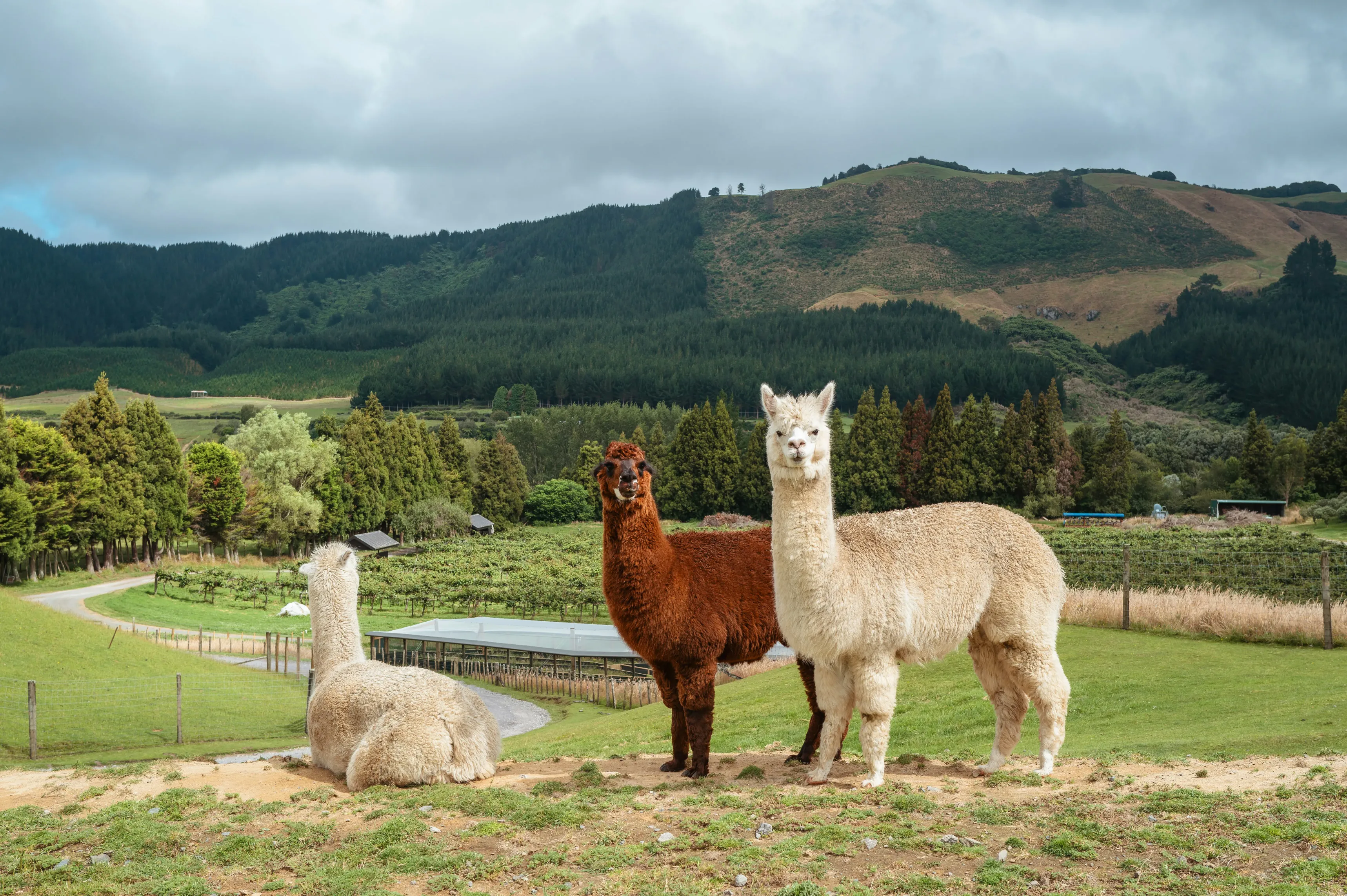
A fascinating detail: alpacas naturally come in 24 different colors, from pure white to black and all shades of brown, gray, and fawn. No other wool-producing animal offers such a natural palette.
Fiber fineness: 17 to 30 microns
Note, there are two types of alpacas with a very visible difference:
The Suri: whose hair is very long and falls like dreadlocks along its body
The Huacaya: whose coat is fluffier, cloud-like
To go further: Alpaca fiber is part of what are known as the "noble fibers", on the same level as cashmere (Kashmir goat, 15-19 microns), mohair (Angora goat, 26-36 microns) and camel wool (18-26 microns). These are animal fibers renowned for their unmatched fineness and softness.
The vicuña (vicuña): the finest fiber in the world
Among the 4, it is the smallest (about 1.30 m) and the least shaggy. Its colors are less varied than those of its cousins: often light brown, beige, and white. It is a slimmer animal, with a more graceful look and movement, almost like a doe.
The vicuña is a wild, never domesticated species and is protected in many countries. In Peru and Ecuador, shearing is allowed once a year during an ancestral ceremony called the Chaccu.
And here is the number that really stands out: vicuña fiber measures only 11.6 to 12.8 microns. It is simply the finest animal fiber in the world. To give you a sense of scale, a human hair is about 70 microns. That is a ratio of 1 to 6.
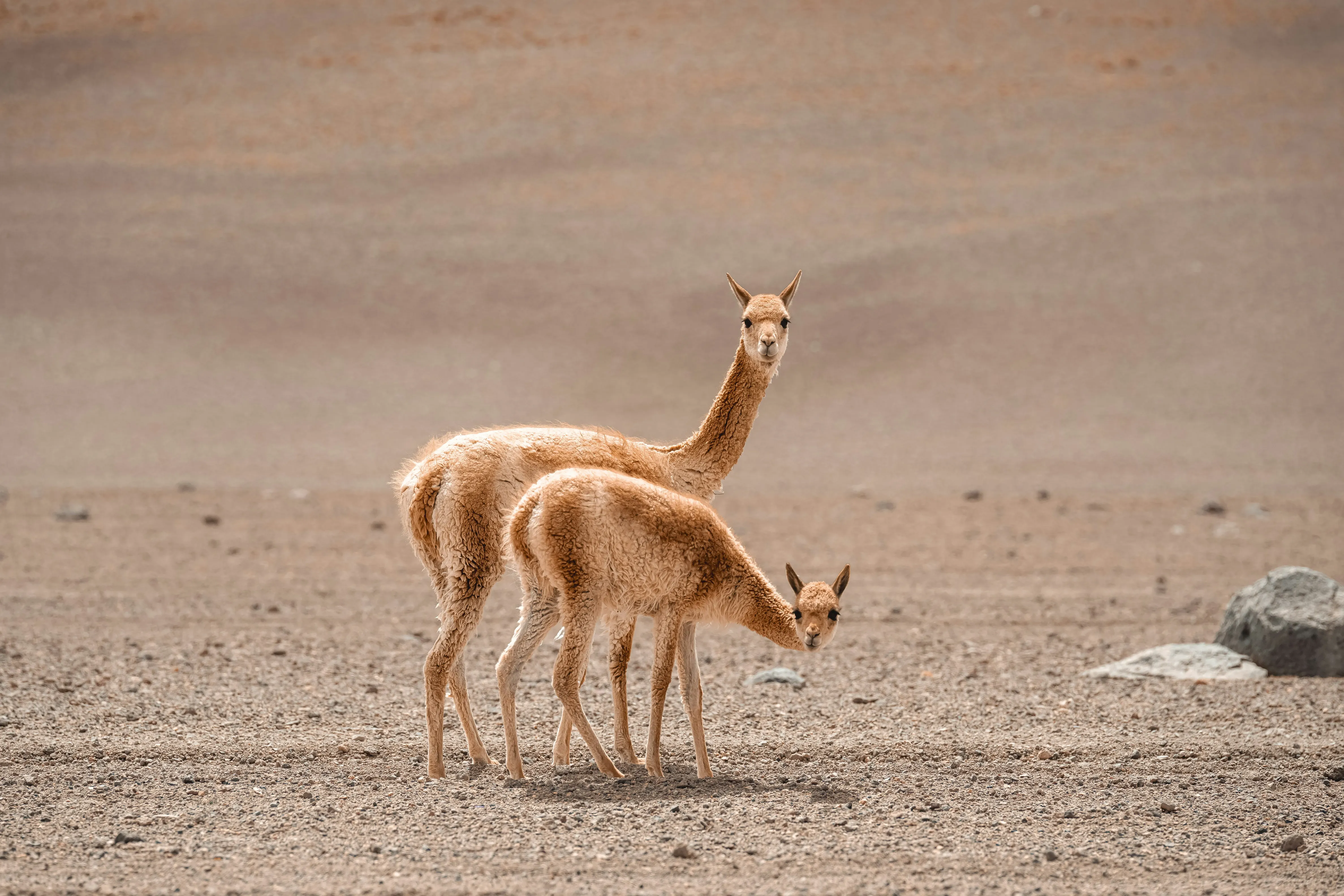
This species almost disappeared, but it was saved from extinction thanks to conservation programs put in place in the 1960s. Today, there are about 430,000 vicuñas in the wild.
Estimated population: 430,000
Habitat: Peru, Chili, Bolivia, Argentina
Needless to say, the rarity and exceptional quality of its fiber make it an extremely expensive product, among the costliest in the world.
Tip: The vicuña is the only one of the 4 species you will never be able to approach closely. It remains wild and lives at high altitude, often above 3,500 m. If you spot one in the distance in the altiplano, consider yourself lucky!
The guanaco: the most adaptable
We didn't know that one at all before our trip. And that's a shame, because the guanaco is a truly exceptional animal.
It is the only South American camelid capable of adapting to very different environments: it can live both at sea level and in the Andes at more than 4,600 m above sea level.
The guanaco is a wild species, like the vicuña. Its reddish fiber is of very good quality (13 to 15 microns), which places it just after the vicuña in terms of fineness. Its population is estimated at around 600,000 individuals.
And here is a fact that blew us away: from an evolutionary standpoint, the guanaco is actually the wild ancestor of the llama. Likewise, the vicuña is the wild ancestor of the alpaca. Andean peoples domesticated these two species around 5,000 to 6,000 years ago, giving rise to the llama and alpaca we know today.
Wild vs. Domesticated: How to Tell Them Apart
To put it simply, the South American camelid family consists of:
Wild species:
Vicuña: the smallest, finest fiber (11.6-12.8 microns) → ancestor of the alpaca
Guanaco: the most adaptable, fine fiber (13-15 microns) → ancestor of the llama
Domesticated species:
Llama: the largest, pack animal, descendant of the guanaco
Alpaca: the fluffiest, raised for its fiber (17-30 microns), descendant of the vicuña
A remarkable detail we learned at the museum: crossbreeding among the 4 species can produce fertile hybrids. This trait, combined with the use of natural dyes, allowed Andean peoples to develop a textile art of unique richness in the world.
The Fiber War: Comparing Wools
For textile lovers, here is a comparison of noble fibers. The lower the micron count, the finer and softer the fiber:
Fiber | Origin | Microns | Rarity |
|---|---|---|---|
Vicuña | Vicuña (wild) | 11,6 - 12,8 | Extremely rare |
Guanaco | Guanaco (wild) | 13 - 15 | Very rare |
Cashmere | Cashmere goat | 15 - 19 | Rare |
Alpaca | Alpaca (domesticated) | 17 - 30 | Accessible |
Camel | Dromedary / Bactrian camel | 18 - 26 | Rare |
Llama (Chaku) | Woolly llama | 19 - 65 | Accessible |
Mohair | Angora goat | 26 - 36 | Common |
Sheep wool | Sheep | 25 - 40+ | Very common |
The two finest fibers in the world are therefore South American, and both come from wild animals. It is no coincidence that people speak of "the gold of the Andes".
A 40-million-year history
The history of camelids is much older and more surprising than one might think. And no, they did not originally come from South America.
40-45 million years ago, the first camelids appeared in North America in the form of a small animal called Protylopus, no larger than a hare.
About 3 million years ago, an ancestor called Paracamelus migrated via the Bering Strait to Asia, where it split into two species: the dromedary (one hump) and the Bactrian camel (two humps). These then spread across Africa and the Middle East.
Meanwhile, other North American camelids crossed the Isthmus of Panama to reach South America. Among the survivors, only the genus Hemiauchenia (now extinct) persisted, giving rise to the guanaco and the vicuña.
North American camelids, meanwhile, eventually became completely extinct. Ironically, the ancestors of "Peruvian llamas" were actually North American.
Between 8,000 and 3,000 BC, Andean peoples began to regard camelids as divine beings. Rock paintings can be found throughout the Andes mountain range (notably in the Pintasayoc cave, in Arequipa) depicting these animals in ritual scenes.
Between 1,000 BC and 700 AD, hunter-gatherers settled down and began raising camelids. This marked the beginning of the domestication of the guanaco (which gave rise to the llama) and the vicuña (which gave rise to the alpaca). Textile art then developed thanks to the delicate fibers of these animals.
Further reading: These Andean rock paintings, like those in the Pintasayoc cave near Arequipa, can be found throughout the Andes mountain range. They bear witness to a human-camelid relationship more than 10,000 years old.
The sacred role of camelids among the Incas
What struck us most at the museum was the spiritual dimension that the Andean peoples attribute to these animals.
The protection of Pachamama
Andean communities believe that camelids are under the protection of Pachamama (Mother Earth). Hunting or mistreating these animals would provoke the anger of the deities and bring harmful consequences into the daily life of herders. This is not just an ancient belief: it is a principle that is still alive in today's Andean communities.
The legend of Wiracocha
According to the legend, after a long period of drought, the benevolent god Wiracocha offered a gift to his children: the alpaca and the llama. These animals appeared as a divine gift, meant to accompany Andean life and the grandeur of the Inca Empire.
But beware: Wiracocha granted these beings as a loan, not a possession. He warned that if they were mistreated, he would come down to take them back. The survival of Inca civilization was therefore intrinsically linked to the respect and protection of these animals.
The Chaccu ceremony
The vicuña, considered sacred, was shorn without causing it the slightest harm during the Chaccu, a ceremony filled with mysticism, offerings, and joy. It was a moment of true religious gratitude, where they harvested "the fiber of the gods".
This practice still exists today in Peru, where the community shearing of wild vicuñas perpetuates this millennia-old tradition.
The pillar of the Inca Empire
Camelids truly supported the development of the Inca Empire, the most sophisticated political organization in the pre-Columbian world. They served both as transportation, a source of food, and raw material for clothing. Without them, no road network, no refined textiles, no large-scale trade.
Checklist: recognize a camelid in 5 seconds
☐ Large + banana-shaped ears → it's a llama
☐ Small + ball of fur + pointy ears → it's an alpaca
☐ Slender + uniform beige color + doe-like appearance → it's a vicuña
☐ Medium size + reddish coat + can be found everywhere → it's a guanaco
☐ Dreadlocked hair → it's an alpaca Suri
☐ Cloud-like coat → it's a Huacaya alpaca
☐ You can't approach it → probably a vicuña or a guanaco (wild)
☐ It carries things on its back → it's definitely a llama