Street art, funiculars, the Concón dunes, and local evenings: our practical and honest guide to visiting Valparaíso with complete peace of mind, featuring an interactive map and safety tips.
Valparaíso: practical guide to visiting the street art city
Colorful hills, century-old funiculars, and an energy unlike anywhere else.
We needed a break. After weeks of stringing destinations together, Valparaíso turned out to be the ideal place to slow down without stopping completely. We stayed there for almost a week, and we didn't regret it for a single second. Here's everything you need to know to make the most of it.
Valparaíso, its history and its street art
Valparaíso was once Chile's maritime gateway. Before the opening of the Panama Canal in 1914, all trade between the Atlantic and the Pacific passed through here, making the city one of the most strategic ports in South America. British, German, and French merchants settled there in large numbers, leaving a unique architectural imprint still visible today in the diversity of styles among the neighborhoods.
Then the canal opened, and Valparaíso lost its central role almost overnight. A long economic decline followed, from which the city has never fully recovered commercially. But it was precisely from that void that its cultural renaissance was born. Starting in the 1990s, a group of Chilean artists decided to make the city's walls their canvas. Facades, stairways, alleyways: everything became a medium. Little by little, Valparaíso established itself as an international showcase for street art, designated a UNESCO World Heritage Site in 2003 for its architecture and exceptional urban landscape.
Santiago
CHILE
Valparaiso
Safety: what you need to know before arriving
Let's be honest: Valparaíso has a somewhat mixed reputation when it comes to safety, and it's better to know that before arriving. The city has seen an increase in pickpocketing and petty scams, notably in areas near the bus station and in some hilltop neighborhoods.
The general rule we were given when we arrived: as long as you're neither all the way down near the port nor all the way up in the most isolated cerros, you're in areas that are generally safe for tourists. El Centro and the Alegre and Concepción hills, the city's tourist heart, are well frequented and have no particular problems during the day.
Tip : When you get off the bus, don't linger at the bus station. Take a taxi or a ride-hailing service straight to your accommodation. It's an area where pickpockets operate, especially on tourists with large bags.
Plan B : We went to areas considered risky and nothing happened. But it all depends on the time, the hour, and how vigilant you are. Stay alert, put your cameras away in isolated alleyways, and trust your instincts.
We've prepared a map for you with the more or less safe areas and all our points of interest, available at the bottom of this article.
Where to stay in Valparaíso
Hostal Licanantay
Our first accommodation, located in the heights of Valparaíso. A simple place, well located for exploring the cerros (hills) on foot, with a pleasant social atmosphere and not too much noise. The dormitories are a bit cramped in their layout, but nothing that spoils the stay. It's a good option if you're looking for a quiet place to sleep without isolating yourself completely. See the hostel here.
Hostal Casa Verde Limón
The ideal hostel if you want to rest; the pleasant common areas are limited to a few rooms per floor. On the other hand, beyond the social aspect, the amenities remain basic. It is clearly a place for travelers who spend their days outside and only use the hostel to sleep and socialize. See the hostel here.
Tip : Valparaíso is a city where you do a lot of walking and where the elevation changes are significant. Choose your accommodation based on the cerros (hills) you want to explore; it really changes everyday life.

Must-do activities in Valparaiso
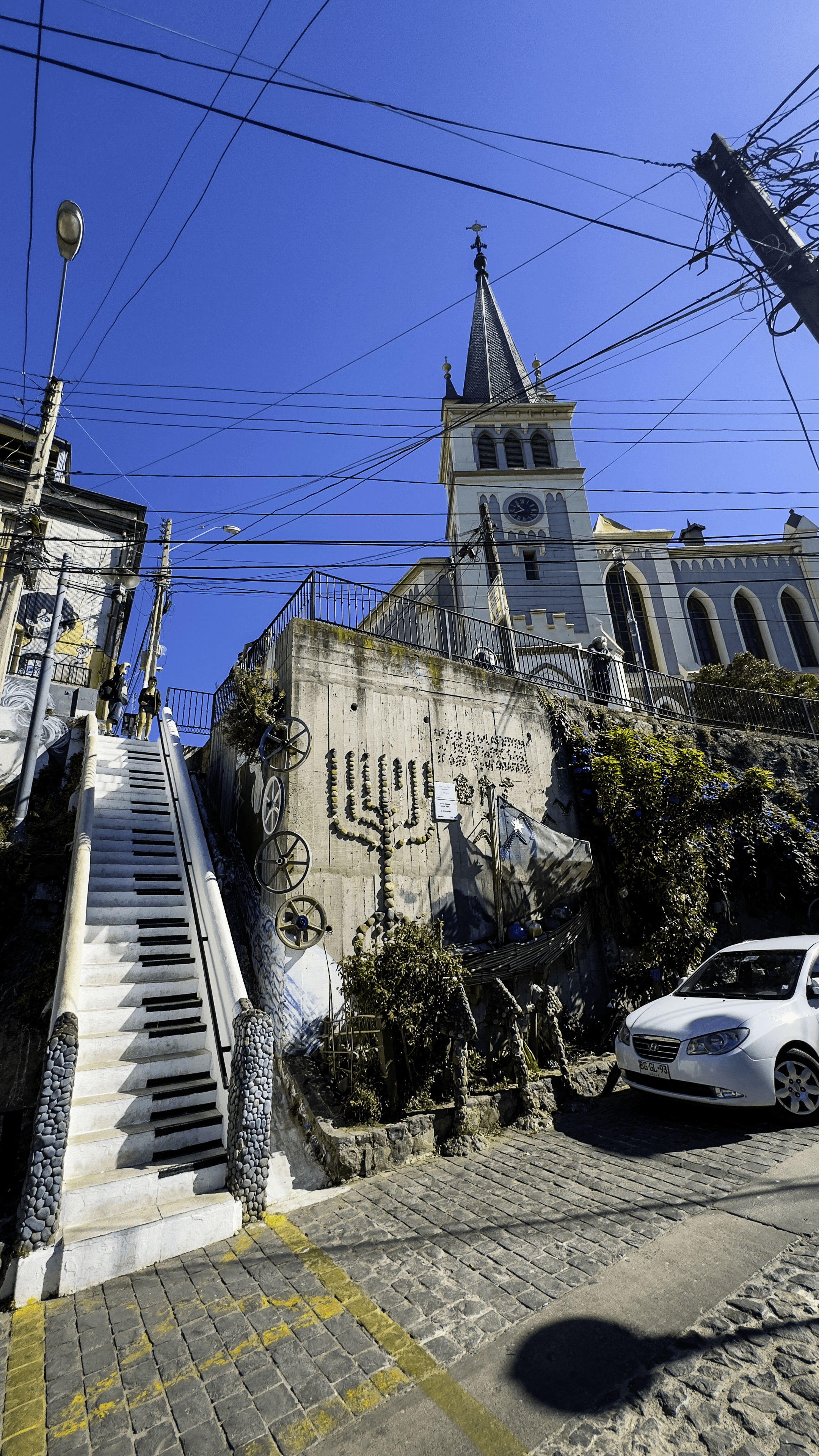
Getting lost in the streets and street art
That's the basics. No need for a precise route: let yourself drift from alley to alley in the Alegre and Concepción hills.
Every wall is a work of art, every staircase is an invitation to go a little higher. We encountered cats, dogs, a French architect who has been living here for 16 years and was selling beautiful illustrated notebooks of typical houses in the city. That's Valparaíso too.
For breakfast, look for the Marion Café Alemán tucked away in a small garden overlooking the city in the cultural center. Less known than the large terraces on the hill, it offers stunning views while shielding you from street noise. A few pastries, a lemonade, and the day gets off to a good start.
The Open-Air Museum
An open-air museum bringing together an exceptional collection of graffiti in a delimited area of Bellavista Hill. The works are monumental, carefully selected, and each tells a part of Chilean history or culture. You have to climb up to get there, but that is precisely what gives the visit its slightly adventurous character.
To go further: Combine a visit to the museum with a funicular ride back down. It is the perfect opportunity to try these historic funiculars while avoiding the walk down on foot.
The funiculars: the soul of the city
Valparaíso still has 16 funiculars in working order, out of the thirty or so that were built starting in 1883. Their history is directly tied to the city's distinctive geography, wedged between the ocean and dozens of steep hills.
At the time when Valparaíso was one of the most active ports in South America, the city attracted a very diverse population. Wealthy classes, often of European origin, settled in the heights, where the air was healthier and the views more open. The lower areas, close to the port, welcomed workers and commercial activities. To connect these two worlds, engineers, mainly British, designed the first funiculars as early as 1883. At their peak, more than 30 ascensores crisscrossed the city's hills.
Today, taking them is both a practical gesture and an act of heritage. Expect to pay a few hundred pesos for a ride, and enjoy the view of the bay from the wooden cabins.
The free walking tour
It's the activity we recommend most for really understanding Valparaíso. For about 2-4 hours, a local guide takes you through the streets explaining why graffiti exists, how the different waves of migration have shaped the architecture of the cerros (hills), and what this city really means to its inhabitants.
After 4 hours, you're an expert on Valparaíso. After 6, you remember the essentials. And that's already a lot.
Tip: The free walking tour works on a tip basis. Give what you consider fair based on the quality of the tour. In general, 5,000 to 10,000 pesos per person is a good starting point.

The Valparaíso Cultural Park
An old prison converted into a cultural center, perched high above the city. The place is surprising: modern, open, with shared rooms for workshops and events, a theater in a separate building, and a large garden where locals simply come to enjoy the sun. Perfect for a quiet afternoon after an intense morning.
Where to have a drink in Valparaíso
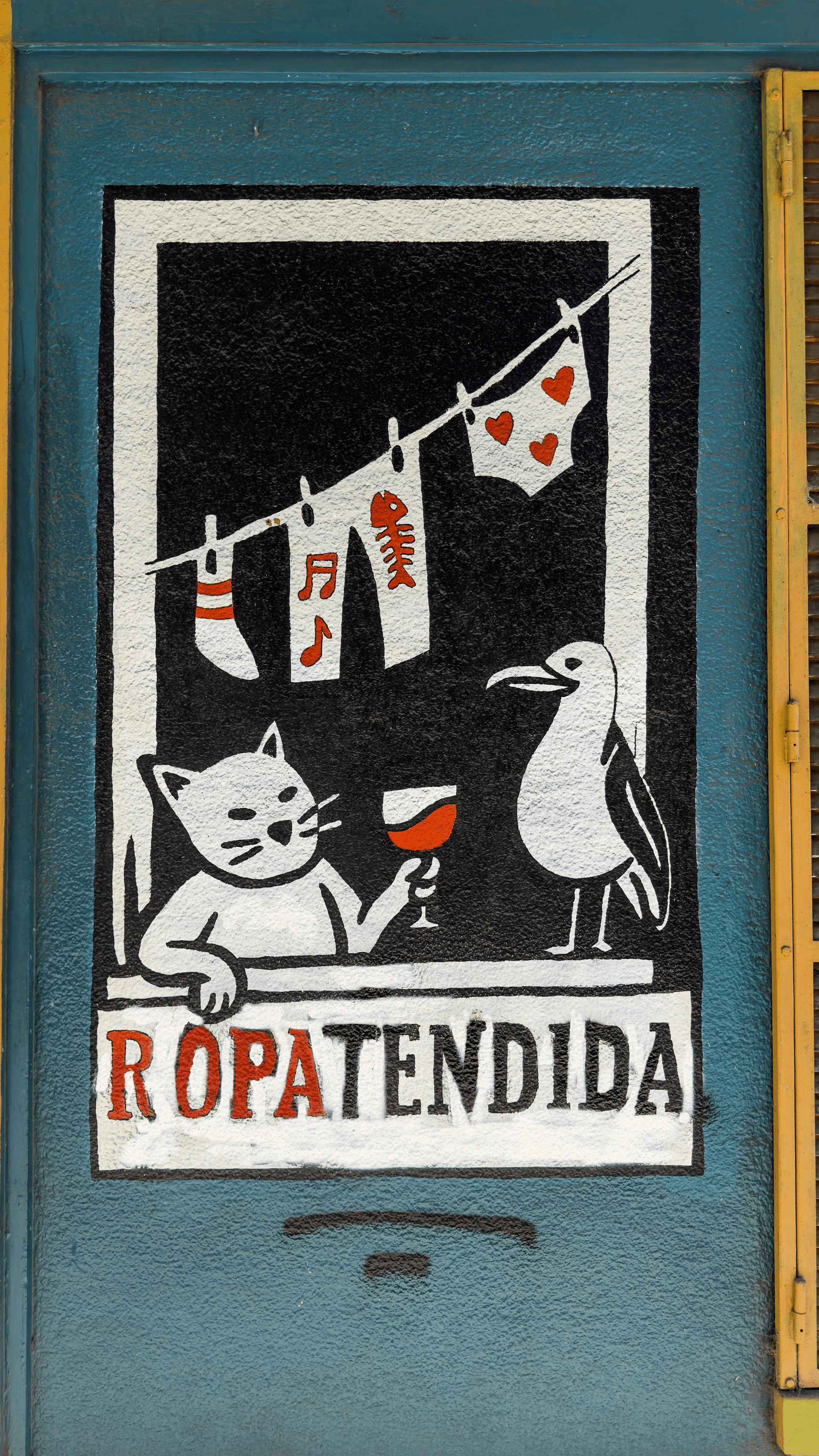
The most interesting bars in Valparaíso are concentrated on two adjacent streets in Cerro Alegre and Concepción. There’s a real variety of atmospheres here, from intimate cocktail bars to large lively terraces. Like the Gato en la Ventana, which is on this street.
Special mention to the OUI-OUI bar, run by a Frenchman, whose cocktails are excellent and whose setting is refined. A place that had been recommended to us and did not disappoint.
To go further: If your group grows as the evening goes on, plan ahead for a move to a larger terrace bar. Evenings in Valparaíso tend to be improvised and to draw a crowd. It’s one of the most enjoyable things about the city.
(The exact addresses are pinned on our interactive map at the bottom of the page.)
Where to eat in Valparaíso
Completos: the local classic
You can't visit Valparaíso without trying a completo, the Chilean hot dog topped with tomato, avocado, and mayonnaise in generous amounts. The stands and small restaurants that serve them are everywhere in the city center. But the one best known by locals remains the Otro K-nibal! It's quick, inexpensive, and frankly delicious.
Plan B: If you want to save money on meals, Unimarc supermarkets offer a wide selection at reasonable prices. A good option for small budgets or busy days.
Viña del Mar and Concón: the neighboring cities
Concón and its dunes: the perfect sunset
A few kilometers from Valparaíso, the city of Concón is home to a large sand dune by the sea, which has become a popular spot to watch the sunset. From Valparaíso, a shared bus gets you there quickly, but hang on: these buses have a very personal understanding of speed limits.
Once there, pick up something to eat at the shopping center right across from the dune (they know very well where to set up), climb into the sand, and settle in. The golden light on the waves of sand is frankly magnificent. Watch out for the wind, though, when someone passes in front of you.
The atmosphere is relaxed: families, couples, a few sandboard fans launching themselves down the slopes. And then back to Valparaíso on the Speedy Gonzalez version of the bus.
Viña del Mar: the region's other face
A day in Viña del Mar makes it possible to see just how close the three cities are geographically and how far apart they are economically. Concón is an affluent, residential city, Viña del Mar has good infrastructure (natural history museum, cultural spaces, shopping centers), while Valparaíso remains in a rougher, more rustic style, with areas still in difficulty.
That contrast is a lesson in itself when traveling. And Viña del Mar is worth half a day, especially for its seafront and gardens.
Our interactive map
Find all our addresses, safety zones, and points of interest directly on our Google Maps map.
Tip: If you don't know how to use our maps, we've written a dedicated article to help you!