How to meet locals while traveling?
How do you meet people on the road and make real connections? Here is our take on the best apps and off-the-beaten-path destinations. Plus, our favorite tips for connecting with locals and travelers alike while backpacking, or simply making the most of your trip to meet new people.
How to meet locals while traveling?
Why meeting the locals changes everything

You can easily visit a country while staying completely inside the tourist bubble: international hotels, TripAdvisor-recommended restaurants, and air-conditioned group tours. You'll see the sights, take the photos, and head home with a full album but a lingering sense of emptiness. Because you will have seen the country without ever truly understanding it.
Connecting with locals is like adding sound to a postcard. It's understanding why a dish is meant to be eaten with your hands, why a festival lasts for three full days, or why people avoid a certain neighborhood after 8 PM. It gives you access to the kind of insight no guidebook can offer: local secrets, hidden spots off the beaten path, and stories that Google knows nothing about (especially in South America).
Cultural immersion while traveling also changes how you see the world. You return as a different person after sharing the daily life of a Peruvian family or discussing politics with an Uruguayan taxi driver. These moments of cultural exchange shape an understanding of the world that no documentary could ever replace. This very belief has guided our blog since the beginning, as we explain in our article on immersion in local culture.
How to meet people while traveling: our top tips!
1. Hang out where the locals go
Markets, parks, neighborhood cafes, laundromats: this is where local life really happens. We had some of our best conversations while waiting for our laundry in Salvador, Brazil, or while picking out avocados at the market in Valparaiso. These everyday spots are neutral grounds where you lose the "tourist vs. local" dynamic. People are just going about their day, and if you do the same, connections happen naturally.
Our advice: spot the cafe where the locals head (not the one with the English menu parked right in front of the cathedral) and settle in like a regular. After two or three visits, the barista will recognize you, the regulars will nod hello, and the conversations will start flowing all on their own.

2. Learn the basics of the local language
You don't need to be bilingual. Just knowing how to say "hello," "thank you," "this is delicious," and "what's your name?" in the local language is 80% of the battle. Making the effort, even if you stumble a bit, sends a powerful message: "I care about your culture, I'm not just passing through." In South America, our basic Spanish (which was far from perfect but full of enthusiasm) opened dozens of doors for us. Apps like Duolingo or Tandem are great for picking up the fundamentals in the few weeks leading up to your trip. We've put together our favorite tools in our selection of the best travel apps.
3. Stay in places that encourage connection
Hostels with common areas, homestays, and family-run guesthouses are perfect for meeting people. On the flip side, a chain hotel with room service might be comfortable, but it keeps you in a bubble. Choosing where you sleep is your biggest lever for cultural exchange while traveling.
In South America, family guesthouses are our absolute favorite. For 5 to 15 euros a night, you're staying with locals who know their neighborhood better than anyone. You'll have breakfast right in the family kitchen, get plenty of great tips, and sometimes, you might even get invited to join them for dinner.
4. Join in on local activities
Whether it's a cooking class, a pickup soccer game, a craft workshop, or a community yoga session, sharing an activity creates an instant bond that goes way beyond language. In Paraguay, we hopped into a soccer game in a park in Asunción. Within 90 minutes, we had three dinner invitations. Sports, music, and food truly are universal languages.
Free walking tours are also a fantastic starting point. The guides are usually passionate locals who know their city inside out, and the small groups make it easy to chat. We've done them in several cities, like our walking tour in Cusco, which led us to hidden corners you won't find on any map.
5. Be curious, but respect people's space
Ask questions about daily life rather than sensitive topics. "What do you recommend I try to eat around here?" works a thousand times better than "How much do you earn?". Genuine, warm curiosity opens doors; being nosy shuts them. A good rule of thumb is 80% listening, 20% sharing. People love talking about their daily lives, their food, and their city. Just let them share their stories.
6. Give before you ask
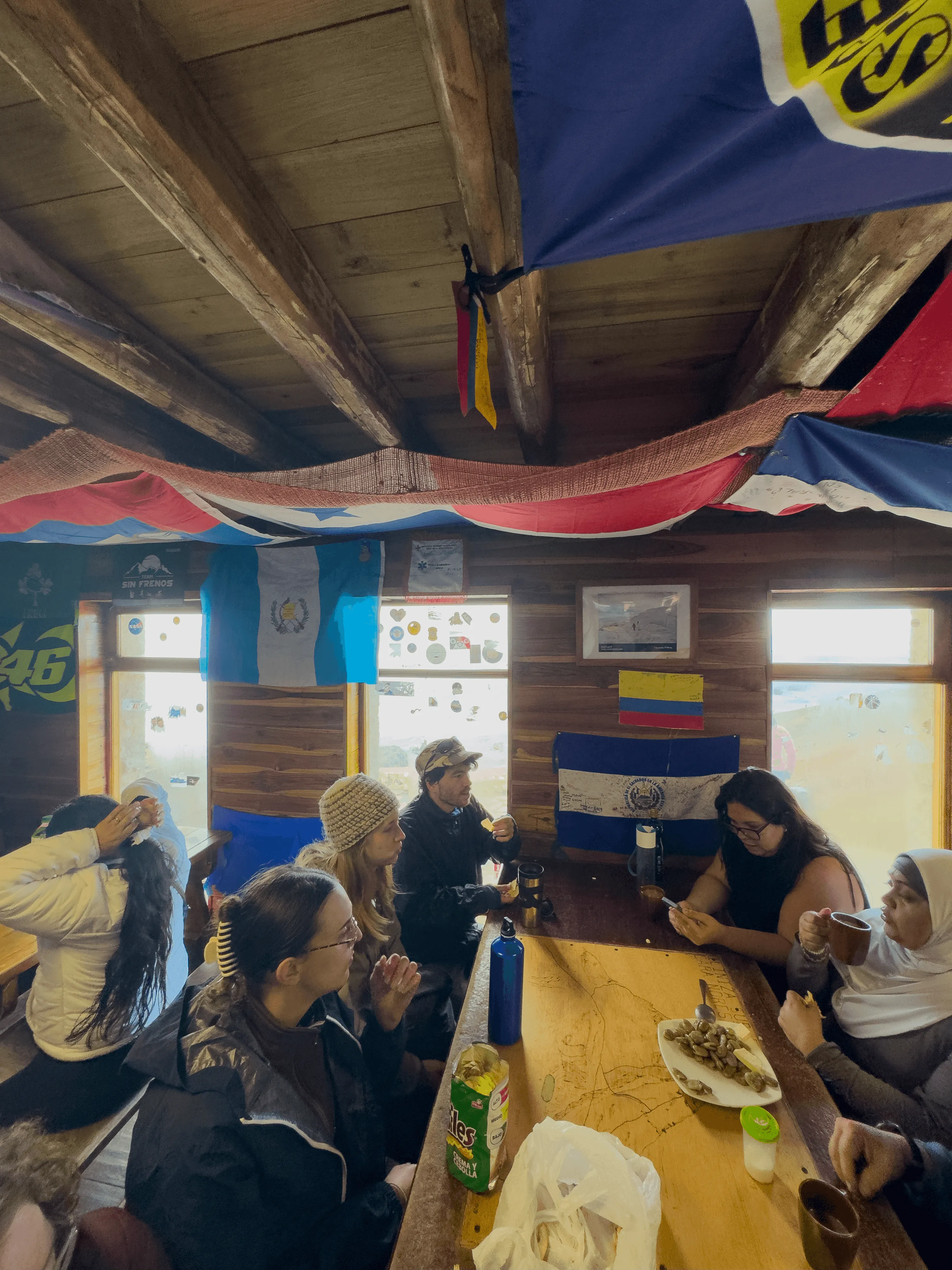
Share some fruit from the market, offer a hand carrying something, or show a photo of your hometown. Small gestures build bridges. In Bolivia, we shared some French chocolates with a family who helped us find our way. That little gesture turned into a three-hour tea invitation, which remains one of our favorite travel memories.
7. Stay a bit longer in one place
It might feel counterintuitive when you have a long bucket list, but spending 3 to 5 days in one spot changes everything. You start to become a familiar face in the neighborhood, and before you know it, neighbors are smiling and waving to you. This is the heart of slow travel. Volunteering through platforms like Workaway takes this a step further by rooting you in a community for several weeks. We dive into all the details in our guide to Workaway and volunteering in South America.
The best apps for meeting locals while traveling
Several apps make it easy to meet people while traveling. Here are the ones we've put to the test:
Meetup: The go-to resource for finding local events in any city. Hikes, language classes, board game nights, cooking workshops. The groups are usually a mix of locals, expats, and travelers, which makes for the perfect social blend.
Tandem: Officially a language exchange app, but in practice, it's a fantastic way to meet locals who want to practice French. You meet up in a café, chat for 30 minutes in Spanish, then 30 minutes in French, and more often than not, this informal "lesson" turns into a full evening out.
Withlocals: A platform that connects travelers with locals for paid experiences, such as guided tours, cooking classes, or dinners at someone's home. Yes, it's a commercial service, but the experiences are usually top-quality and highly personalized. Expect to spend 20 to 60 euros per activity.
Workaway / Worldpackers: For those who want to take immersion even further, these volunteering platforms embed you in a local community for several weeks. We made this our main way of traveling, and it's easily the best way to build deep connections with locals.
Facebook Groups: Don't underestimate local Facebook groups. "Français à Medellín," "Expats in Lima," "Backpackers South America"... These communities are packed with tips and often organize get-togethers. They're also great places to ask questions before rolling into a new city.
For a complete list of must-have apps (navigation, budgeting, translation, accommodation), check out our top 27 des meilleures applications de voyage.
Off the beaten path: destinations where you'll really connect with the locals
A simple rule of thumb: the more touristy a spot is, the more the locals tend to put up walls. It is not malice, just tourist fatigue. On the flip side, in destinations off the beaten path, your mere presence sparks curiosity. People will come up to chat because you are a fresh face, not just another tourist.
South America: our favorite spots for genuine connections
Paraguay is arguably the most underrated country on the continent. With next to no tourists, the locals are incredibly warm, and their curiosity about travelers is close to pure enthusiasm. In Asunción, we were literally invited to dinner right off the street. Our Paraguay guide details why this country is well worth your time.
Uruguay, away from Punta del Este, offers a relaxed, rural vibe where gauchos will readily invite you to share a mate with no strings attached. The La Barra region and the interior are particularly welcoming.
Northern Peru (Chachapoyas, Carhuaz, Cajamarca) is light-years away from the busy Cusco-Machu Picchu tourist highway. This is where we experienced our most authentic interactions, especially during our volunteering at the Casa Viva shelter and our visit to the Kuelap fortress.
It is just as possible in Europe
We often think that traveling off the beaten path means flying halfway around the world. Not necessarily. In Europe, the residential neighborhoods of major cities offer types of encounters you will never find in the historic centers. In Budapest, we found our favorite spots and best conversations in the 9th district, far from the Parliament and the crowded thermal baths. Our guide to the best spots in Budapest highlights exactly these local neighborhoods. In Lisbon, the Mouraria and Graça districts are much better for chatting with locals than the tourist-saturated Alfama.
The principle is universal: step out of the tourist comfort zone. Take the local bus instead of the tourist shuttle. Eat at the diner with no English menu. Walk down streets that do not have a single attraction listed on Google Maps. That is where the magic happens.
Mistakes that can ruin your travel plans
With the right approach, you will find yourself meeting amazing people everywhere you go. But a few slip-ups can shut things down in seconds. Here are the classic mistakes we've noticed (and sometimes made ourselves):
Playing the photographer without asking. Snapping photos of people as if they were tourist attractions is the quickest way to kill any chance of a connection. Always ask first, and if they say no, just put the camera away with a smile.
Only talking about home. You're there to discover their world. Listen first, share second. Curiosity goes both ways: if you show a genuine interest in their daily life, they will naturally start asking about yours.
Waiting for others to make the first move. Shyness is universal. If you wait for others to come to you, you'll spend 90% of your trip in silence. A warm smile, a friendly "hola," or a quick compliment on the food is usually all it takes to break the ice.
Pushing for interaction. If someone doesn't seem interested in chatting, respect their space. Not everyone is in the mood to talk to a traveler, and that's completely fair. Pushing too hard crosses the line from curious to intrusive.
Bargaining too aggressively. In local markets, haggling is often part of the culture. But grinding down an artisan who earns 5 euros a day just to save 50 cents is disrespectful and immediately ruins any chance of a genuine, friendly connection.
To help you navigate other cultural nuances, our guide on travel do's and don'ts covers common slip-ups country by country.
Our 3 most unforgettable encounters on the road
The Colombian family who invited us for Christmas
We were in Medellín, far from our families for the holidays. A casual conversation in a café led to an invitation to spend Nochebuena (Christmas Eve) with a family of eight. Before we knew it, we were gathered around a table loaded with buñuelos, natilla, and lechona, singing aguinaldos that we only half-understood. The grandmother hugged us as if we had been part of the family forever. That night, we realized that the best encounters can't be planned—they find you when you keep an open heart.
The Peruvian fisherman who taught us patience
On the shores of Lake Titicaca, a fisherman invited us onto his boat. For three hours, not a single word was spoken. Just silence, the water, the endless sky, and the hypnotic rhythm of his net. Then, he caught two trout, cooked them over a small fire, and we shared the simplest and most memorable meal of our trip. You don't need words to connect. Some encounters are best experienced in shared silence.
The travelers on the Bolivian night bus
A twelve-hour journey, a broken-down bus in the middle of the Andes, and suddenly we found ourselves playing cards with locals, an Australian, and an Argentine couple. The breakdown lasted four hours. We shared snacks, swapped life stories, and laughed in a mix of Spanish, English, and sign language. When the bus finally started running again, everyone cheered. Travel mishaps are always the best icebreakers. If this kind of adventure speaks to you, our article on traveling without a return ticket shares how we learned to embrace the unexpected.
How meeting locals helps you travel more responsibly
Meeting the locals isn't just incredibly rewarding on a human level, it's also a form of responsible travel. When you eat with a local family instead of at an international chain, you directly support the local economy. When you sleep through Couchsurfing or in a family run guesthouse, your money stays within the community.
Locals are also your best guides for travelling respectfully. They are the ones who will let you know if a certain natural site is fragile, if a tourist attraction exploits animals, or if you should avoid taking photos in a particular neighborhood. By listening to them, you become a more conscious, respectful, and helpful traveller.
If this approach resonates with your way of travelling, volunteering is the perfect next step. By volunteering in an animal shelter, an organic farm, or a community project, you turn your trip into a tangible contribution. We tested this way of travelling for months, and there's simply no going back. Our bucket list of 50 travel experiences includes many of these human adventures.
One last word
By choosing the right places, keeping the right attitude, and using the right tools, you set the stage for incredible connections to happen. The rest is just travel magic—a look shared on a bus, a question asked at the market, or a smile shared in the pouring rain.
After a year on the road, what we remember isn't the sights we visited but the people we met. The Colombian grandmother, the quiet fisherman, the travel companions we braved the chaotic Bolivian bus with. They are our real journey.
So next time you head out, put down your phone, look up, and say hello. The rest will follow.