How to do a self-guided walking tour of Quito in 1 day
Discover Quito's historic center on foot: the Basilica del Voto Nacional, Plaza Grande, golden churches, local food, and Ecuadorian chocolate. Here is your complete free walking tour itinerary at 2,850 meters above sea level, packed with local stories about the city!
How to do a self-guided walking tour of Quito in 1 day
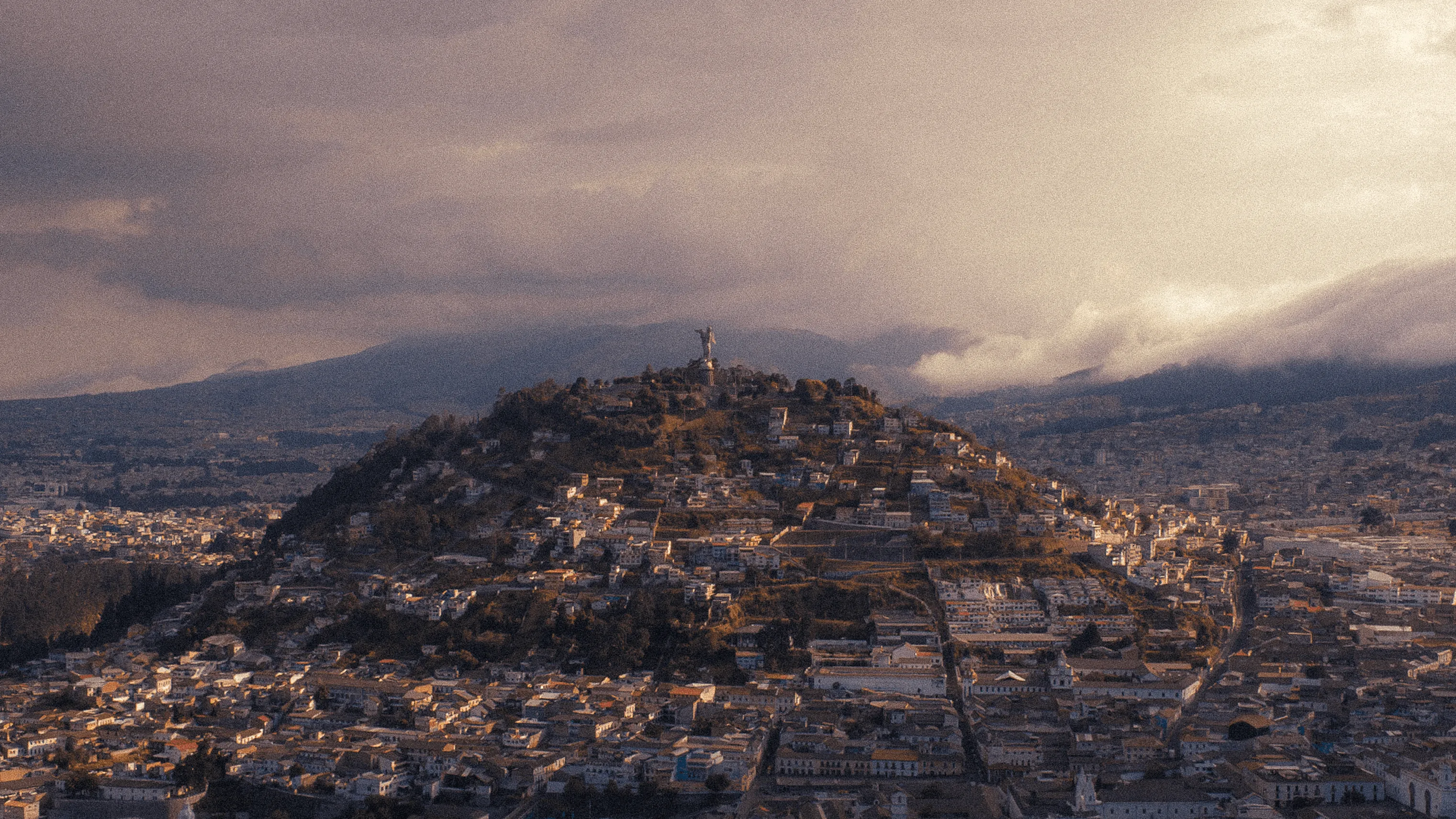
There is something special about stepping foot in Quito for the very first time. Even before you see the colonial facades or the church domes, you find yourself catching your breath. Literally. Sitting at 2,850 meters of altitude, the Ecuadorian capital is one of the highest in the world (if you do not count La Paz as a capital), nestled in an Andean corridor framed by volcanoes. Your first steps in the city are an immediate reminder: here, your body needs to adapt before your eyes can take in the sights.
And what a sight it is. The historic center of Quito, a UNESCO World Heritage site since 1978, is the best-preserved in Latin America. It features more than twenty churches, centuries-old squares, and markets where ancestral remedies sit alongside tropical fruits. The best way to explore it? On foot, guided either step-by-step by our article using our map and history, or by someone who knows every alleyway. This is exactly what you get with the free walking tour of the historic center.
Here is the complete itinerary with an interactive map to help you find your way, enriched with stories we heard from our guide during our visit, verified historical corrections, and our recommendations for exploring Quito responsibly.
Quito Free Walking Tour: discover the historic center on foot, from rich history to local bites
First steps at 2,850 meters: Mercado Central and altitude remedies
Why start a walking tour at a market? Because at this altitude, your body starts sending signals. A little lightheadedness, a mild headache, getting out of breath at the slightest flight of stairs. This is altitude sickness (soroche), something most travelers coming from lower elevations experience.
1. Mercado Central de Quito ⭐ 4.3/5
At Mercado Central, the local herbalists offer warm infusions of camomile and coca to help ease the effects of the altitude. This traditional knowledge has been passed down through generations, long before western medicine arrived. Ecuador boasts some of the richest biodiversity of medicinal plants in the world, and there is no better place to find them than right here in the bustling local markets. It is also the perfect spot to try your first fresh fruit juice: tree tomato (tomate de árbol), passion fruit (maracuyá), or naranjilla, served by the glass for under a dollar.
Access: free · open Monday to Saturday 7 a.m. to 4:30 p.m. 📍 Google Maps

In Ecuador, the local markets are the very heart of daily life, much like we discovered during our exploration of the indigenous markets of the Sierra.
If you want to experience something truly grand in Quito, don't miss Inti Raymi, the great festival celebrated around June 21. Contrary to what you might sometimes hear, this isn't an equinox but the solstice: the moment when the sun is furthest from the Southern Hemisphere. For the Andean peoples, this is the festival of the Sun God (Inti), an Inca heritage that is still very much alive in Ecuador, Peru, and Bolivia. The whole family comes together to cook, dance, and celebrate. It is a beautiful moment of cultural heritage that predates the arrival of the Spanish by several millennia.
The Basilica del Voto Nacional: Neo-Gothic style, Ecuadorian style
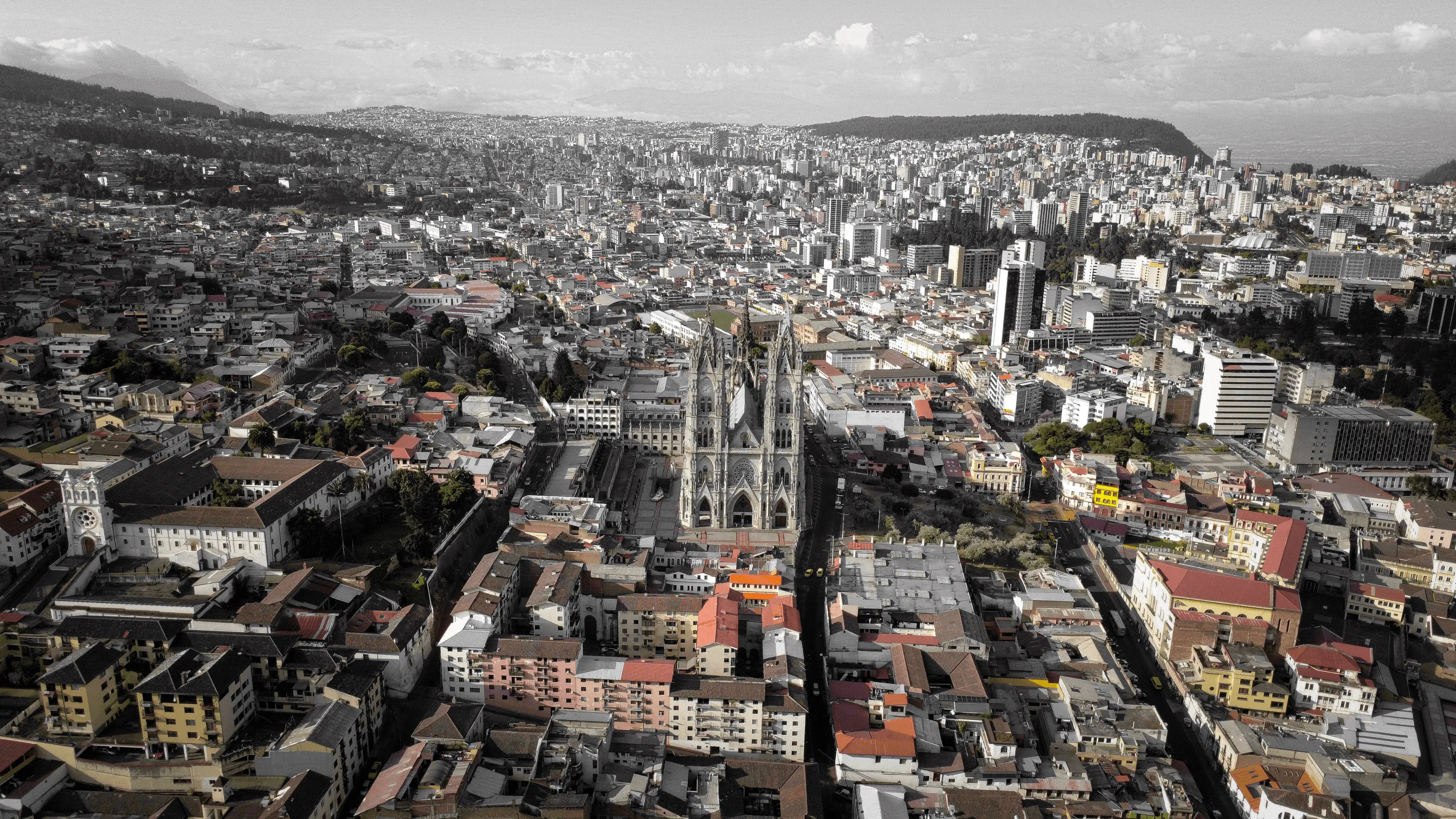
Heading north from the old town, the silhouette of the Basilica del Voto Nacional comes into view. With twin towers rising over 115 meters high, flying buttresses, and stained-glass windows, it might remind you of Notre-Dame de Paris or a cathedral along the Rhine at first glance. But as you get closer, the details tell a completely different story.
2. Basilica del Voto Nacional ⭐ 4.7/5
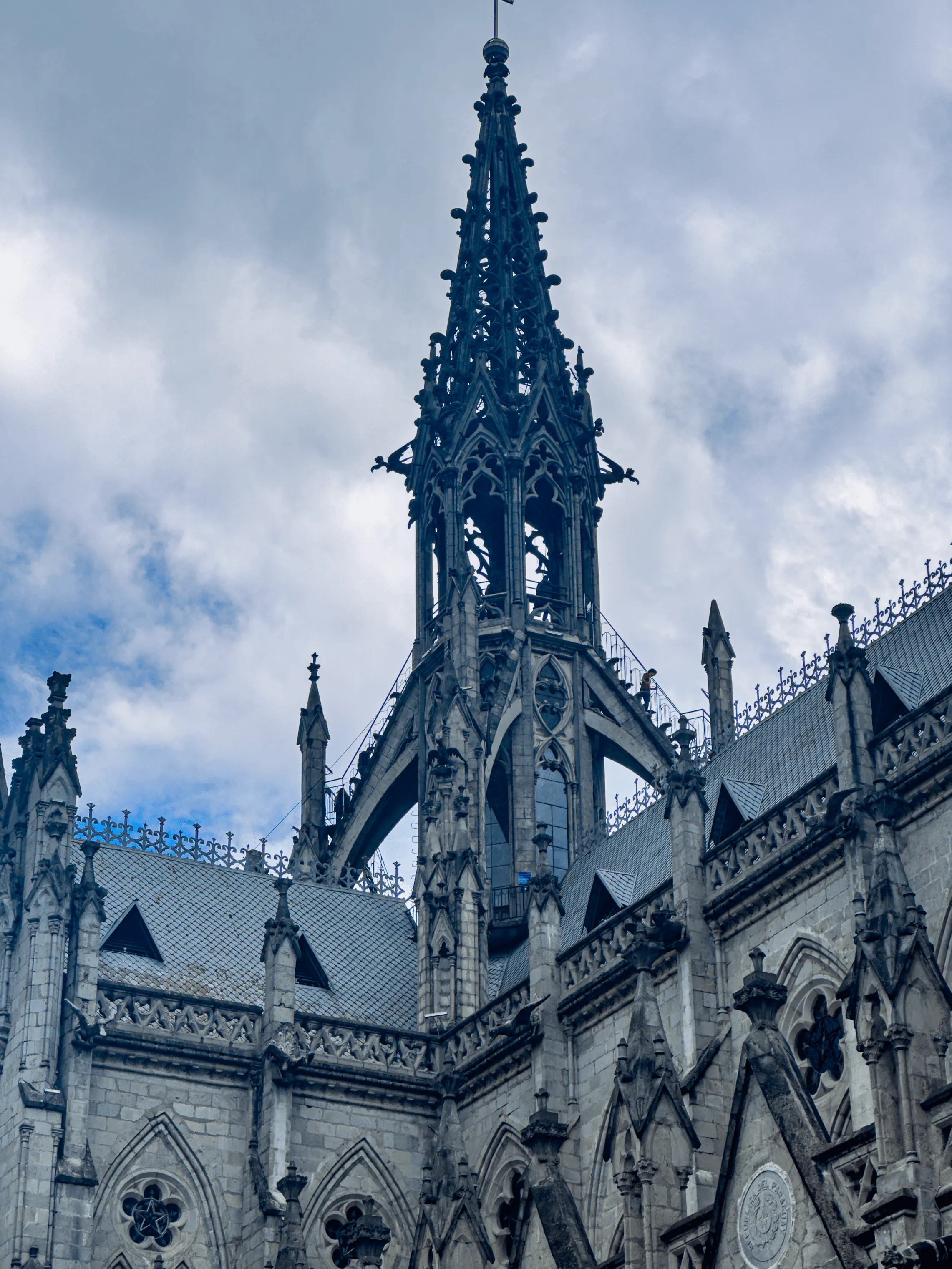
Designed by French architect Emilio Tarlier with construction starting in 1887, this basilica stands as the largest neo-Gothic structure in Latin America. What makes it truly special is how it blends into the local culture. Where European cathedrals feature demonic gargoyles and mythical chimeras, Quito's basilica showcases Ecuadorian wildlife: iguanas, Galápagos tortoises, monkeys, pumas, and condors carved directly into the volcanic stone. It is neo-Gothic, indeed, but with a heart deeply rooted in the country's identity.
The main tower, often called the "Tour du Condor", offers a 360-degree panoramic balcony over the city and the surrounding volcanoes. To get up there, you have to climb through the basilica's inner structure, cross a narrow suspension bridge, and go up a nearly vertical ladder. The vertigo is real, but the view is absolutely worth the effort.
Our guide pointed out that the basilica was built of reinforced concrete, which is partly true: the central nave, left largely unfinished, reveals the raw concrete. It is a striking contrast to the carved ornaments of the exterior, giving the place an almost industrial feel, far from the gilded interiors of the other downtown churches. And if you are wondering what happened to the clocks, they are broken due to an earthquake!
Access: around 5 USD (towers and museum) · open daily 9 a.m. to 5 p.m. 📍 Google Maps
Plaza Grande: the political heart of Quito for 500 years
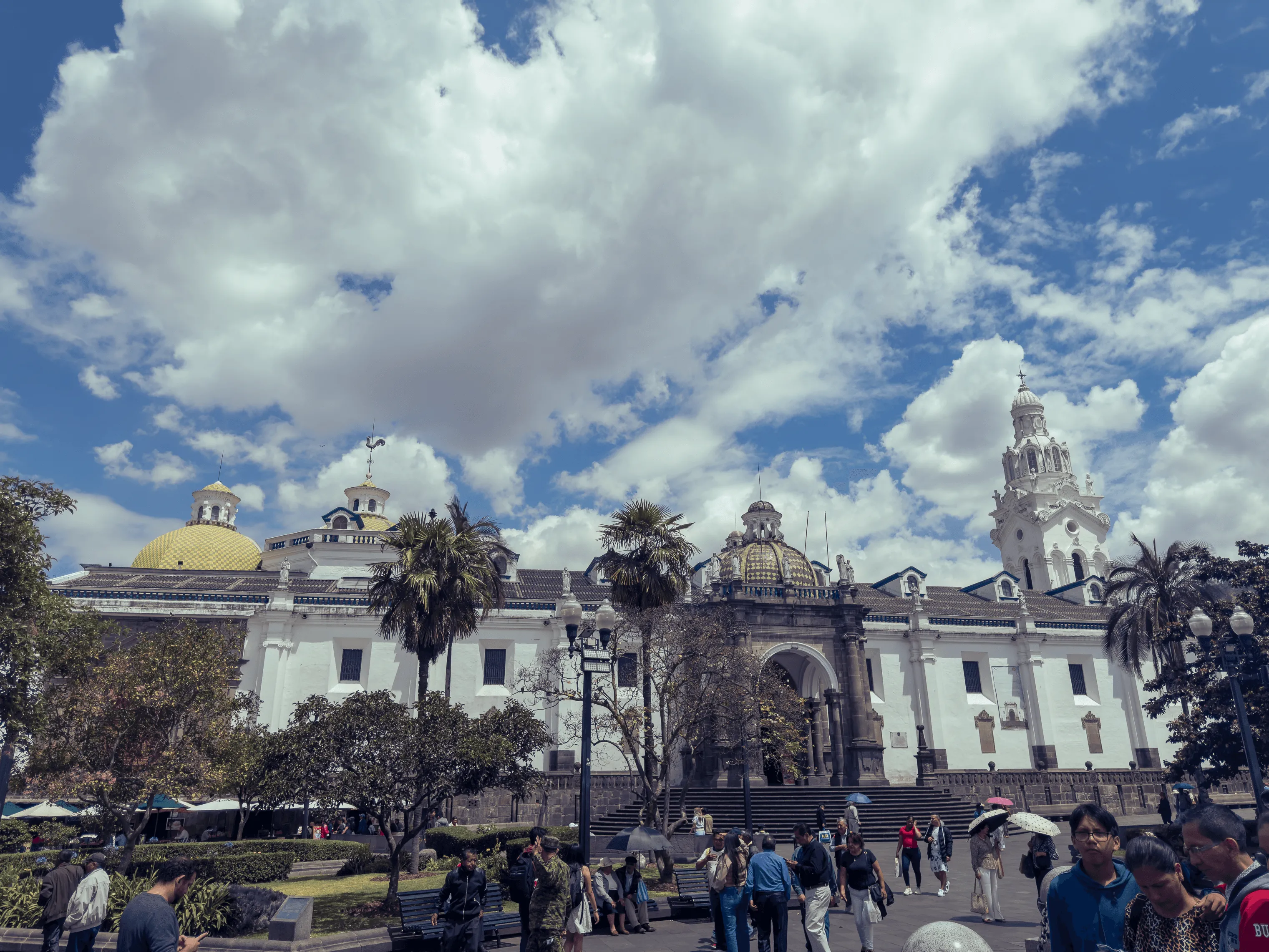
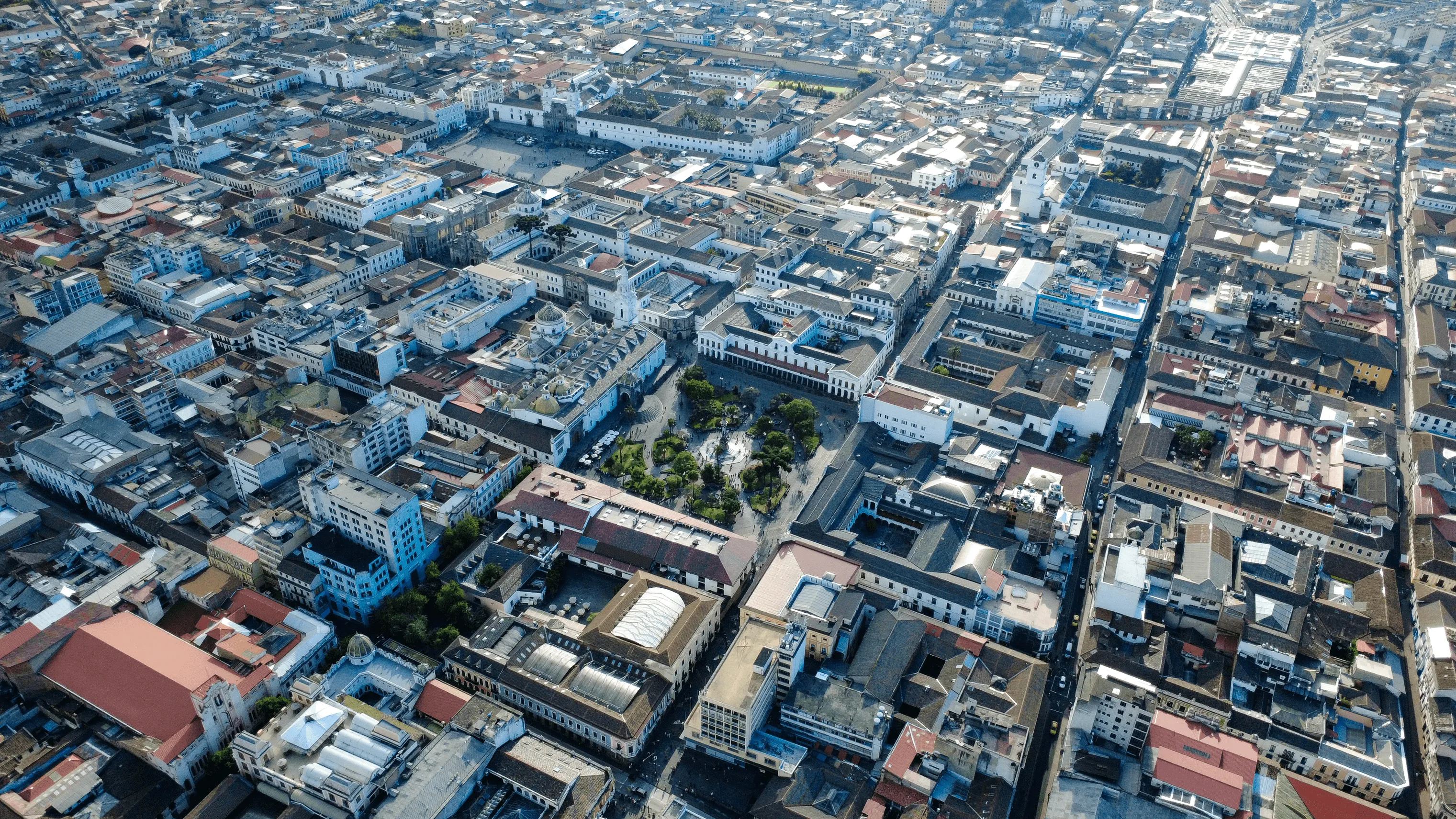
Heading back down south, you will arrive at the Plaza Grande (officially Plaza de la Independencia), the beating heart of Quito since its foundation. This is where political, religious, and civil powers come together. Around this rectangular square, four buildings tell the story of five centuries of history.
3. Catedral Metropolitana de Quito ⭐ 4.5/5
The Metropolitan Cathedral is one of the oldest in South America. The first church on this site was built as early as 1534, the very year Quito was founded. Construction on the current building began in the 1550s under the direction of Spanish architect Antonio García, and it was consecrated in 1572. The eruption of the Pichincha volcano in 1660 destroyed part of the building, and reconstruction stretched all the way to 1806. The result is a mix of Gothic, Baroque, and Neoclassical styles, a living testament to the layers of history that have built up over time.
Access: free (climbing to the lookout is about 5 USD) · open Monday to Saturday 9:30 AM to 5:00 PM 📍 Google Maps
On the same square, the Presidential Palace (Palacio de Carondelet) houses the office and residence of the head of state. Right opposite, the Municipal Palace holds the city's administrative offices. Having political and religious power side by side on the same square is no coincidence: it is the blueprint for every city founded by the Spaniards in Latin America, an urban grid designed to control the territory.
The First Cry of Independence: How August 10, 1809, Changed Everything

At the center of the Plaza Grande stands the Monument à l'Indépendance, dedicated to the heroes of 10 août 1809. This date is foundational for Ecuador. But what actually happened?
Our guide calls it a "first successful revolution," though the reality is a bit more nuanced. On 10 août 1809, a group of Creole notables led by Juan Pío Montúfar took advantage of Napoleon's invasion of Spain to proclaim an autonomous junta in Quito. This is the "Primer Grito de Independencia" (First Cry of Independence), the very first independence movement in South America. In fact, it was in Quito, before Bogotá, before Buenos Aires, and before Caracas, that the idea of breaking free from the Spanish crown first took real shape.
But this first attempt was brutally crushed. Loyalist troops of the Viceroy of Peru crushed the movement, and the insurgents were massacred on August 2, 1810. Ecuador's actual independence wasn't won until 1822, following the Battle of Pichincha led by Marshal Antonio José de Sucre. This is why Quito is nicknamed "Luz de América" (Light of America): not because the revolution succeeded right away, but because the spark started right here.
After gaining independence, Ecuador was briefly part of Gran Colombia (1819-1830), a grand union envisioned by Simón Bolívar that brought together what is now Colombia, Venezuela, Ecuador, and Panama. The union dissolved in 1830, and Ecuador became an independent republic, making for just under 200 years of modern history.
At the top of the monument, a female figure represents Liberty, holding a torch in the classic Roman allegorical style. The engraved crosses symbolize the Spanish crown, and the coats of arms represent the nations that took part in the continent's liberation movement.
Quito's historic center is home to more than twenty churches packed into a compact area. When the Spanish arrived in the 16th century, building religious sites was a key tool of the conquest: each church was a bold statement of Catholicism designed to overshadow local beliefs. Two of them are absolute must-sees where you'll want to take your time.
The churches of the historic center: from your first beer to the golden temple
4. Iglesia y Convento de San Francisco ⭐ 4.6/5
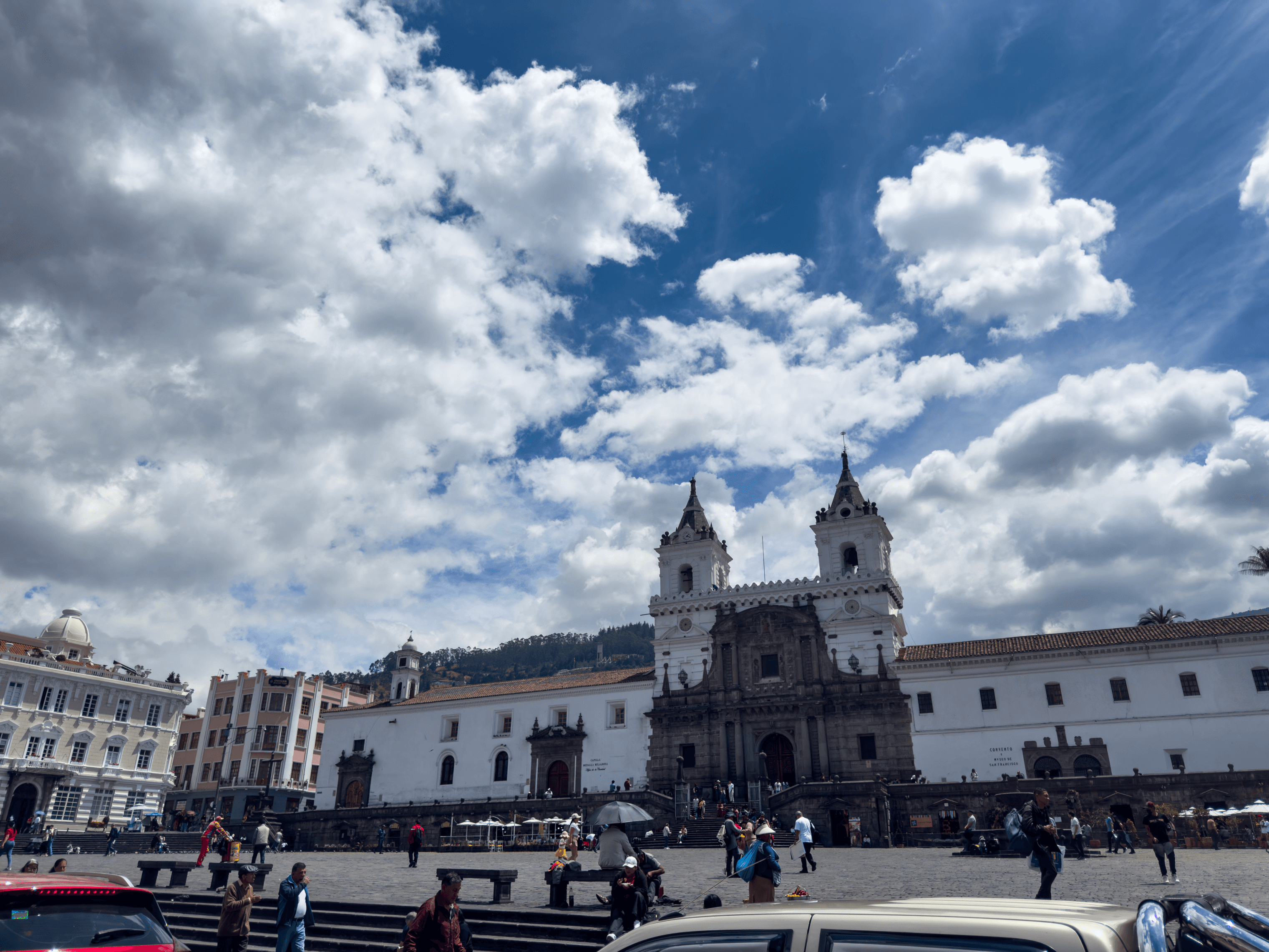
The Iglesia y Convento de San Francisco takes up an entire block of the old town, making it one of the largest colonial religious complexes in South America. But this place also holds a little-known story that few guidebooks mention: it was right here in 1566 that the Flemish monk Fray Jodoco Ricke brewed the first European beer in the Americas. The brewery, set up inside the convent, actually ran for over four centuries before finally closing its doors in 1970.
Inside, you will find a beautiful blend of styles where Spanish colonial arches mix with local designs. The interior courtyards, typical of colonial buildings, were used to collect rainwater, since the city had no modern water system back then.
Access: Free (Museum 3 USD) · Open 9 am - 5:30 pm 📍 Google Maps
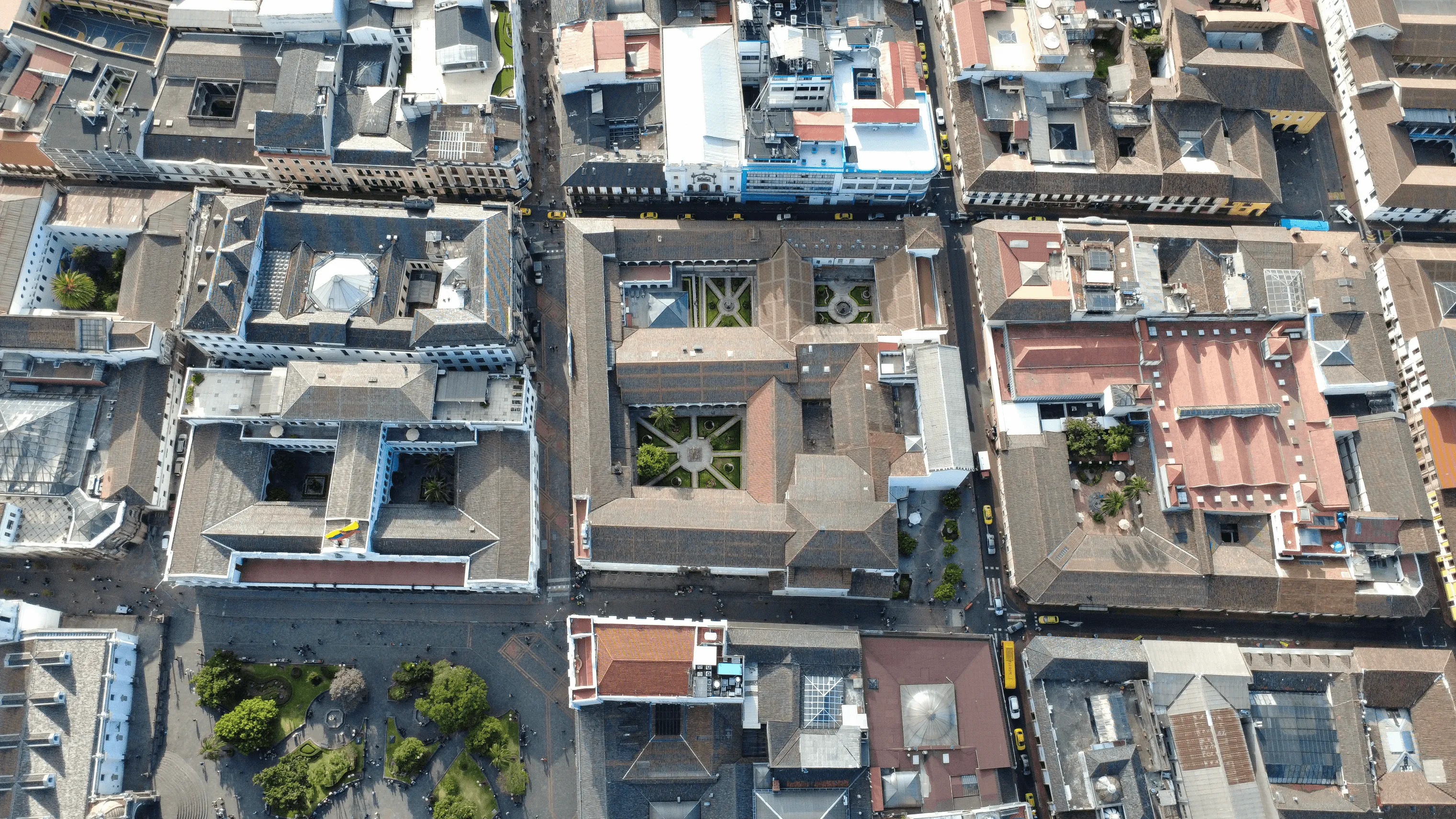
5. La Compañía de Jesús (the Golden Church) ⭐ 4.8/5
The La Compañía de Jesús is probably the most ornate church in South America. Its construction took 160 years (1605-1765), bringing together successive generations of artisans from the Escuela Quiteña (the Quito School), an artistic movement that blended European techniques with Andean sensibility.
When you step inside, you are greeted by "seven layers of gold." The reality is just as striking: the interior is covered in 23-karat gold leaf, applied to every single inch of the nave, columns, and vaults. The church combines four architectural styles: Baroque (which dominates), Mudéjar (Moorish geometric patterns on the pillars), Churrigueresque (ultra-ornate stucco), and Neoclassical (the chapel of Santa Mariana de Jesús). The result is a place where light plays beautifully with the gold from every angle.
Access: 5 USD · open Mon-Fri 9:30 AM-6:30 PM · free on the first Sunday of the month 📍 Google Maps
Chocolate, tropical fruits, and 400 dishes: a walking food tour
A walking tour in Quito is also a succession of delicious discoveries. Ecuador is a country of extreme geographical diversity: the Pacific coast, the Andean highlands, the Amazon rainforest, and the Galápagos Islands. Each region has developed its own gastronomy, and our guide estimates that the national culinary repertoire includes over 400 traditional dishes.
Up in the mountains, soups reign supreme, made with potatoes (Ecuador grows more than 400 varieties), corn, and freshwater fish. On the coast, ceviche and seafood take center stage. In the Amazon, cooking features products from the forest, often completely new to Western travelers.
But the star product is definitely the chocolate. Ecuador was the world's leading cocoa exporter for decades. Even today, the country produces around 65 % of fine aroma cocoa (the highest quality variety, with floral and fruity notes) and 35 % of bulk cocoa. The local chocolate industry really took off about 25 years ago: before that, Ecuador exported raw cocoa without processing it. Today, brands like Pacari or República del Cacao make world-class dark chocolate, which you can easily find in the shops around the historic center.
The 100% dark chocolate, with no added sugar or milk, is a fantastic energy booster. You can even find varieties infused with lemongrass, a uniquely Ecuadorian specialty. For lovers of tropical fruits, every restaurant meal starts with a fresh juice: maracuyá (passion fruit), babaco (an elongated fruit with a delicate flavor, native to the Andes), or tomate de árbol (a tart red fruit, completely unrelated to the standard tomato).
We also experienced this amazing culinary diversity while exploring Baños and the village of Patate, where local markets offer produce you won't find anywhere else. That is the beauty of eating local when you travel: every single purchase directly supports the country's economy.
The Avenue of the Volcanoes and Chimborazo: Living on the Ring of Fire
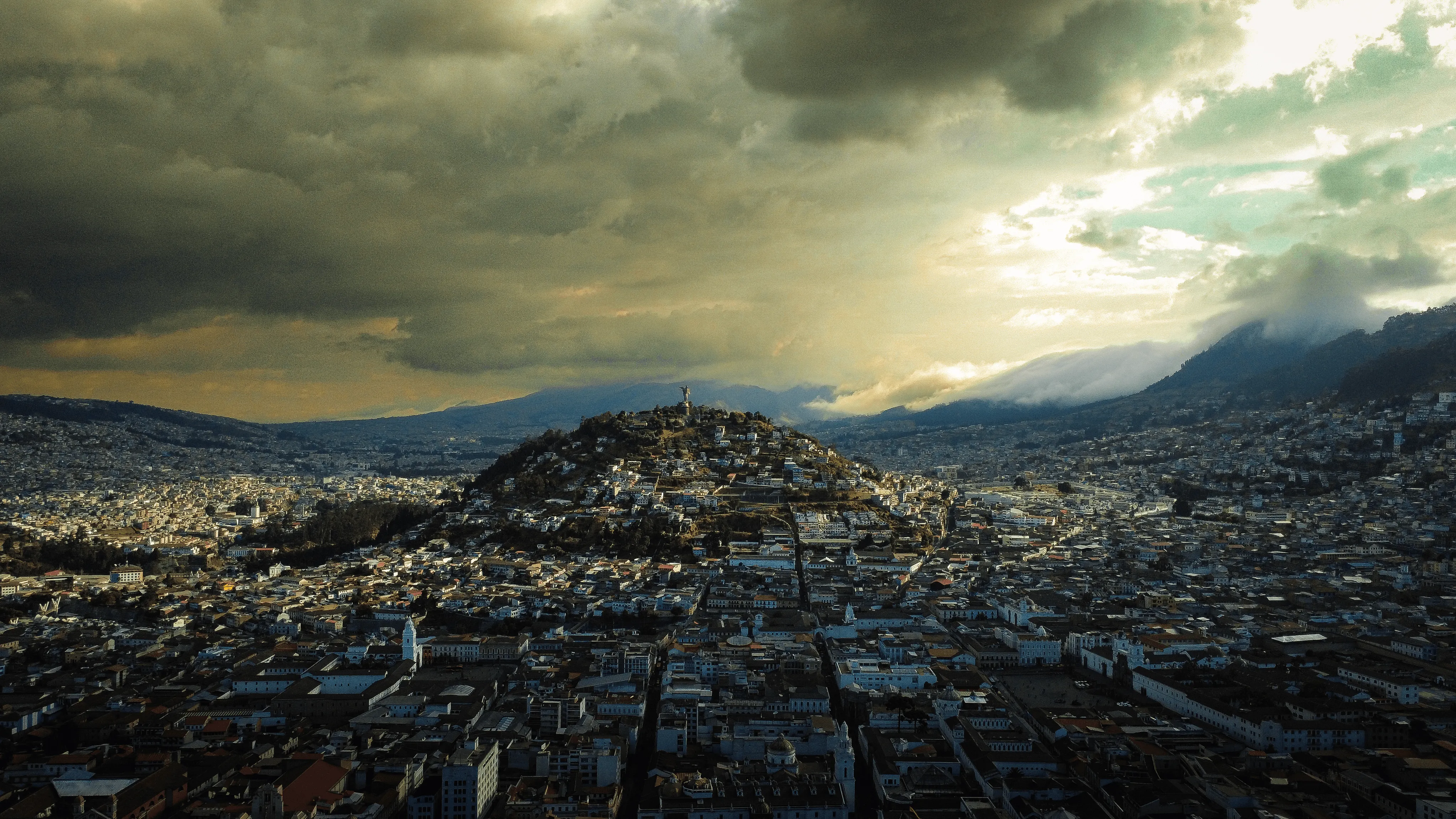
This walking tour takes you through a city framed by volcanoes. Quito stretches for 50 kilometers from north to south along an Andean corridor that the naturalist Alexander von Humboldt famously called the "Avenida de los Volcanes" (Avenue of the Volcanoes). On either side, active peaks serve as a daily reminder that Ecuador sits right on the Pacific Ring of Fire.
The Chimborazo (6,263 meters) is often called "the highest volcano in the world measured from its base." While that phrasing is a bit loose, the reality is even more amazing: thanks to the Earth's equatorial bulge (our planet is slightly flattened at the poles and wider at the equator), the summit of Chimborazo is actually the farthest point from the center of the Earth. That makes it over 2,000 meters farther than Mount Everest. It is, quite literally, the closest place on Earth to the stars.
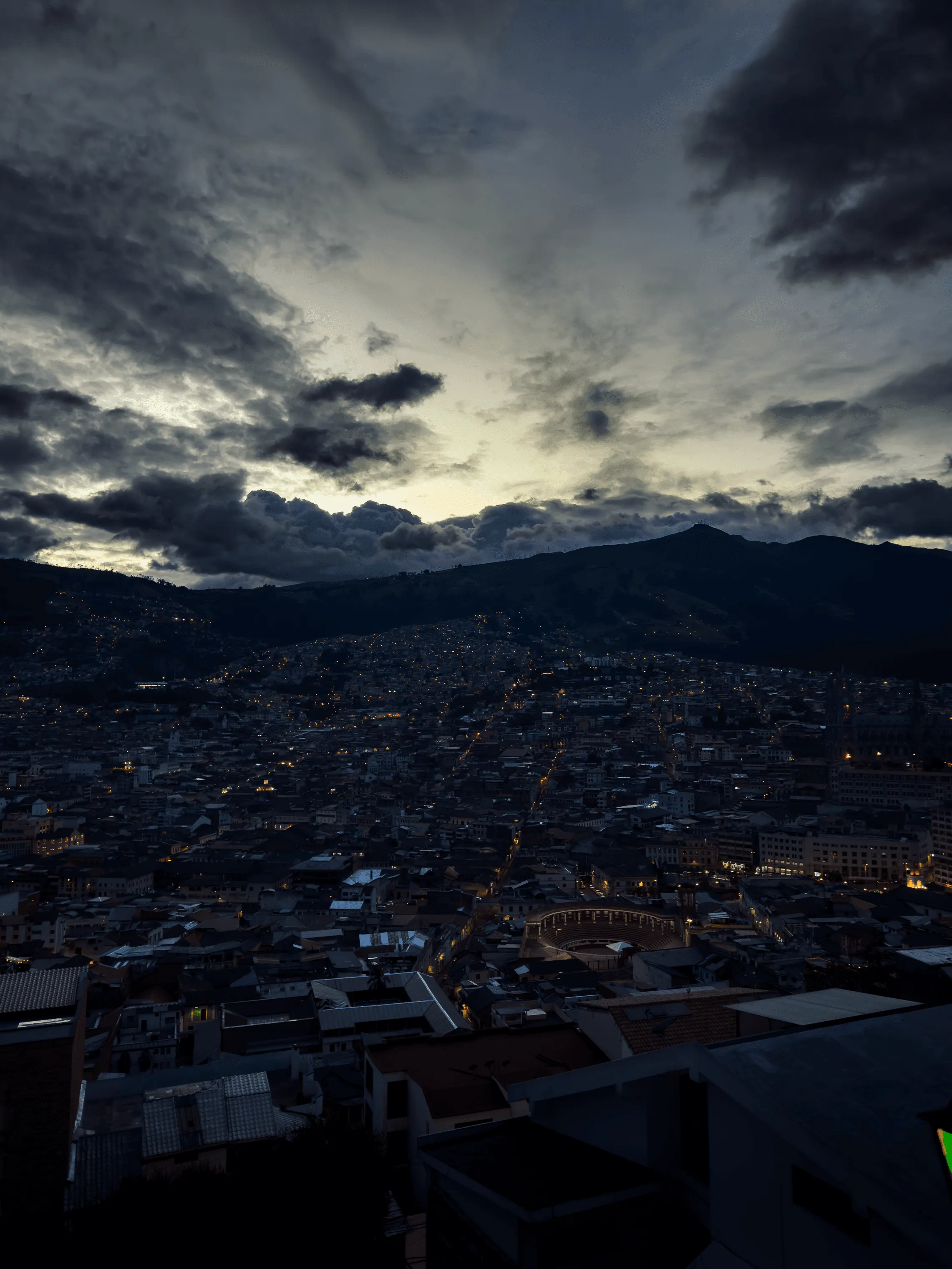
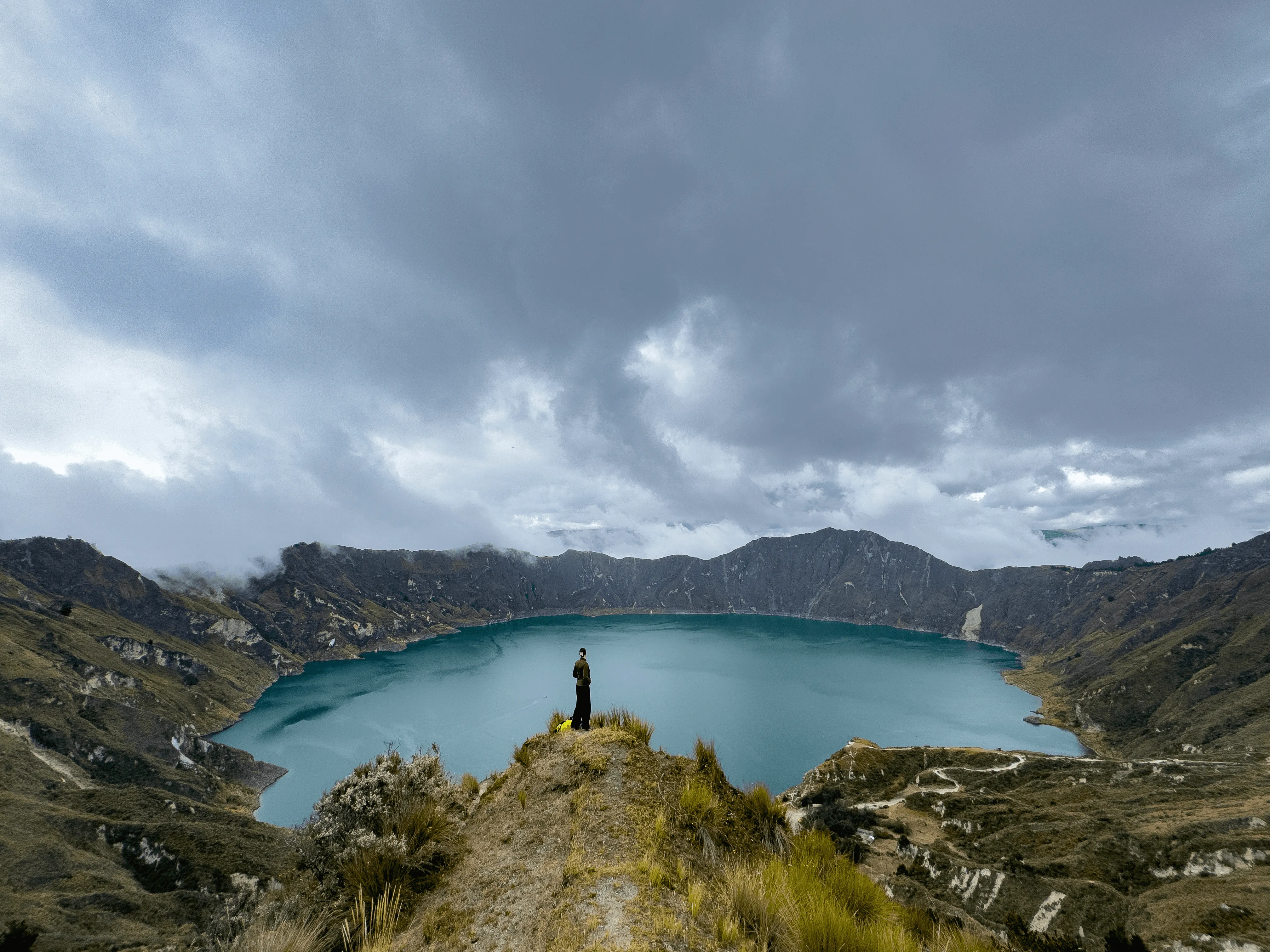
In practical terms, this active geology means that Quito lives with seismic risk. The eruption of Guagua Pichincha en 1999 covered the city in ash. Cotopaxi, located 50 km to the south, is under constant surveillance. For backpackers planning treks in the region, our guide to the Quilotoa Loop provides all the necessary information on high-altitude conditions.
Getting around Quito: the 0.45 USD subway that changed the city
The Quito Metro, opened in late 2023, is the largest infrastructure project in Ecuador's history: around $2 billion for a 22.5 km line with 15 stations, connecting the south (Quitumbe) to the north (El Labrador) in just 34 minutes. While official guides claim 28 minutes, that is usually the travel time between specific intermediate stations. Expect just over half an hour for the full north-south journey.
The fare? Just 0.45 USD per trip. For travelers used to European subway prices, this is incredibly cheap. And the impact on the city is huge: before the metro, making that same north-south journey by car could easily take two hours during rush hour. The metro runs Monday through Friday from 5:30 AM to 11:00 PM, and on weekends starting at 7:00 AM.
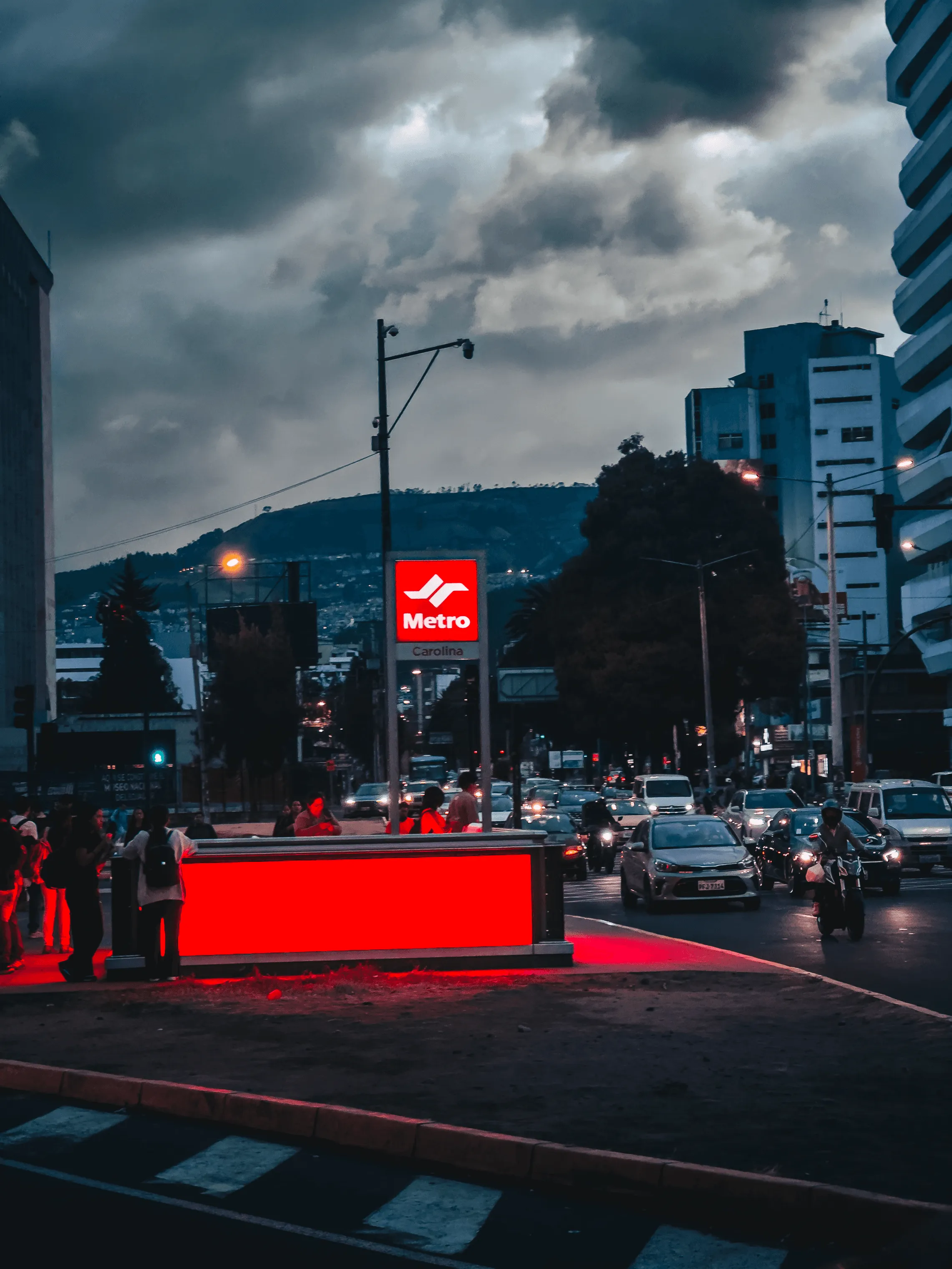
To get around the historic center, the Trolebús (trolleybus) and local bus lines complete the transit network. The PassApp and Uber apps are also great options for taxi rides, though in the pedestrianized center, walking is still your best bet. Our selection of useful travel apps covers the essential tools you will need to navigate all of Latin America.
The historic center at night: a local recommendation
To round off your tour, we have a personal tip: come back to see the old town after dark. Twenty years ago, Quito's historic center was a lively neighborhood in the evening. While rising security concerns changed things for a while, private investments in monument lighting are bringing life back to the district at night. Seeing the Basilica, la Compañía, and Plaza Grande beautifully lit up after sunset offers a completely different perspective from your daytime visit.
To be transparent about Ecuador's current challenges, safety concerns have increased since the pandemic, partly due to cocaine transit from Colombia and Peru to Ecuadorian ports. The historic center remains a tourist area with a good police presence, but the usual common-sense travel precautions apply: keep your valuables out of sight, stick to well-lit and busy areas, and follow the advice of your hosts. If you plan to travel along the coast or to Guayaquil, please take extra care.
What will the weather be like for your trip?

Responsible travel in Quito: why a walking tour is your best bet
If you want someone to bring this history to life, choosing a free walking tour to discover the historic center is already a step toward responsible travel. You get around on foot, explore the neighborhood with a local guide who lives and works in Quito, and the system is tip-based: you pay what you feel is fair, based on the quality of your experience.
Why is this a great option? Because it ensures that the money goes directly to the guide, without any middlemen. This follows the exact same principle we advocate in our article on responsible tourism and cultural immersion: prioritizing direct local connections, local operators, and experiences that create a genuine bond between the traveler and the destination.
In Quito, this also comes down to practical choices. Eat in the local markets rather than the touristy restaurants in La Mariscal. Stay in guesthouses in the historic center instead of hotel chains. Buy chocolate directly from local producers rather than at the duty-free shop. Every spending decision you make is a vote for the kind of tourism you want to support.
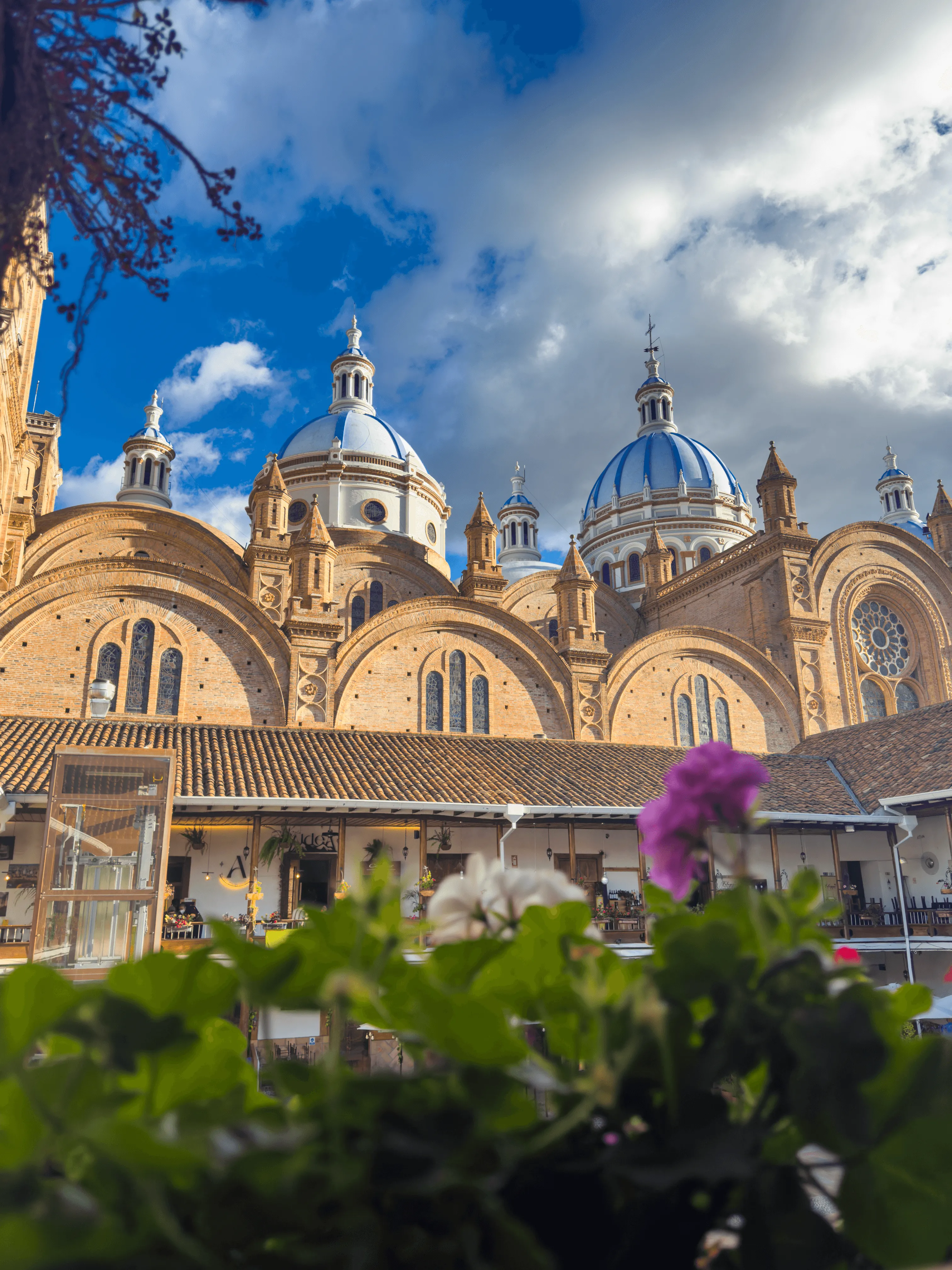
For those thinking about extending their stay, Ecuador is absolutely perfect for backpacking. Distances are short (the country is about the size of Colorado), bus travel is affordable, and meeting locals is easy thanks to incredibly welcoming people. Our own experiences in Cuenca and exploring the markets of the Sierra confirm that in Ecuador, the best experiences are the ones off the beaten path.
A quick linguistic tip our guide shared along the way: in Ecuador, the indigenous language is called kichwa (not "quechua" as in Peru). It belongs to the same language family, but the Ecuadorian variant has its own unique flavor. Around 2 million Ecuadorians speak Kichwa, mostly in the rural communities of the Sierra. Learning just a few words of Kichwa at the market opens doors that no guide book ever could, as we discovered when looking to connect with locals during our travels.