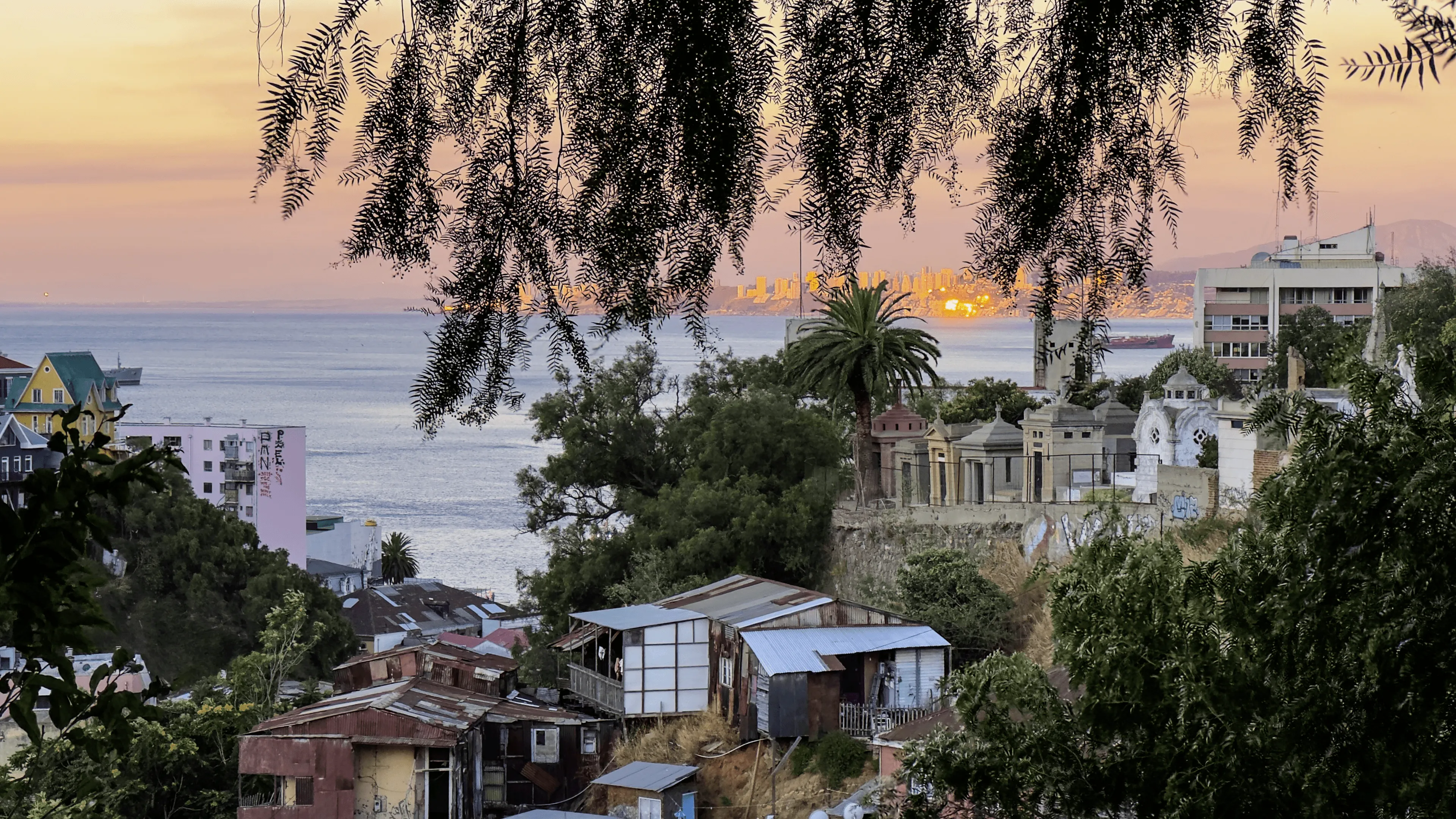
Valparaiso, the street art capital of the world
The capital of street art—or how a city hit hard by economic crisis and natural disasters managed to reinvent itself, all thanks to the sheer creativity of Chilean artists.
Valparaiso, the street art capital of the world
Valparaíso was once the main port city connecting Santiago to the ocean, before the Panama Canal Opening en 1914. Following the opening of the canal and the damage left behind by a 8.2 magnitude earthquake in 1906, the city gradually lost its commercial importance and went through an economic and social decline.
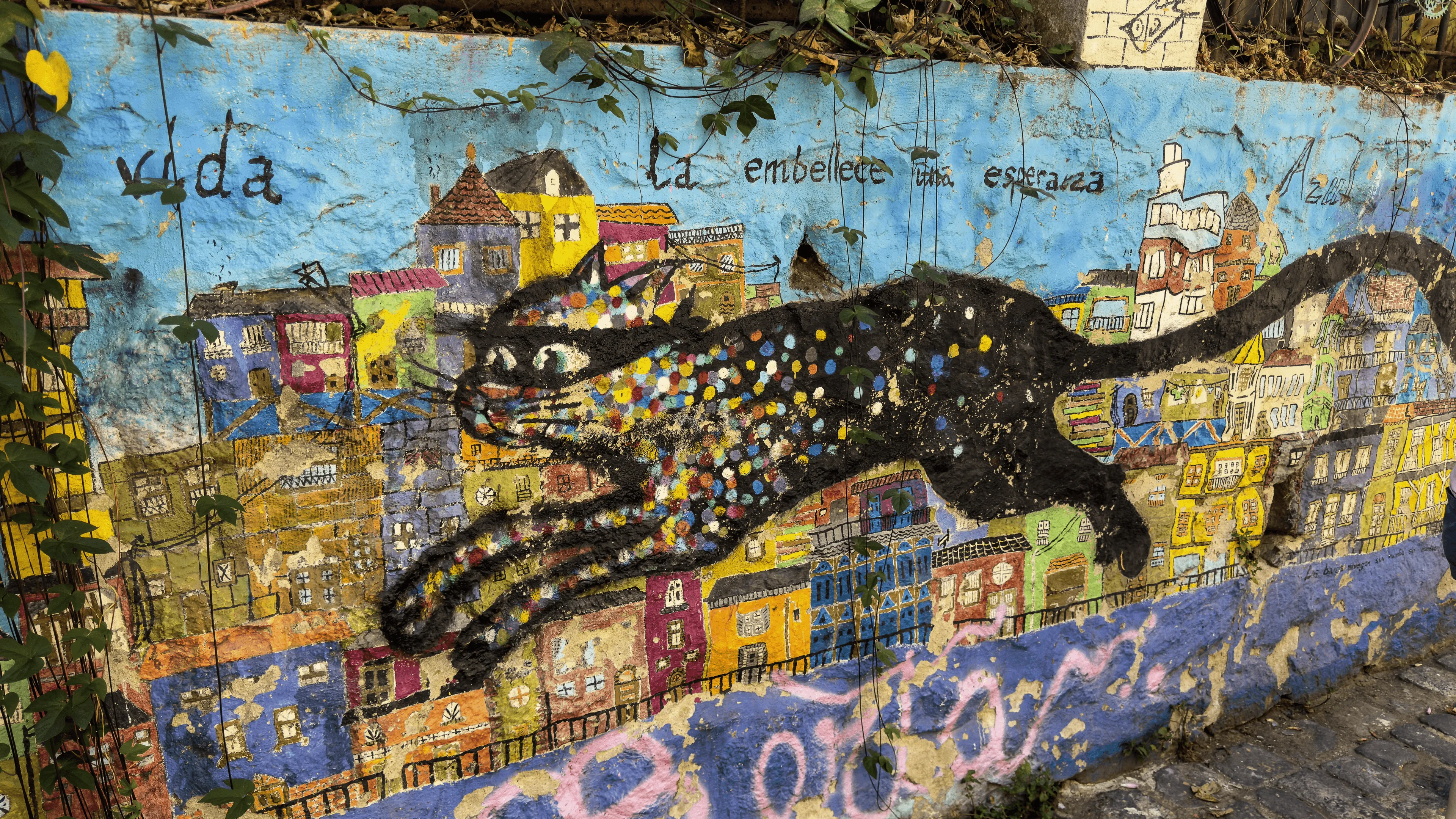
It was during the Pinochet dictatorship that street art (though banned) first appeared in the city, initially as a symbol of rebellion against the military. Over time, it spread almost everywhere, eventually gaining the support of residents and local authorities by the end of the dictatorship. In 2010, the city even hosted its first "Graffiti Festival." Little by little, Valparaiso became a true international showcase for street art, drawing in local and international artists alike, as well as travelers eager to explore its colorful hills.
Today, street art is an essential part of the city's identity.
Santiago
CHILE
Valparaiso
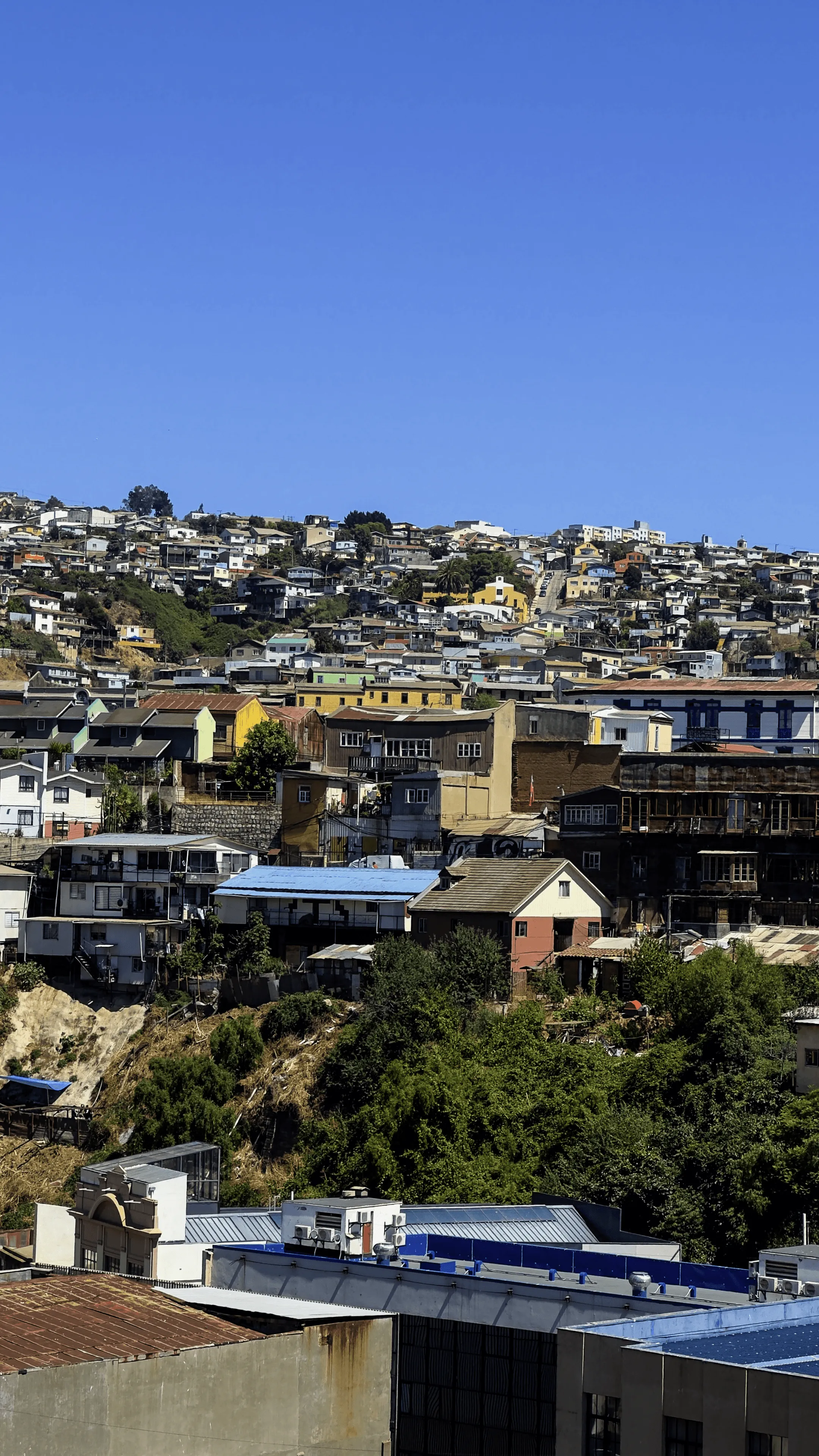
We arrived by bus, as we often have since the start of this trip. We quickly noticed that the area around the bus station wasn't exactly the kind of place we wanted to linger, so we hopped in a taxi to reach our hostel, nestled in the hills of Valparaiso.
The hostel itself is pretty simple, but perfectly located for exploring the city.
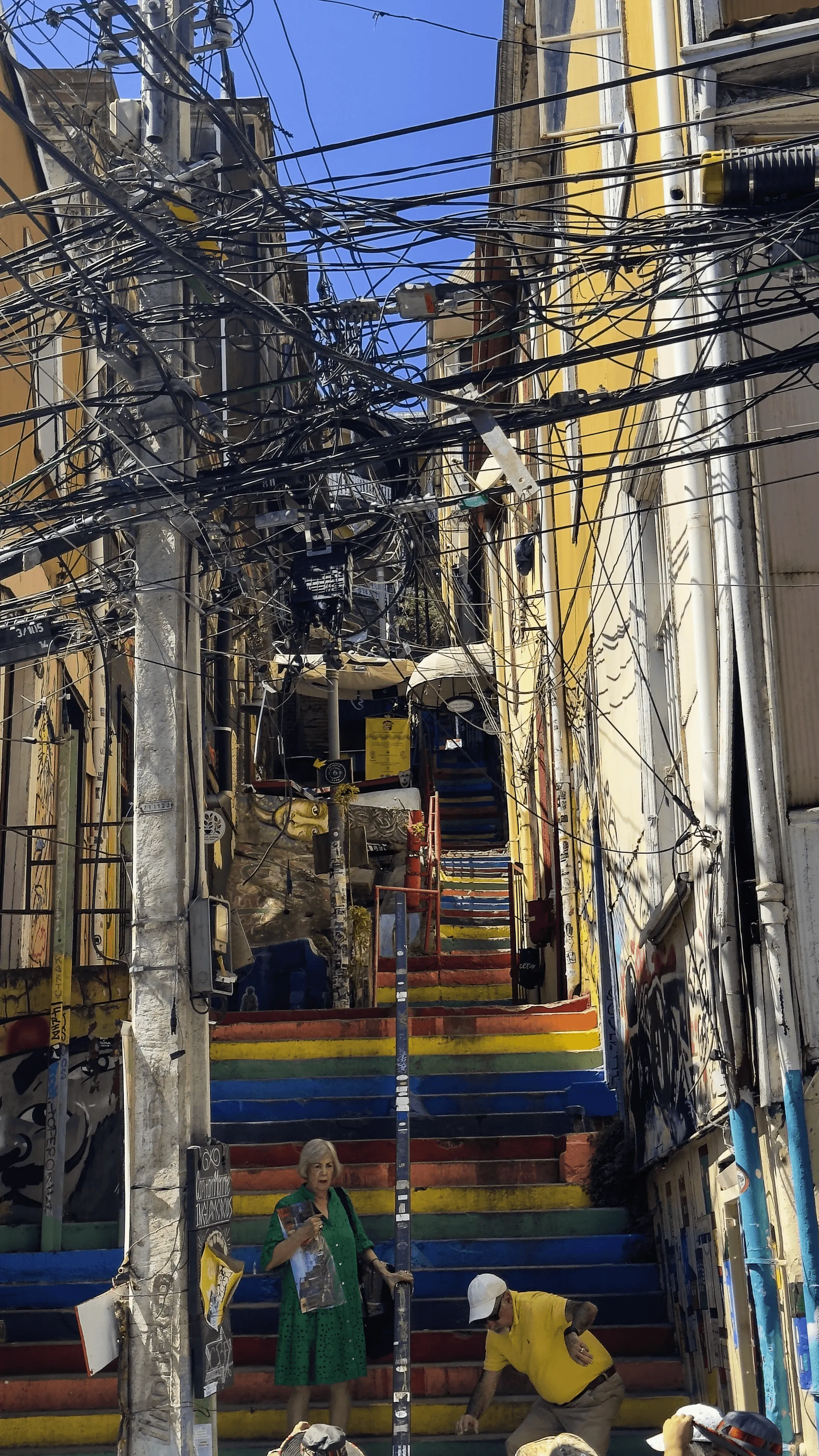
The colorful streets of Valparaiso
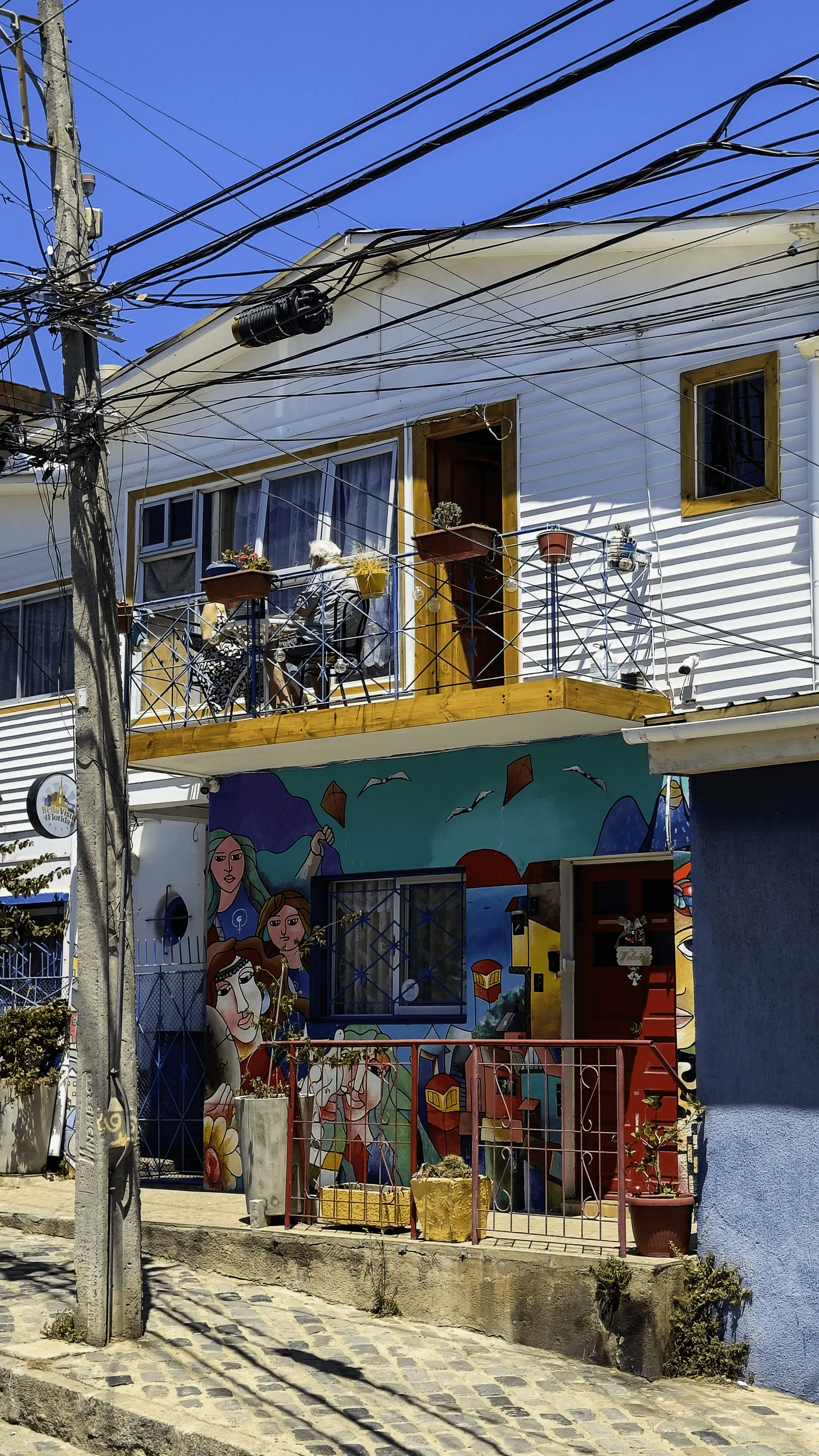
Our first day was all about exploring the streets and taking in the murals, tags, and graffiti. We just let ourselves wander from street to street, without really following a set route.
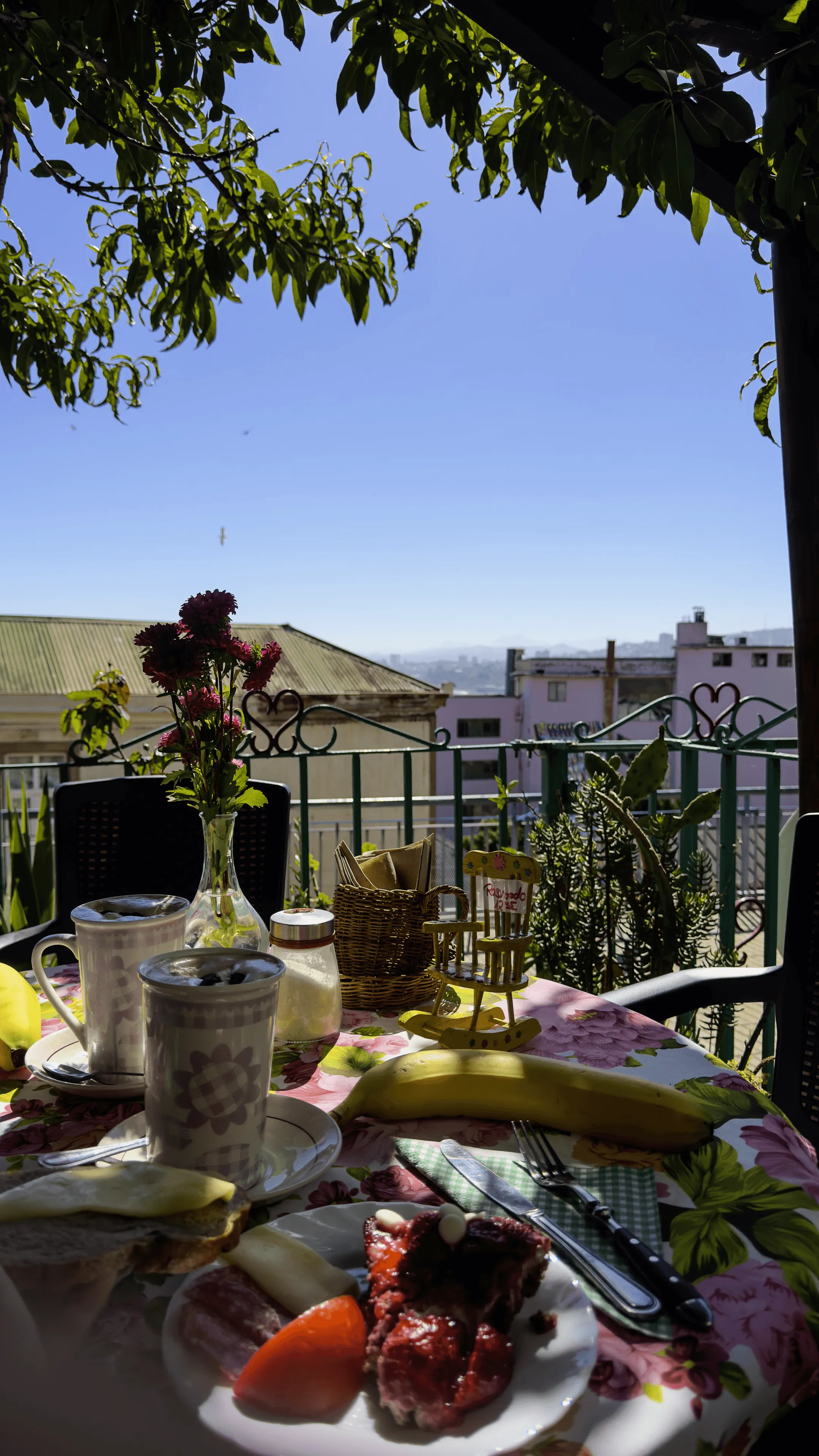
We did have one goal in mind, though: finding a spot for breakfast. That's how we stumbled upon Marion Café, a cozy, tucked-away spot overlooking the city with a beautiful little garden.
There are plenty of restaurants with terraces in Valparaiso's cultural center, but this one really stole our hearts (and let's be honest, the cakes they had on display did most of the convincing!)
Here is the address: https://maps.app.goo.gl/dVFrS1wyxRzawsdr7
After a few pastries and lemonades, we got back on our way and ran into a French woman who has been living in Valparaiso for 16 years. Originally an architect, she now sells her illustrations of the city's signature houses. They're lovely and really capture the local architectural style.
The open-air museum and historic funiculars of Valparaiso
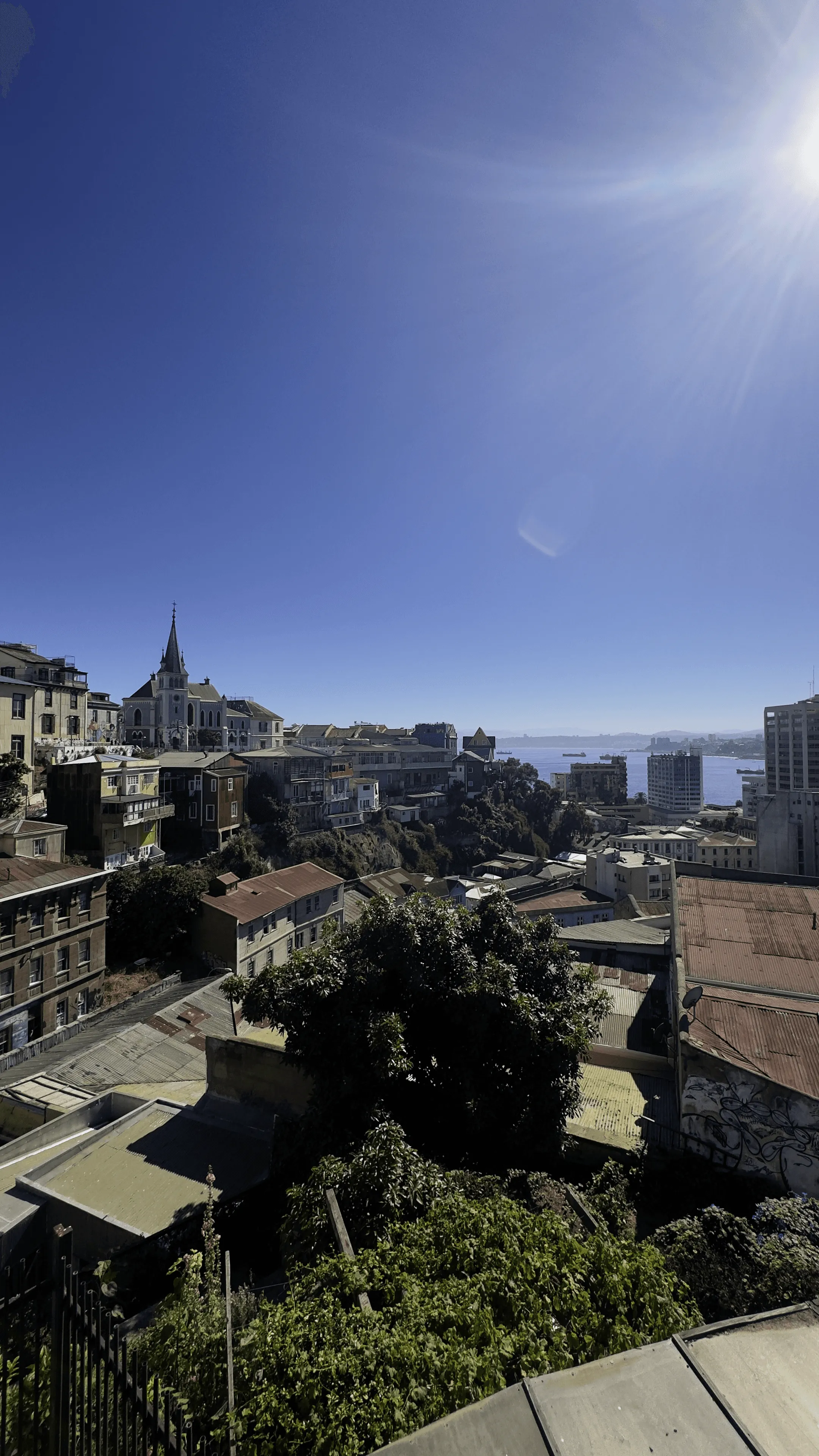
We also had another specific spot in mind: the Museo a Cielo Abierto de Valparaíso, a real open-air museum where you can check out tons of murals and graffiti all gathered in one area.
Located on one of the city's 42 hills, you'll need to climb a bit to get there, but it's nothing you can't handle. Along the way, you'll spot a cat, a dog, and then a few more stairs… Valparaiso definitely makes you work for it! Fortunately, the city is also packed with elevators and funiculars.
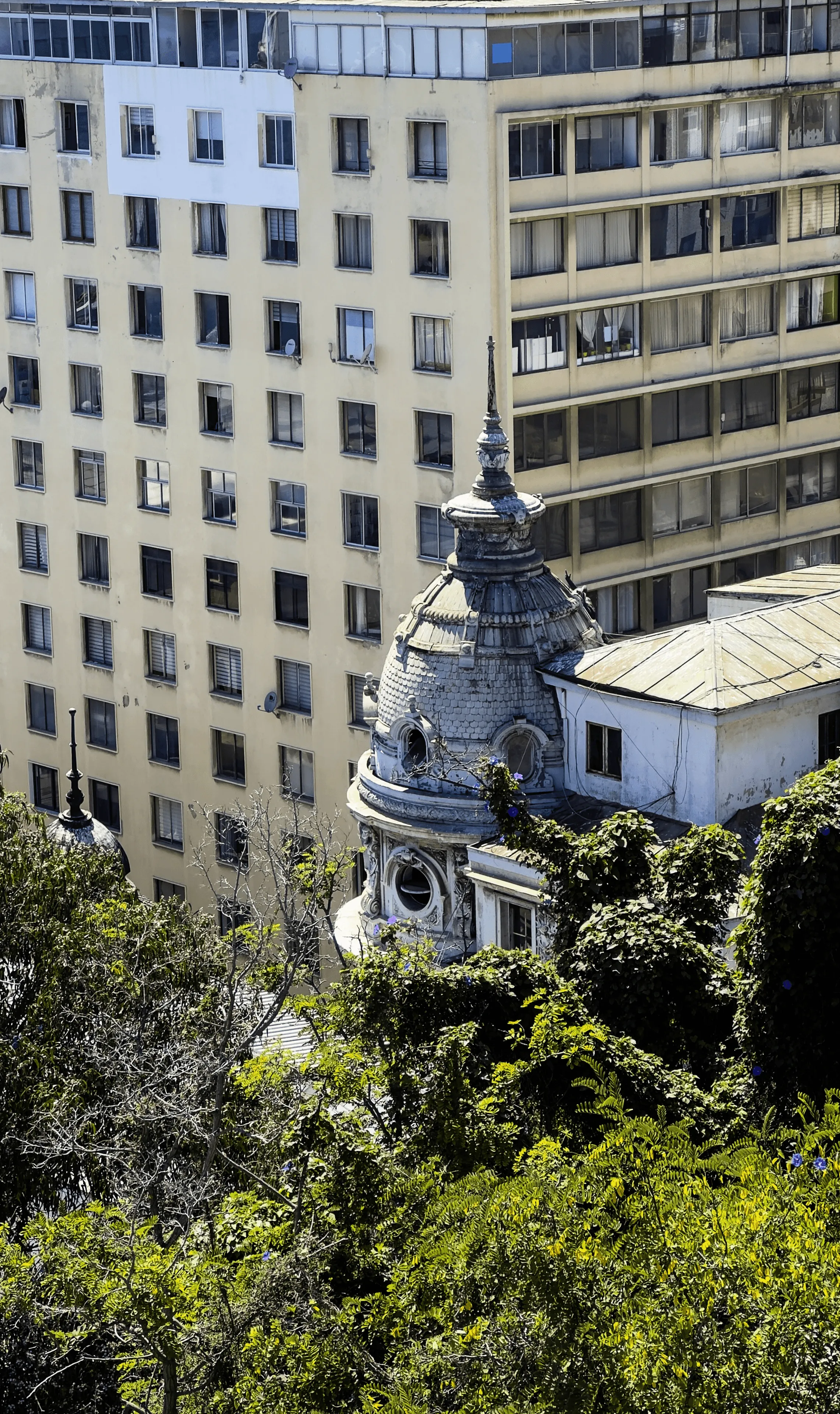
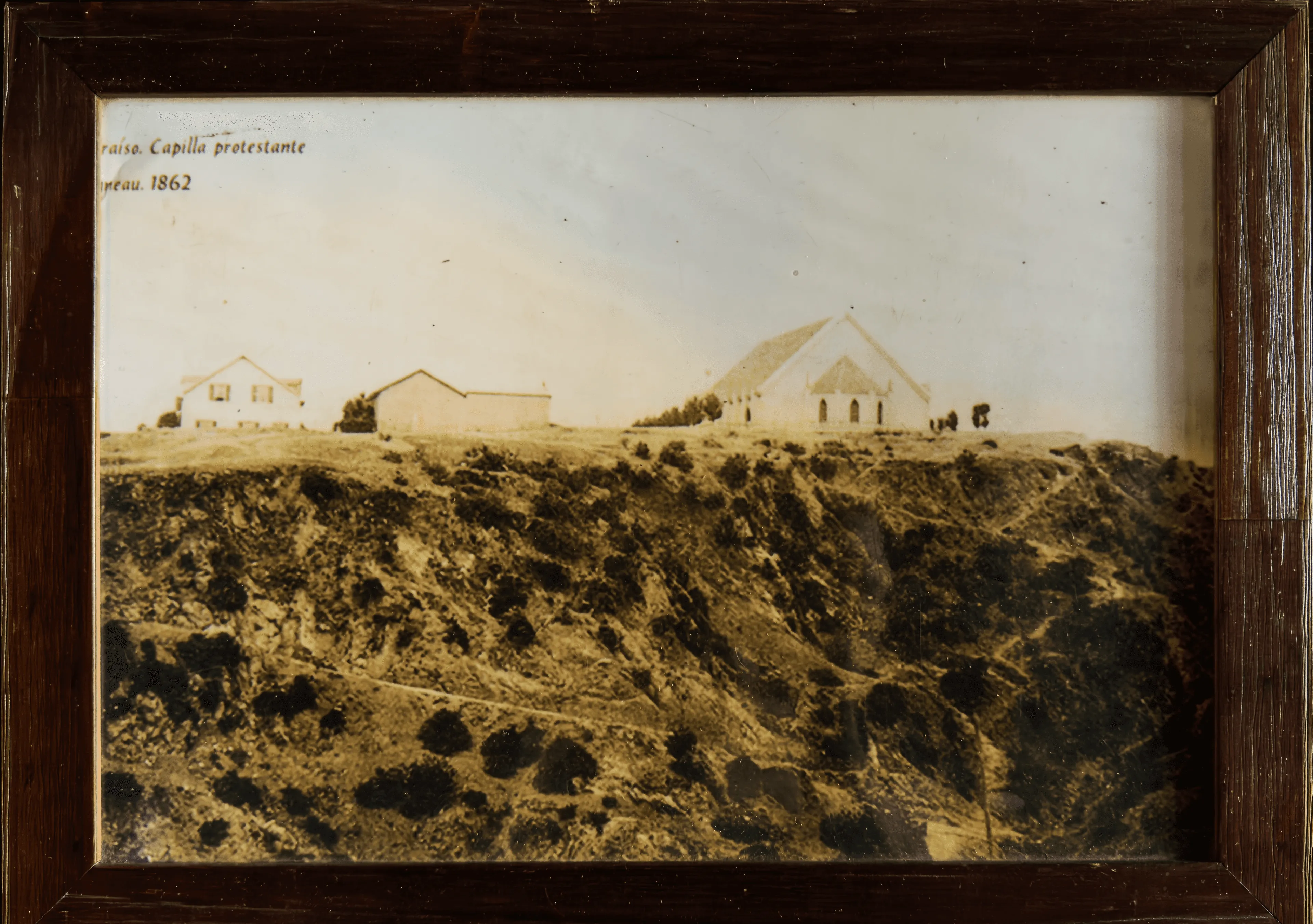
The funiculars of Valparaíso were built back in the late 19th century, a time when the city was one of South America's most bustling ports. Many European merchants—mainly British, German, and French—settled here to tap into the busy trade route between the Atlantic and Pacific, long before the Panama Canal Opening. The city grew rapidly, but its unique geography, squeezed between the ocean and steep hills, naturally divided the locals. The working-class lived in the lower districts near the port, while the wealthier classes made their homes higher up in the hills, where the air was fresher and the architecture more modern.
To make getting around easier between the different levels of the city, entrepreneurs and engineers (often of European descent) started building funiculars in 1883. At their peak, more than 30 "ascensores" quickly connected the bustling downtown commercial hubs with the peaceful residential neighborhoods up top. Today, these historic lifts are a testament to how Valparaiso adapted to both its rugged landscape and social divides.
Sunset in the Concón dunes
On the second day, we hadn't planned anything in particular, we just wanted to go watch the sunset from a sand dune in the neighboring town.
The day went by at a relaxed pace, and then in the late afternoon, we hopped on a shared bus heading towards Concón. The local buses are quite… something… they drive fast, sometimes way faster than you'd think possible for a bus. The trip actually ended up taking 15 minutes less than our app predicted.
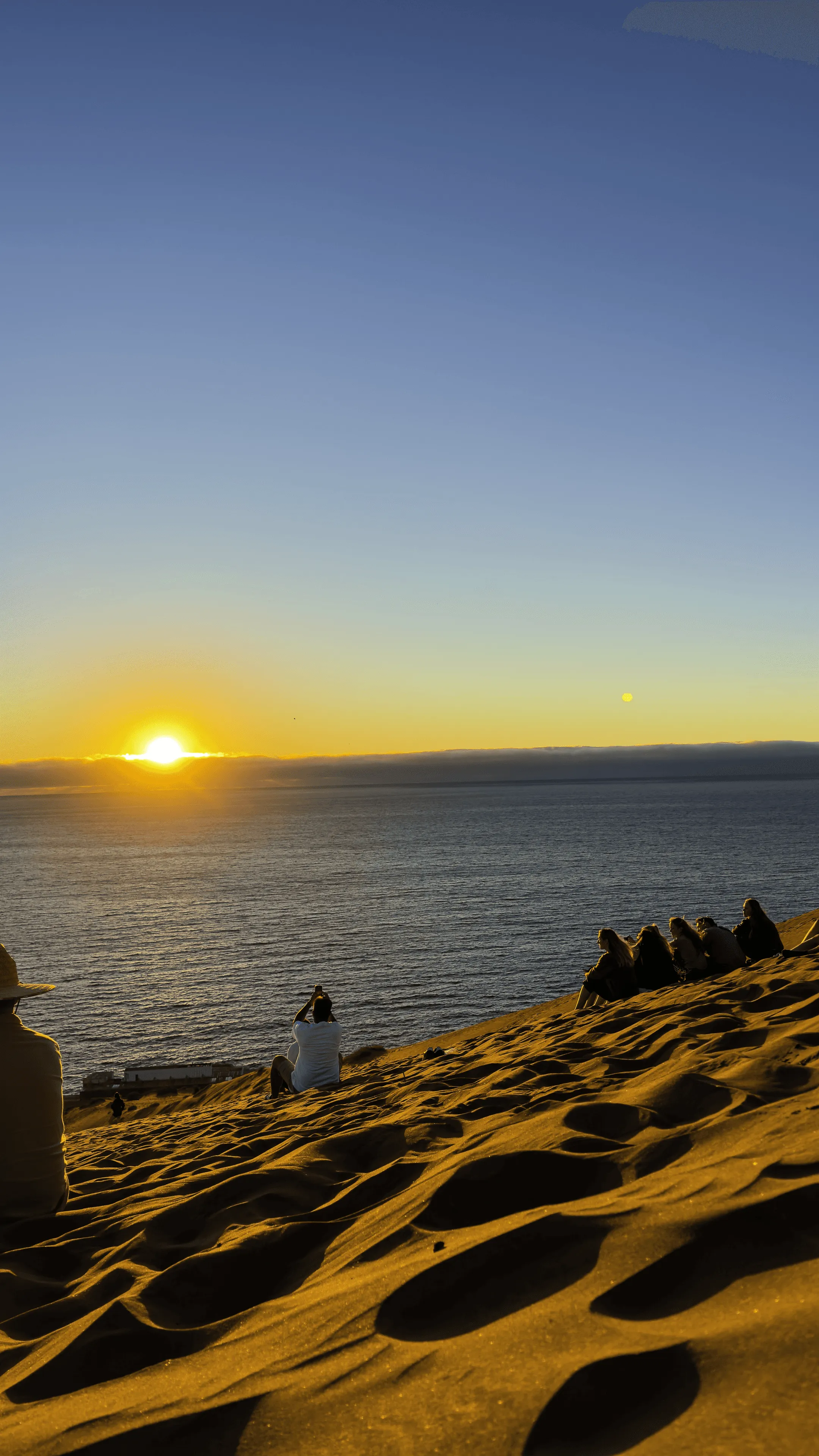
Once we arrived, we grabbed a bite to eat from the mall right across from the dune (they certainly know where to set up shop) and climbed up to find a spot in the sand. The golden light over the dunes was beautiful. The sand ripples into nearly perfect waves. The only minor catch is that as soon as someone walks past, the wind kicks up sand and sends it flying everywhere… and yes, that includes right in your face.
A brief pause in your journey
We had planned for several days in Valparaiso, which allowed us to take things at a much more relaxed pace.
After being on the move so much, it was the perfect spot to slow down a bit without stopping completely.
Get to know the city like a local with a friendly guide
For our third day, we had planned to do a free walking tour.
For two hours, a local guide took us around the city, explaining why street art is so prominent here, how the city grew, and why the architecture is so wonderfully varied.
Valparaiso has welcomed many different waves of immigrants over the years, which explains the mix of styles from one neighborhood to the next. This tour is also where we finally learned the story behind the funiculars.
By the end of the walk, you really start to get a feel for the city.
After the tour, we headed up to a former prison that's been transformed into a cultural center: the Parque Cultural de Valparaíso.
It's a really surprising place. It's modern, open, and filled with spaces for community activities, a theater, and a large lawn where locals come to soak up the sun.
Since it was a beautifully sunny day, we just kicked back on the grass to enjoy the moment before heading back to the hostel.
The next day, we headed out to visit the neighboring city Viña del Mar, which has a much more modern feel and infrastructure.
There, you'll find a natural history museum, great cultural spots, and some beautiful old castles.
You can really feel the contrast between these three neighboring spots, despite being so close geographically, they are worlds apart economically. Concón is peaceful and upscale, Viña del Mar is also well-to-do but much more bustling, while Valparaíso has a more modest, gritty feel. Yes, it's less modern, but it's incredibly cosmopolitan and absolutely bursting with history and soul—a must-see on any trip to Chili.
We were warned to avoid certain areas, but overall, the city felt vibrant, safe enough with common sense, and genuinely fascinating to explore.
An unexpected evening in Valparaíso
One evening, we met up with some French travelers we'd crossed paths with earlier in the south of Chili, along with two people staying at our hostel. We kicked off the night in a cool bar—which, funnily enough, we later found out was started by a Frenchman!—sipping on some excellent cocktails. As the night went on, our group grew, and we moved to another bar to find a bigger table.
That’s where we crossed paths with a local who had one of the most infectious laughs we’ve ever heard.
There was a small barrier separating our table from the street, and this man just popped up on the other side. His Chilean accent was incredibly thick and hard to follow, but his laughter was the only translator we needed to strike up a conversation.
We didn't catch every word, but we laughed a lot. It was one of those simple, genuine travel moments you never forget.
A lively city
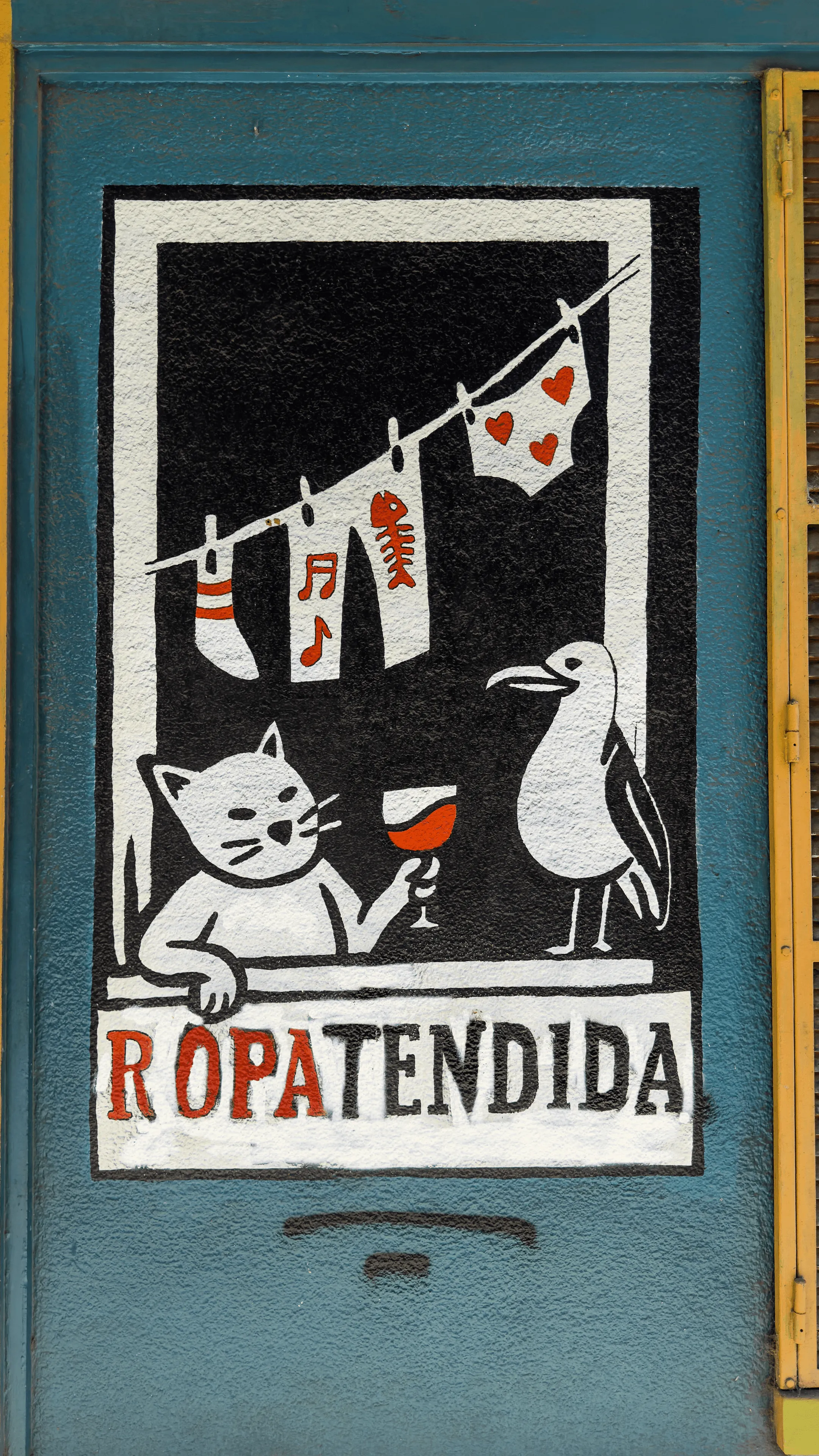
After spending almost a week in Valparaiso, we can definitely say that, yes, street art is everywhere. But it's not just that—culture in general is alive and well throughout the city. You'll find a massive mountain biking competition, several cultural centers, music schools, and museums.
The city does require a bit of vigilance, especially around the port area, but we didn't find it dangerous. It was the perfect spot to slow down, relax, and recharge before heading off to the next leg of our journey:
Now, off to Santiago!