Shrunken heads and Amazonian tribes: Pumapungo Museum in Cuenca
Discover the fascinating history of tsantsas (shrunken heads), Amazonian tribes, and Inca ruins at the Pumapungo Museum in Cuenca, Ecuador. With 10,794 ethnographic artifacts, it offers an incredible window into the Shuar worldview and ancestral rituals.
Shrunken heads and Amazonian tribes: Pumapungo Museum in Cuenca
There are museums you simply visit, and then there are those you truly experience. The musée Pumapungo in Cuenca, en Equateur, definitely belongs to the second category. Set on the site of an ancient Inca temple, this free-admission gem houses the country's largest ethnographic collection: 10 794 objets chronicling 10,000 years of human history. It takes you on a journey from the very first traces of settlement in the Amazonie équatorienne to the famous shrunken head rituals of the têtes réduites des Jivaros, without forgetting the traditional Andean festivals and the profound worldview of the tribus d'Amazonie.
Whether you are planning a voyage à Cuenca or are just curious to find out what lies behind the word "tsantsa", this guide takes you beyond the usual tourist trails.
Cuenca, Ecuador: so much more than just a pretty colonial town
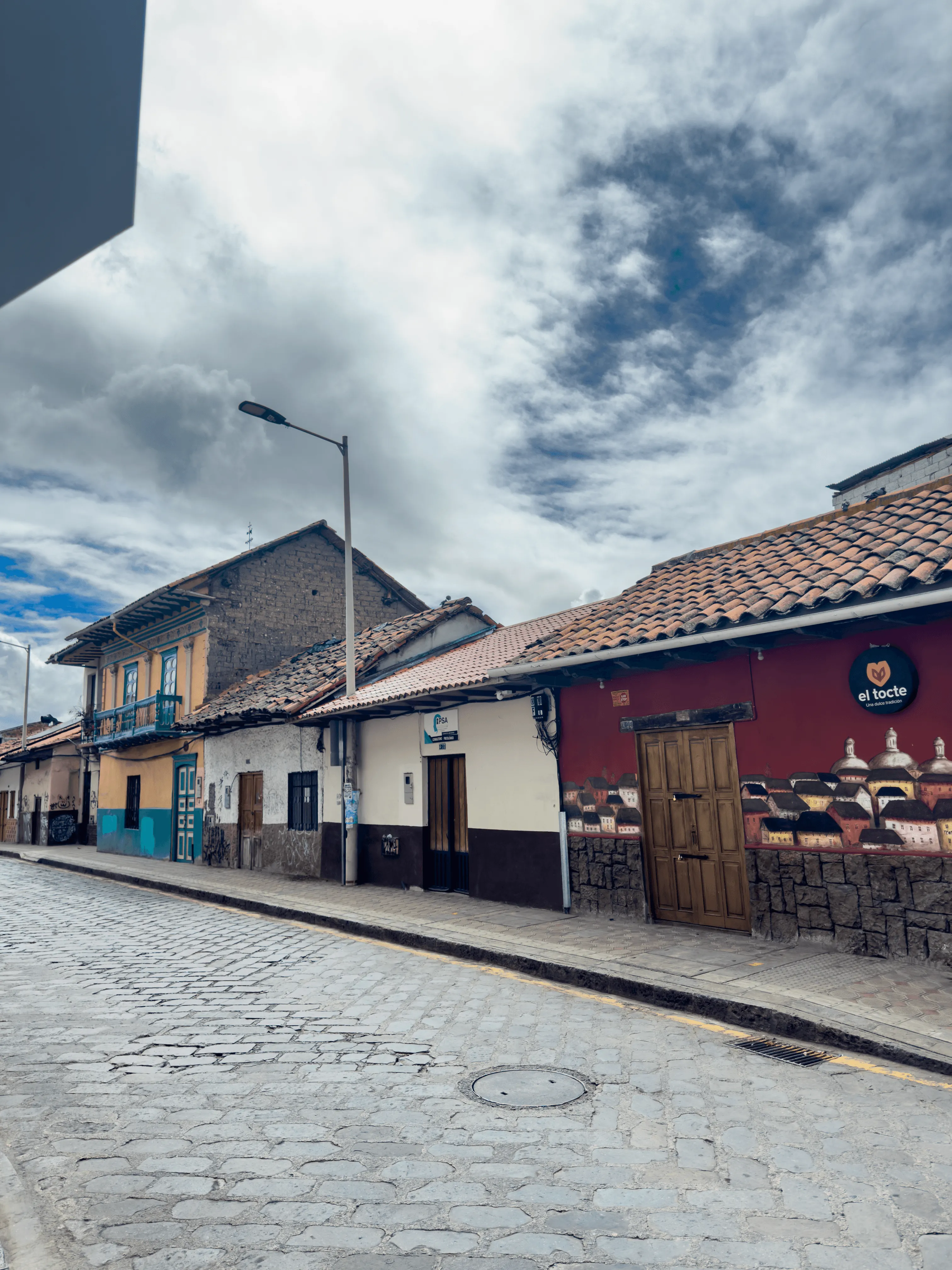
Cuenca in Ecuador is often described as a beautiful colonial city, recognized as a UNESCO World Heritage site. What most guidebooks leave out, however, is that Cuenca is a vibrant cultural crossroads, where Inca, colonial, and indigenous heritage all come together within the same city streets.
In 2020, the Belgium-based World Crafts Council (WCC) officially named Cuenca a "World Craft City" in recognition of ten distinct artisan crafts: goldsmithing and jewelry, pottery and ceramics, paja toquilla weaving and basketry, wrought ironwork, embroidery, leatherworking, tinsmithing, woodworking, marble and stone carving, and pyrotechnics. These ten traditional skills, passed down from generation to generation, turn the city into an open-air museum before you even step foot through the gates of Pumapungo.
If you already know the story behind the Panama hat—which is actually Ecuadorian—you'll know that the paja toquilla weaving technique mastered in Cuenca has stood the test of time. It's this rich artisan heritage that makes a visit to the Pumapungo Museum so incredibly meaningful!
ECUADOR
Quito
Cuenca
The Pumapungo Museum: 10,794 artifacts to help you truly understand Ecuador
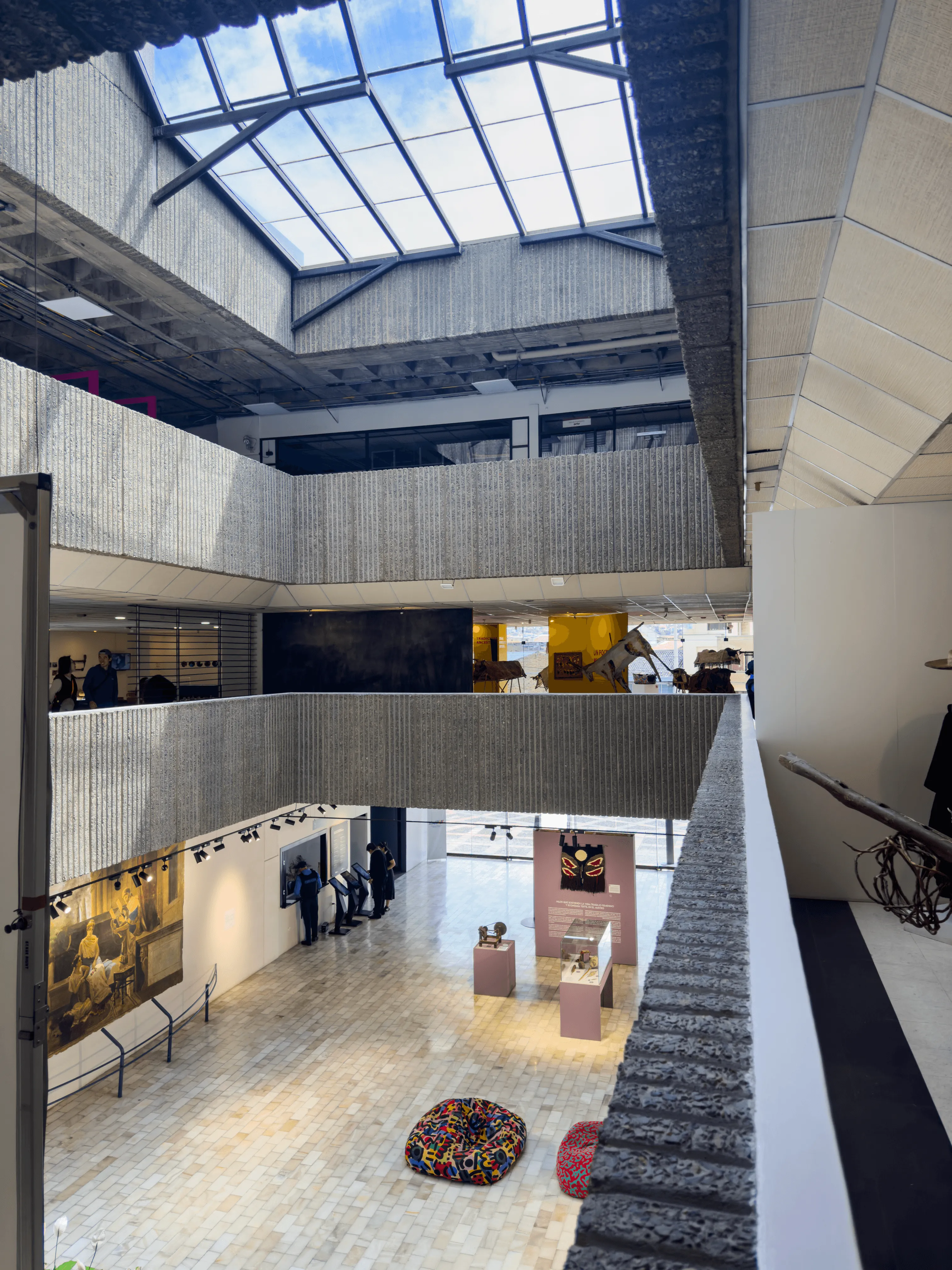
The museum was built in 1975 within the Banco Central del Ecuador. In 2000, the space was redesigned under the name Sala Nacional de Etnografía (SaNeT), with a clear goal in mind: to create a welcoming, inclusive space for open dialogue and reflection on how social memory, biodiversity, and the country's diverse communities all connect.
This shift in perspective is no small thing. In 1998, the Ecuadorian Constitution granted collective rights to indigenous and Afro-Ecuadorian peoples. Ten years later, Ecuador officially declared itself an intercultural and plurinational state, laying the groundwork for celebrating its rich ethnographic heritage. The museum is a direct reflection of this political evolution: it doesn't just display items, it explores the deep connections between the 14 nationalities, 18 peoples, and the various groups that make up the country today.
The collection, built entirely from donations, features 10,794 ethnographic items carefully preserved by category: textiles, ceramics, fishing tools, ritual objects, and ceremonial weapons. It is the largest ethnographic archive in the country, and best of all, admission is completely free.
This ethnographic heritage is a priceless window into humanity's cultural diversity. It goes beyond physical objects created and used by different communities to include intangible traditions, beliefs, and wisdom passed down through generations.
Exploring this heritage is key to understanding how people have interacted with their environment, shaped their societies, transformed their lands, and expressed their identity over time.
Admission: Free · Monday to Friday, 8:00 AM - 5:30 PM; Saturday and Sunday, 10:00 AM - 4:00 PM 📍 Google Maps
The tribes of the Ecuadorian Amazon: 10,000 years of human history
The Ecuadorian Amazon is home to some of the oldest traces of human settlement in the Amazon basin. According to research by Sánchez (1998) featured in the museum, the earliest human footprints in the region date back nearly 10,000 years. The Mayo-Chinchipe culture (dating back around 5,500 years) shows there was early contact between Andean and Amazonian civilizations, long before the Incas arrived.

Today, this region of forests and rivers is home to peoples like the Shuar, Achuar, Kichwa, Siona, Secoya, and Huaorani. Each community shares a deep bond with nature, which provides both their physical livelihood and spiritual meaning. Their ancestral knowledge of medicinal plants and their social structure form the core of their culture, all beautifully documented in the museum.
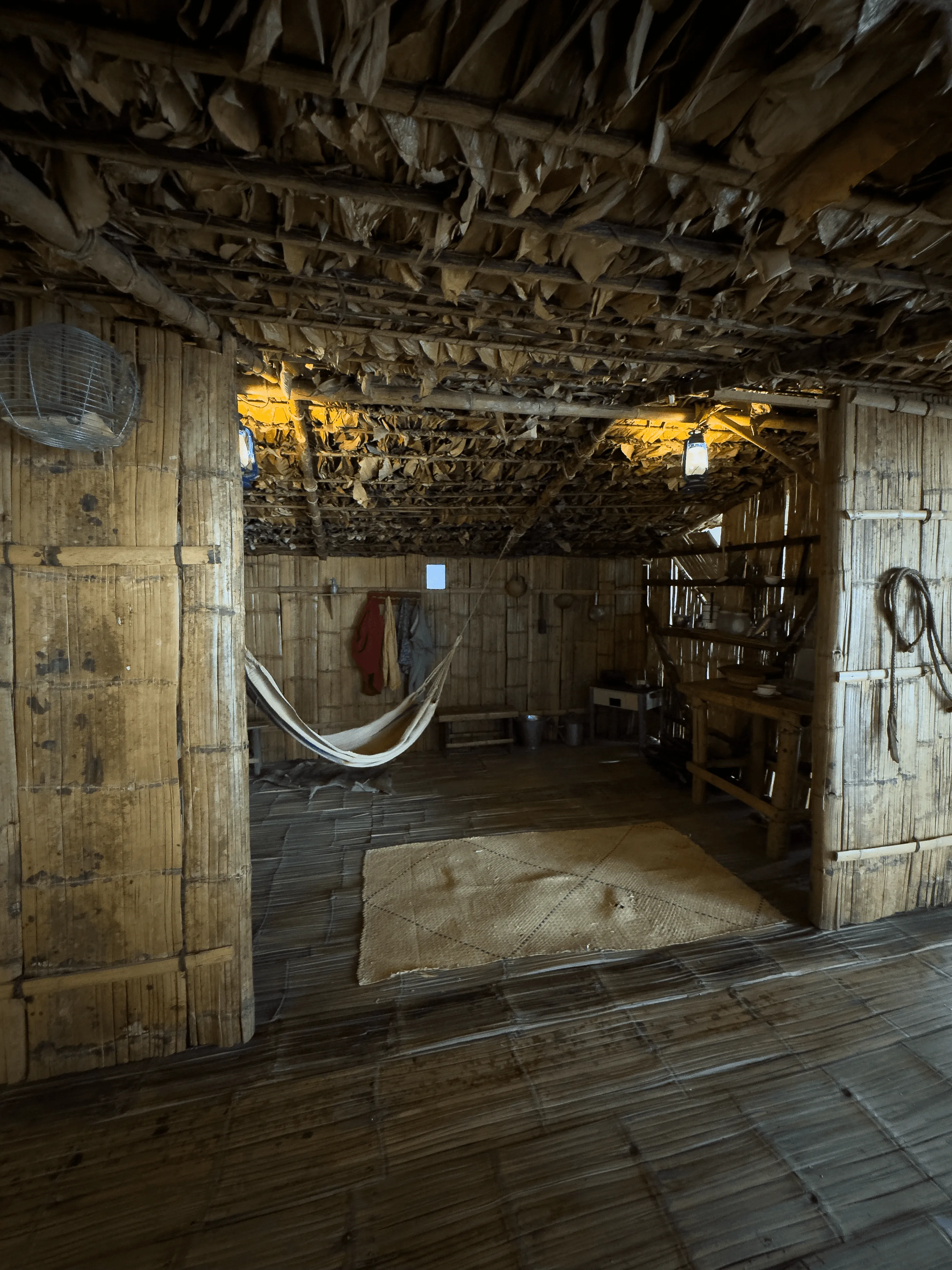
The Achuar, for instance, build their traditional homes (known as jea) from chonta palm, a local wood that stands up to the tough Amazonian climate. Their oval shape is no accident: it represents a symbolic connection to their cosmovision. When it comes to getting around, the rivers are still the main highways, navigated in pangas—canoes carved from a single tree trunk, perfectly designed for the region's long, narrow, and rushing waters.
Some groups, like the Tagaeri and Taromenane, have chosen voluntary isolation to protect their way of life from outside pressures. Sadly, it is on Huaorani territory that the museum documents the highest concentration of oil companies in the country—a harsh reality you won't find in travel brochures. This ongoing tension between cultural preservation and resource extraction is a key theme throughout the exhibition.
On the wildlife front, the Ecuadorian Amazon is home to the jaguar, tapir, delfín rosado (pink river dolphin), piranhas, caimans, various primate species, and the world's greatest diversity of amphibians. Yet, this rich ecosystem faces real-world threats: deforestation, mining, and oil pollution.
If you are interested in immersing yourself in local cultures, the Ecuadorian Amazon offers community-run tourism experiences managed by the indigenous peoples themselves—far removed from your typical cookie-cutter safaris.
Shrunken heads of the Jivaro: the tsantsa ritual explained
This is probably the most striking section of the museum. The shrunken heads of the Jivaros, or tsantsas, are not mere curiosities or trophies of war. It is a complex, highly codified ritual, deeply connected to the Shuar worldview.
To understand the tsantsa, you first have to understand the Emésak. In the Shuar worldview, the Emésak is a vengeful supernatural being. It appears in various forms, usually harmful, but always linked to Arútam, the creator. Its key function: to avenge the unjust death of humans. It is this inner strength that the warrior acquires when he delivers justice. The tsantsa is not an act of senseless cruelty: it is an act of cosmic justice.
The museum details every step of the process. During intertribal raids, warriors were led by the tsánkram—a man who had claimed several ritual lives, guided himself by a Wea (a representative of Arútam). After beheading the enemy, the group fled for fear of retaliation. Once they reached a safe place near a river (to maintain contact with Arútam), the process of shrinking the head to the size of a fist would begin. Sacred songs, known as ujaj, accompanied every single movement.
An important detail the museum highlights: the Shuar only made tsantsas from adult Achuar warriors. Never from children, women, or apach (whites or mestizos), who were considered outsiders in this warrior hierarchy. This was a ritual between equals, not random violence.
Next came the Numpenk, or blood ritual, which lasted for ten days. The tsánkram maintained a strict fast under the watchful eye of the Wea, who blew tobacco juice into his nostrils, painted his knees with rooster blood, and offered him chicha and floripondio to help him dream of his protective spirit. During this rite, the lips of the shrunken head were sewn together with splints of chonta wood to keep the Emésak from escaping and causing harm.
Then came the Amiamu, the ceremony of renewal. A pig was symbolically sacrificed, the tsantsa was rejuvenated by replacing the chonta splints with cotton threads, and it was washed, combed, and adorned. Near the Chumpi (the ritual axis), the Wea gave the tsánkram guayusa tea and the sacred food, the ikmak: pork and yuca. It was all done according to the teachings of Ayumpúm, preparing the warrior to step into a new life.
The Uyundh—the path this ritual journey represents—is the road to honor, prestige, and material wealth. It is the sign of a long life and, above all, of future victories over the enemy.
Learning about these rituals and this history really stays with you. This museum left a deep impression on us, and we heartily recommend that you take the time to visit.
TRAVEL RESPONSIBLY: CONNECTING WITH ECUADOR'S RICH CULTURES
Ecuador is one of the few countries where the Constitution actually recognizes the rights of nature (Pachamama). You'll feel this deep respect on the ground through travel opportunities that put you in direct contact with local communities.
To get to Cuenca from Quito, the overnight bus (around 10 hours, 12-15 dollars) is the go-to option for local travelers. From Baños, it’s a 6-to-7-hour bus ride through breathtaking Andean landscapes—a journey that's just as rewarding as the destination itself.
For accommodation in Cuenca, we highly recommend 1840 hostel, a quiet and very well-equipped hostel right in the historic center ($7 a night). The local markets, especially the Mercado 10 de Agosto, offer complete almuerzos (soup + main dish + juice) for $2-3.
For travelers interested in the Amazon, community tourism programs are organized directly by the Kichwa and Shuar communities, without any intermediaries. It's a wonderful opportunity to experience firsthand what the museum displays behind its glass cases. If volunteering in South America sounds like you, some communities welcome travelers for cultural exchange stays.
A quick word of advice: never buy authentic ritual objects (like tsantsas or ceremonial feathers) from street vendors. Aside from the ethical aspect, exporting indigenous cultural goods is illegal in Ecuador. The Pumapungo Museum is the right place to admire and understand these artifacts, not to purchase them.
To help plan your Ecuadorian adventure, don't forget to check out our travel gear checklist and our handy tips on travel do's and don'ts. And if you’re still deciding on your next stop, our other Ecuador travel guides might just convince you that this country deserves a spot on your itinerary.
Finally, for those planning to head on to Peru, our articles on the Cusco walking tour and Ollantaytambo, the living Inca town of the Sacred Valley, make the perfect follow-up to your Pumapungo visit, offering another fascinating look into the Inca legacy.
The Shuar Cosmovision: When Nature Speaks to the Spirits
"There was a time when all living things were human, but through their good or bad behavior, Arútam transformed them into different animals and plants. This is why we consider them our brothers and sisters." This quote, displayed in the museum, perfectly sums up the Shuar's relationship with the natural world.
The Shuar worldview revolves around several spirits or deities, each connected to a specific realm of the living world. The museum introduces them one by one, offering a spiritual mapping you won't find in any travel guidebook:
Arútam is the creator, master of life and death. His symbol is water. He dwells in the waterfalls, which are considered sacred.
Nunkui is the goddess of the earth and gardens. Shakáim is the creator of the forest. Uwí renews the vital cycle of all living things. Etsa created land animals. Tsunki is the creator of aquatic animals and the lord of health. Ayumpúm, a manifestation of Arútam, blesses women with fertility, and in the myth of the tsantsa, is the one who laid down the steps for its creation.
There is also the Nekás wakán (the true soul), a passive spirit born with every human being. The Shuar perceive this physically as blood: to bleed is to lose one's soul. This belief explains, in part, why blood holds such a major place in the rituals described above.
The use of hallucinogens is deeply woven into Shuar culture. Through them, the Shuar connect with Arútam, who reveals to them in dreams the value and purpose of their lives. Right from birth, a newborn is given a hallucinogen to help them step into "real life." The museum shares the words of Rosario Putsum Tsere: "Because I have taken these hallucinogenic drinks since I was very young, I feel so strong. I have seen my future and the future of my daughters. Everything I saw with the Maikina (floripondio) is now coming to pass."
There are different kinds of hallucinogens: some for shamans (the seekers of Arútam), some for ordinary people, and even some for hunting dogs. The power of the shamans lies in their ability to see spirits in the form of arrows (tséntasak) and to connect with the real world. They are known as "sorcerers" if they cause illness and death, and "healers" if they ward off bad spells.
The Shuar Oral Tradition: The Power of Words
"Without myth, we can neither understand nor explain much of Shuar life." This is the museum's key message to introduce the Aújmátsamu, the rich tapestry of mythological knowledge that encompasses the entire Shuar oral tradition. This tradition is divided into four distinct registers, which the museum illustrates with examples:
The Anent are chanted prayers, full of wisdom, that connect the Shuar with the divine world. These are poems passed down from generation to generation. The museum shares one, connected to death: "The one who has passed away must not appear in dreams. They must be forgotten by their loved ones straight away. Neither dreams nor belongings should keep their memory alive, so that life and joy may reign in the family."
The Nampet are poems of a different style, written to express deep feelings. The Chichamat are morning sermons given by a mother or father to the entire family. They passed down the essential knowledge needed for survival, brought to life with examples from their own experiences or those of their ancestors. Think of it as a daily form of oral education, long before school ever existed.
This rich oral tradition brings to mind other cultures you can discover while traveling through Southeast Asia, where wisdom passed down by elders plays just as vital a role.
From the Andes to the coast: Montubios, Warankas, and traditional festivals
The Pumapungo Museum is about much more than just the Amazon. It showcases the incredible diversity of Ecuador, stretching from the Pacific coast all the way to the Andean peaks.
On the coast, you'll learn about the Cholo Pescador, the traditional fishermen who live along the shores and rivers. The men wear white and sport the iconic chapeau de paja toquilla (Panama hat). Local cuisine beautifully reflects this maritime identity: fresh fish ceviche cured in lime juice, and encebollado (a hearty tuna or bonito soup served with yuca and pickled onions), which is the legendary local cure for a "chuchaqui" (the Ecuadorian word for a hangover). You can find these comforting dishes in Cuenca's markets and try them yourself for under 3 dollars.
The Montubio, the mestizo people of the coastal interior (their name comes from “monte,” meaning hill), live close to the land, working in agriculture to grow coffee, sugarcane, bananas, and rice. Their ceramic and paja toquilla crafts are made using age-old techniques—a heritage proudly recognized at the national level.
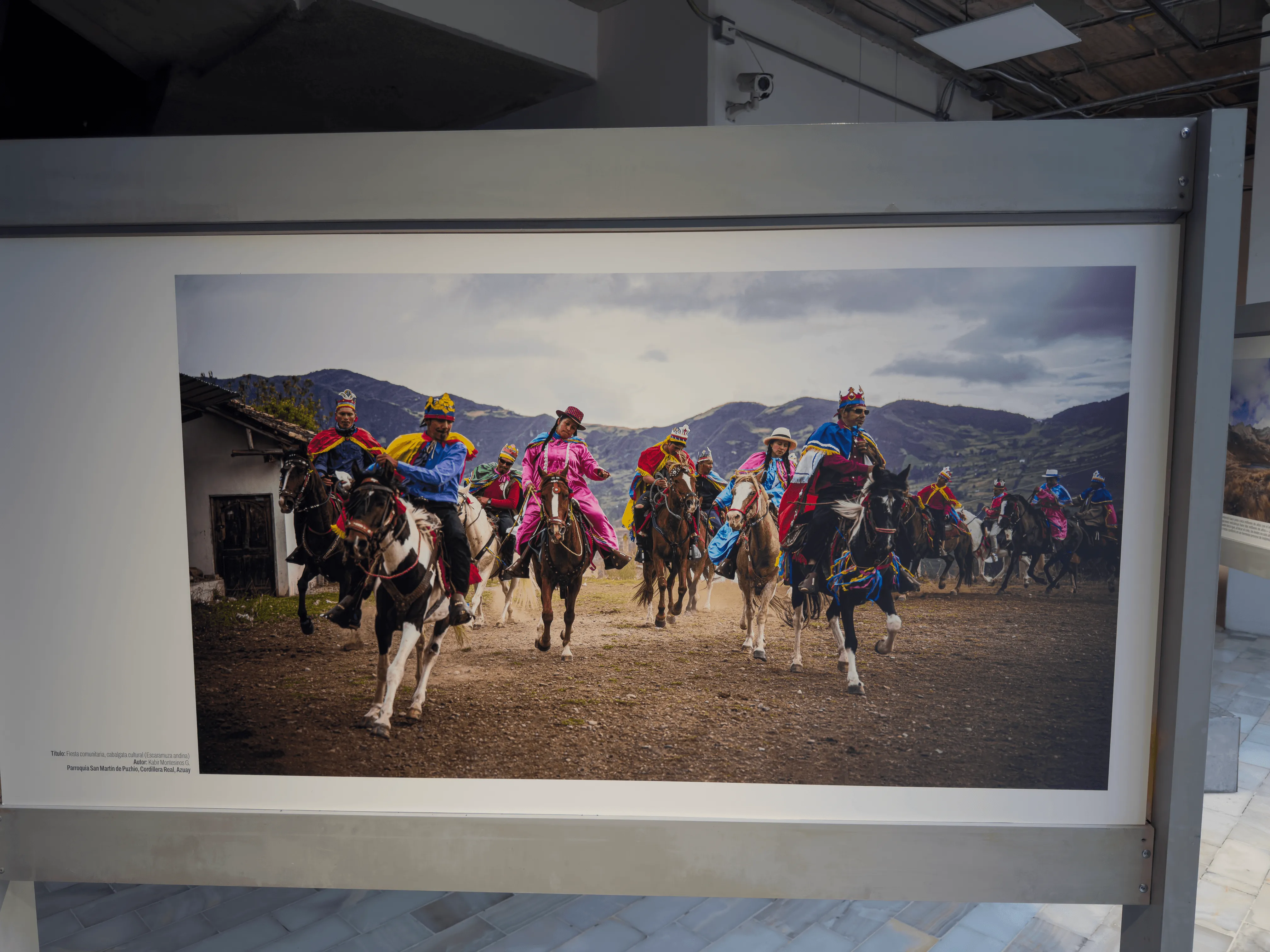
Up in the Sierra, the Waranka make up 40% of the population in the Bolívar province. Their famous Carnaval de Guaranda is known both at home and abroad. A mythical figure representing abundance, Taita Carnaval, descends from the hills on Carnaval Sunday. His counterpart is Yarka, who symbolizes poverty and hunger. During the festivities, there’s plenty of eating, drinking, dancing, and singing, as everyone throws corn flour and water until Ash Wednesday.
The museum also features a space dedicated to the Danzantes de Corpus Christi, who beautifully embody Ecuador's rich cultural blend: they thank Pachamama (Mother Earth) with jingling anklets, pay homage to Taita Inti (Father Sun) with their elaborate headdresses, and honor the Christian God introduced by the conquistadors through masses, blessings, and prayers. It’s three distinct worldviews joined together in a single dance.
Another essential character in local festivals is the Vaca Loca (Crazy Cow). Built from bamboo (carrizo), wood, or metal, covered in hide or paper, and loaded with sparklers, whistles, and flares, it is said to represent the Spanish colonizers. Performing this role is a proud tradition, often passed down through families from one generation to the next.
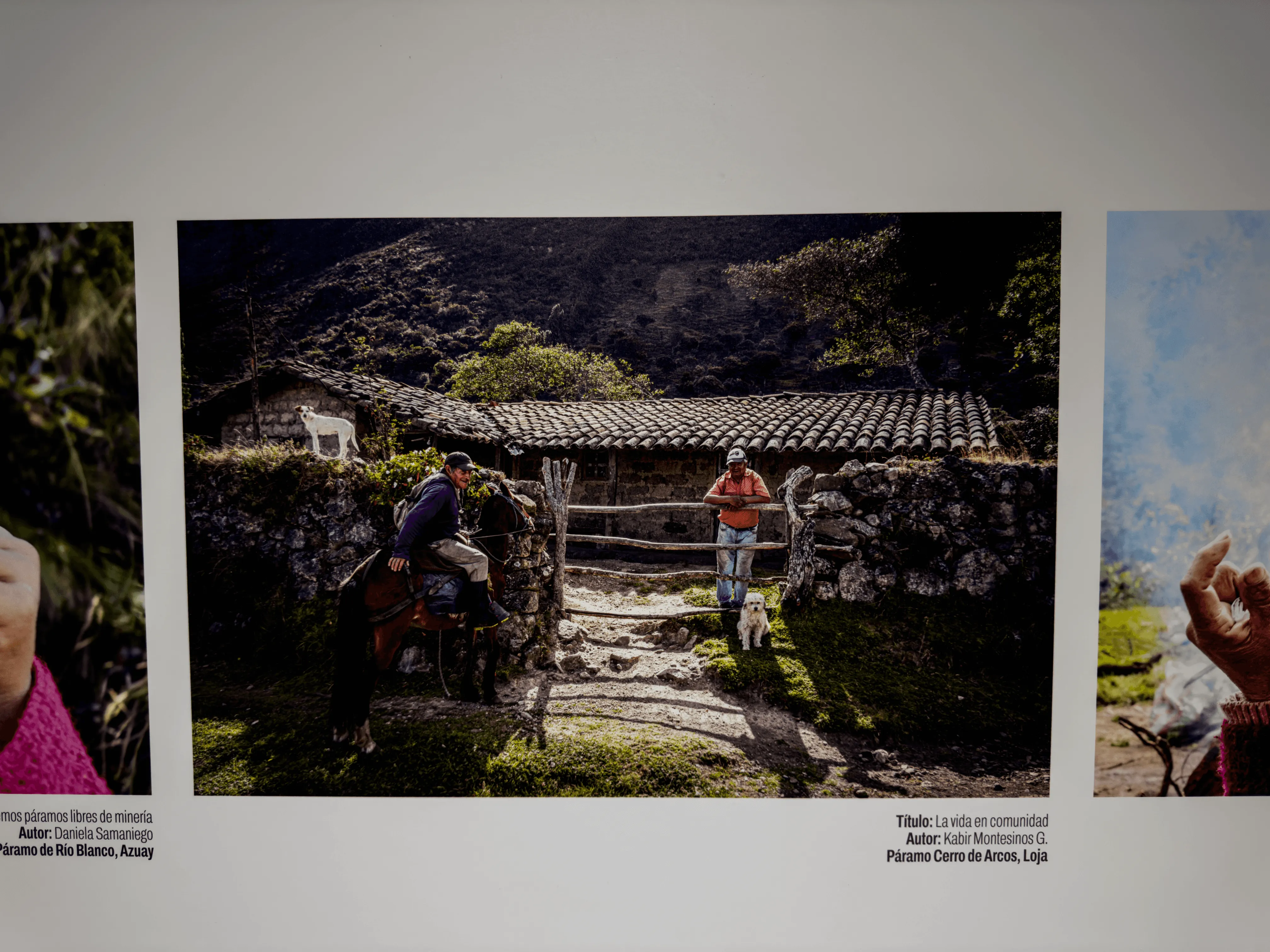
As a backdrop to all of this, the Ecuadorian Andes shelter some of the world's most incredible ecosystems: the highland páramos and cloud forests are home to about 3,000 plant species (including many unique local ones like the chuquiragua), and over 700 vertebrate species, including the Andean condor, the puma, and the spectacled bear. Parque Nacional Cajas, just 30 minutes outside of Cuenca, protects these fragile environments and makes for the perfect day trip to pair with your museum visit.
To help you plan this day trip and other adventures around Cuenca, check out our travel app recommendations to download offline maps and any translation tools you might need.
The Qurikancha of Pumapungo: Inca ruins in the heart of Cuenca
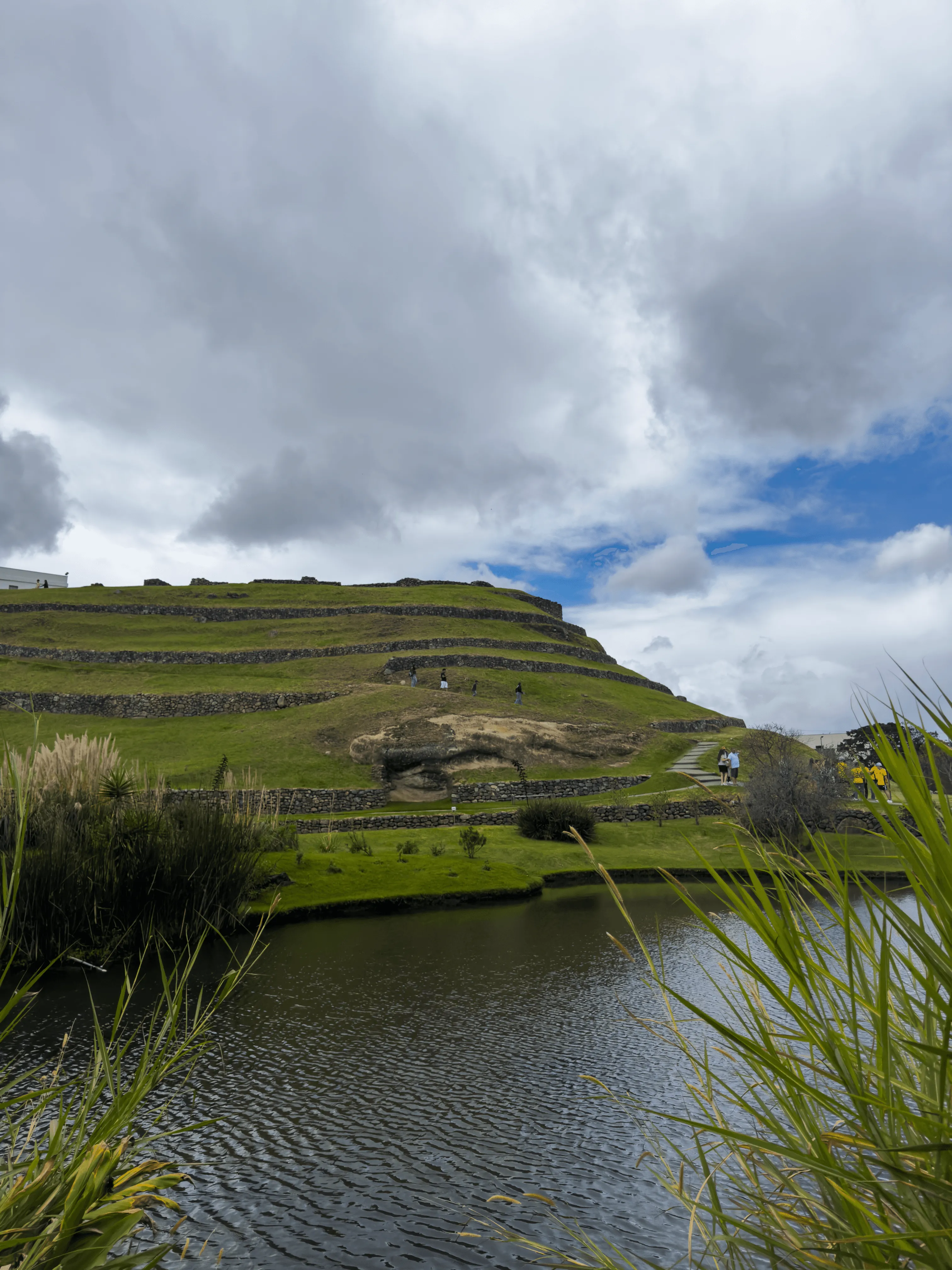
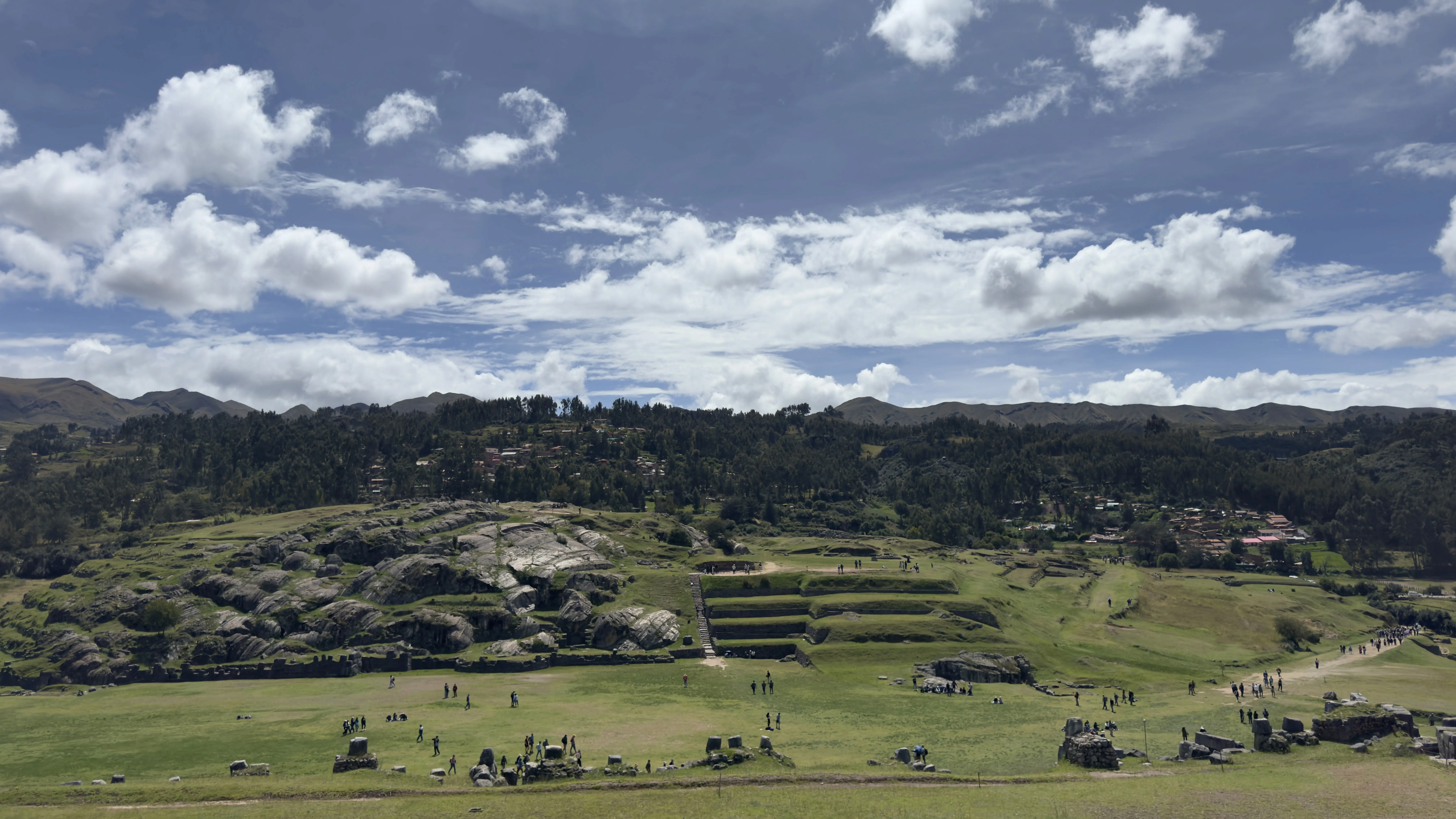
Behind the building lie the Inca ruins of Pumapungo, a fascinating archaeological site.
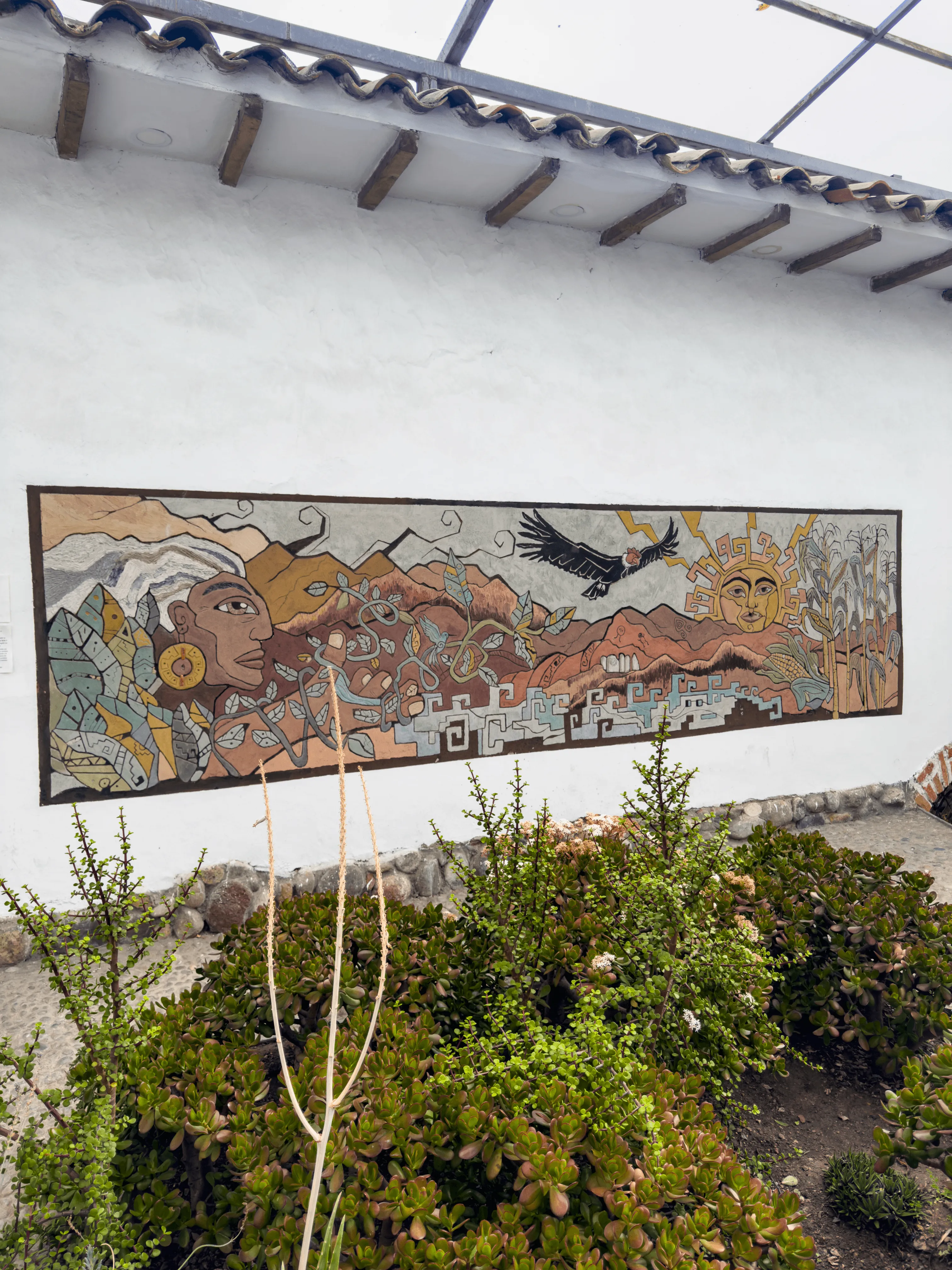
The Qurikancha (or Major Temple) was the central religious, political, and administrative hub of the Tawantinsuyu in this region. Dedicated to the Sun (Inti) and other celestial bodies central to the Andean cosmovision, it served a dual purpose: a ceremonial center and an astronomical observatory. Priests, who held deep ritual knowledge and managed the agricultural calendar, regulated ceremonies, festivities, and productive activities from here, aligning the spiritual, social, and economic life of the local people in harmony with the cycles of nature.
The site is positioned as a strategic vantage point for observing the sacred geography. The museum does great job explaining the visual and ritual connections with the apus (sacred mountains) of the Tomebamba Valley: Cojitambo, Pacha Mama, Guagual Shumi, Turi, and Boquerón, five protective entities of the Andean cosmovision. You won't find these names in standard travel guides, yet they are what truly give meaning to the site.
The history of contact between the Incas and the Shuar, documented in the museum, is well worth a detour. In the early 16th century, Wayna Qapaq led his army to conquer the "Jíbaros" (the name given to the Shuar). He met with fierce resistance that forced him to retreat, pursued by the Shuar. He even tried to appease their anger by offering gifts.
The Spaniards took over in 1549 with an expedition that missed its mark. In 1552, they founded two towns in Shuar territory: Logroño and Sevilla de Oro. The trade alliance and gold mining lasted until 1599, when a Shuar uprising—sparked by an excessive increase in demanded taxes—led to the complete disappearance of both towns. Neither the Incas nor the Spaniards ever managed to subdue the Shuar. It's a piece of history that the museum documents with a certain sense of pride.
If you love Inca ruins, the Pumapungo site offers a different perspective from what you see in Peru: here, the Inca Empire met its limits, pushed back by local people who defended their land and identity.