Apus, Pachamama and Syncretism: Understanding Andean Spirituality
Deified mountains, high-altitude sacrifices, and Christian festivals packed with Inca roots: here is your guide to Andean cosmology, all shared with us by our local guide on the Salkantay trek.
Apus, Pachamama and Syncretism: Understanding Andean Spirituality
Apus, Pachamama, and Syncretism: Understanding Andean Spirituality in Peru
We were climbing towards the Salkantay Pass at 4,630 meters when our guide started talking about the mountains as living beings. This isn't just a metaphor. It's an entire cosmology that still shines through today in every festival, every gesture, and every Andean community.
The Apus: mountains as living entities
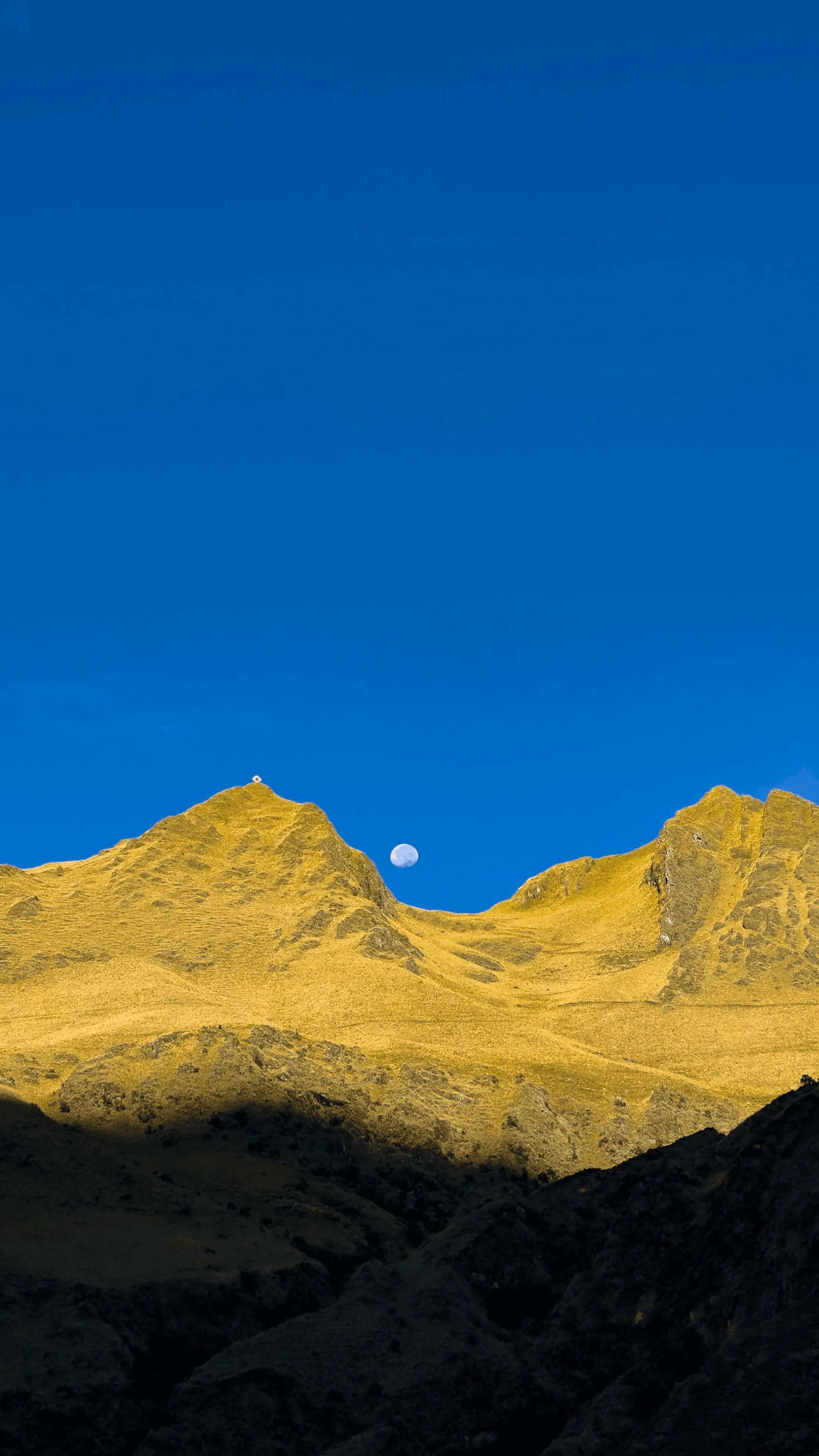
In Andean cosmology, mountains are not just part of the scenery. They are the Apus—living entities capable of thinking, communicating with one another, and shaping the human world.
For the communities that still practice the polytheistic Andean religion in the remote provinces of Peru, every force or manifestation of nature is a deity: the rivers, the moon, the rainbow, the trees, and the lightning. And among all these deities, the Apus hold a central place.
The most important of them are the highest peaks in each region. This isn't just an arbitrary choice, but for a very practical reason: they feed the rivers, providing irrigation and drinking water to communities living between 3,500 and 4,000 meters above sea level in an environment with only two seasons—rainy and dry.
Without the glaciers, there is no water; without water, no agriculture; and without agriculture, no life. This simple truth is what sparked a thousand-year-old reverence for these snow-capped peaks.
La Pachamama: Mother Earth
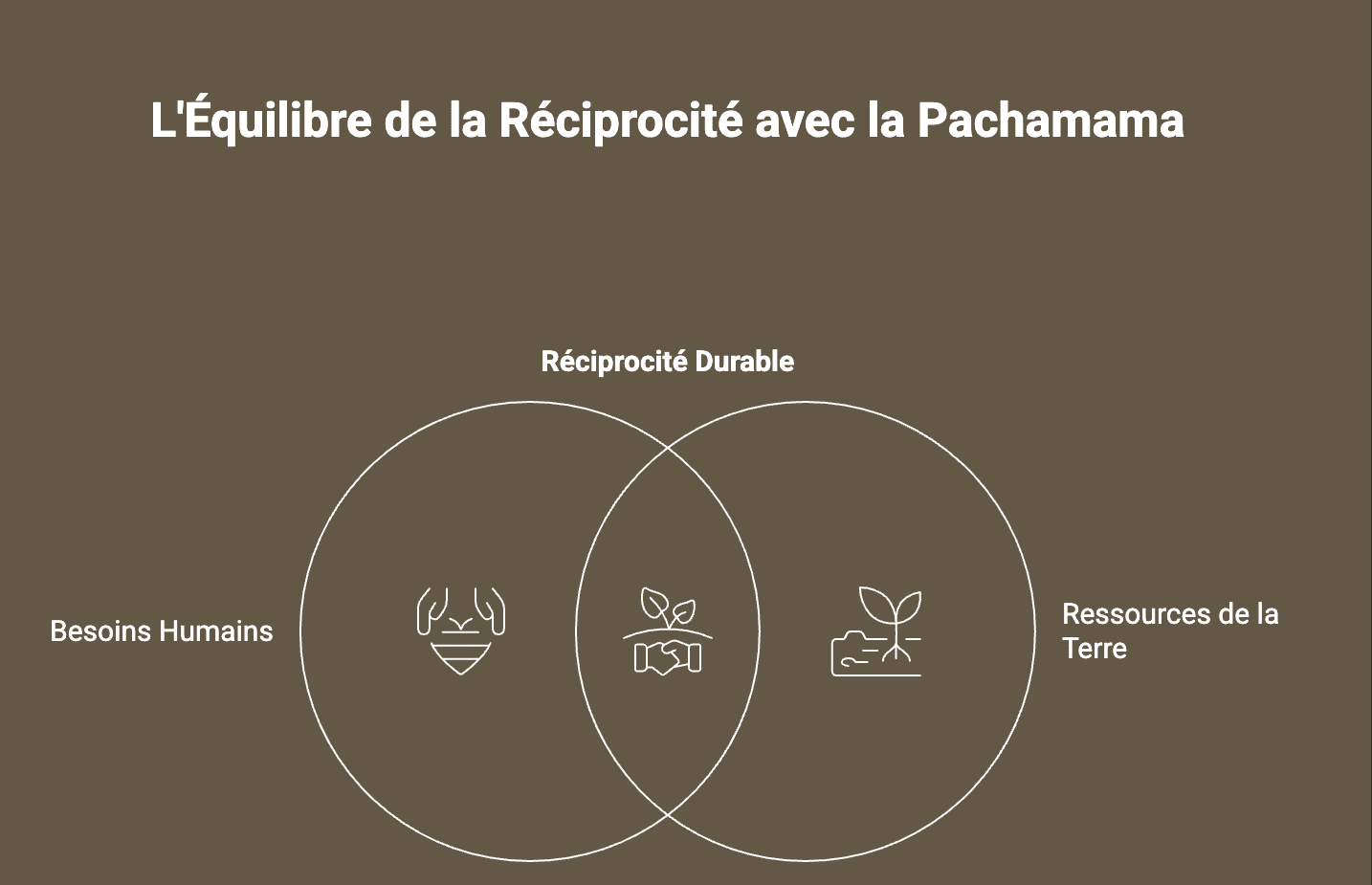
At the heart of Andean cosmology is the Pachamama, literally "Mother Earth." She is the source of everything, providing the food, water, and conditions essential for human life.
The relationship with Pachamama isn't just about devotion—it's a constant system of give and take. You only take what you need from the earth. A community of 400 people produces enough for 400 people, nothing more, nothing less. Overconsumption isn't just seen as a moral misstep, but as an act that demands a response from the earth itself.
And when this balance is broken, Pachamama's response comes in the form of natural disasters: earthquakes, floods, landslides, and mudslides. Since Peru sits right on the Pacific Ring of Fire where several tectonic plates collide, these events are both frequent and devastating. For Andean communities, these are never just random occurrences—they are a clear sign of an unpaid debt to the earth.
Reciprocity — a golden rule of the road
Reciprocity, or "Ayni" in Quechua, is the core principle that shapes the economic, social, and spiritual life of Andean communities. This concept applies at every level: between individuals, between communities, and between humanity and nature.
In Inca practice, this principle was institutionalized across the entire empire. In exchange for integrating into the imperial system, conquered peoples received a fair share of agricultural goods from all over the empire. Thanks to the diverse ecosystems managed by the Incas—ranging from the jungle to high mountain peaks—a variety of foods could be constantly distributed across the region via a massive 60,000 km road network.
The concept of Andean reciprocity has been studied by anthropologists like John Murra, who developed the theory of "vertical control": the way Andean societies managed multiple ecological zones at the same time to secure their livelihood.
High-altitude human sacrifices
These children were raised in the "Houses of the Chosen" (Acllahuasi), well-fed, cared for, and prepared spiritually. For the sacrifice, they made their way in a procession up to the peaks of the continent's highest volcanoes or glaciers. Once there, they were gently put to sleep with chicha (corn beer) and coca leaves before being left at high altitude.
Today, the accelerated melting of the glaciers is revealing these mummies at altitudes between 5,500 and 6,600 meters. The most famous is "La Juanita", found in an incredibly well-preserved state in 1995 on Peru's Ampato Volcano at 6,380 meters. You can see her today at the Santuarios Andinos Museum in Arequipa.
Travel Tip: The Santuarios Andinos Museum in Arequipa is one of the most moving museums in Peru. The mummy of La Juanita is on display there under carefully controlled conditions. It's a must-see if you're passing through Arequipa.
Andean syncretism: when two beliefs beautifully coexist
Today, 100% of the Peruvian population officially identifies as Christian. And yet, if you experience the major festivals around Cusco, you won't see a single practice that actually belongs to biblical Christianity.
This phenomenon is called Andean syncretism: a one-of-a-kind blend between the Christian religion and polytheistic Andean traditions, made possible by a clever compromise on the part of the Spanish evangelizers.
To make converting the indigenous populations easier, the Spaniards agreed to link Andean festivals with the Christian calendar, renaming local deities after saints or timing key ceremonies to coincide with Christian holidays. The result, four centuries later, is a truly unique spiritual practice: 50% Christianity, 50% ancient traditions, melted together so deeply that they are practically inseparable.
The great festivals still celebrated today
Inti Raymi, the Festival of the Sun, takes place every year during the southern winter solstice (June 21) in Cusco. Although the Spanish adapted it to fit the Christian calendar, the processions, natural-fiber costumes, and surrounding rituals are anything but biblical. They faithfully recreate the Inca ceremonies where the emperors' mummies were brought out of their temples to be paraded through the main plazas.
Señor de Qoyllur Riti, recognized as UNESCO Intangible Cultural Heritage since 1999, is the largest pilgrimage in the Americas. It takes place every year between June 11 and 14, at the foot of a sacred glacier 5,000 meters above sea level in the Cusco region. Between 30,000 and 40,000 people from indigenous communities take part, carrying massive crosses weighing hundreds of kilos all the way up to plant them in the glacier.
Handy resources
The Señor de Qoyllur Riti is one of the most photographed events in South America. Photographers travel from all over the world to document this festival. If you happen to be in Peru in June, it's an experience you simply can't miss.