Colonial Quito: baroque art, golden churches, and the spirit of independence
From the Spanish conquest in 1534 to the Battle of Pichincha in 1822, discover Quito's colonial history at the City Museum. You'll explore stunning Baroque churches, the unique Escuela Quiteña art movement, the historic textile workshops known as obrajes, and the city's historic first cry for independence.
Colonial Quito: baroque art, golden churches, and the spirit of independence
When you stroll through the centre historique de Quito, the ochre facades, the bell towers piercing the Andean sky, and the flower-filled courtyards tell three centuries of a rich history. Three centuries during which a Spanish colonial city was built on the ashes of an Inca city, produced one of the continent's most original artistic movements, and eventually rose up against the crown that founded it.
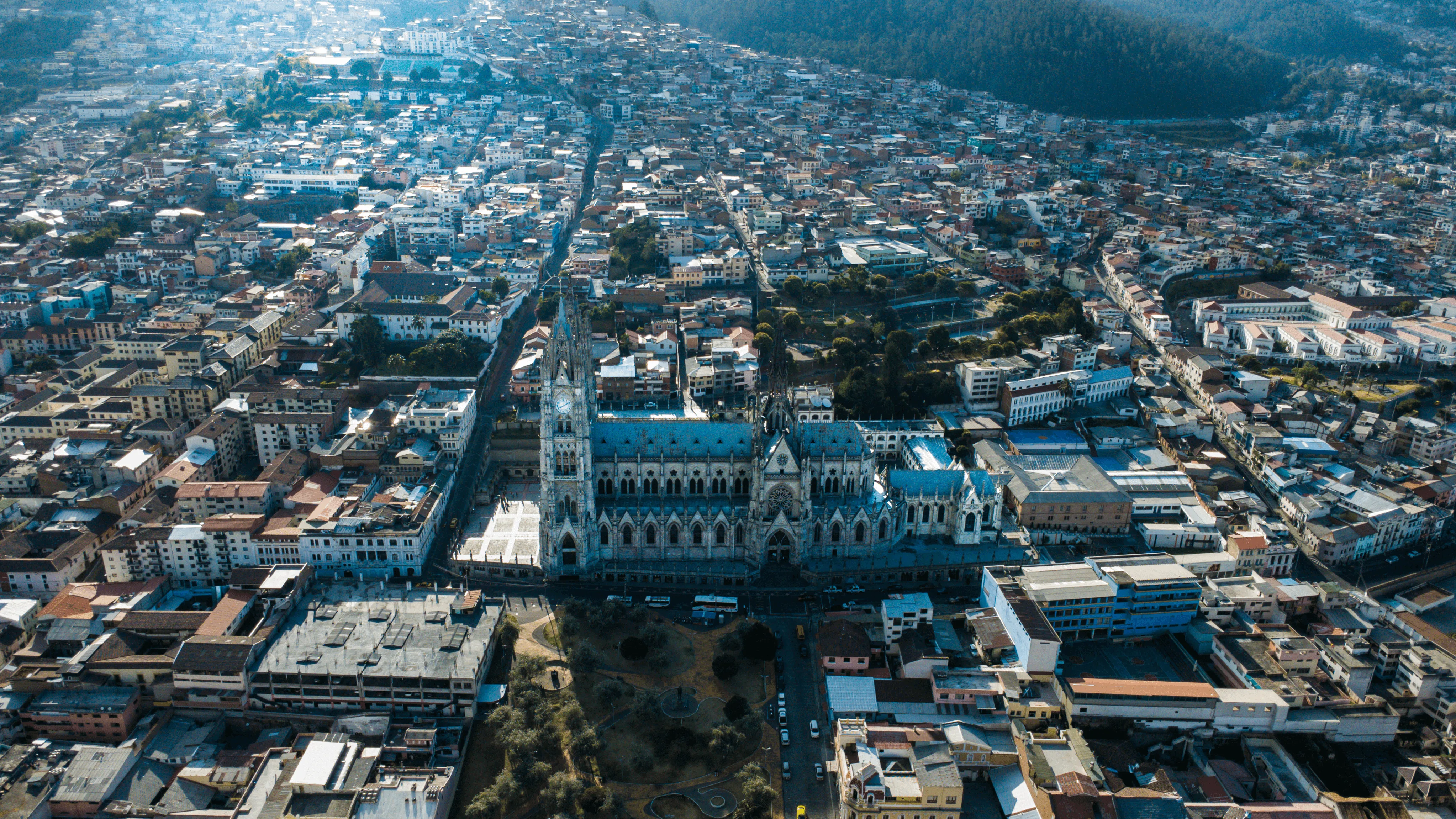
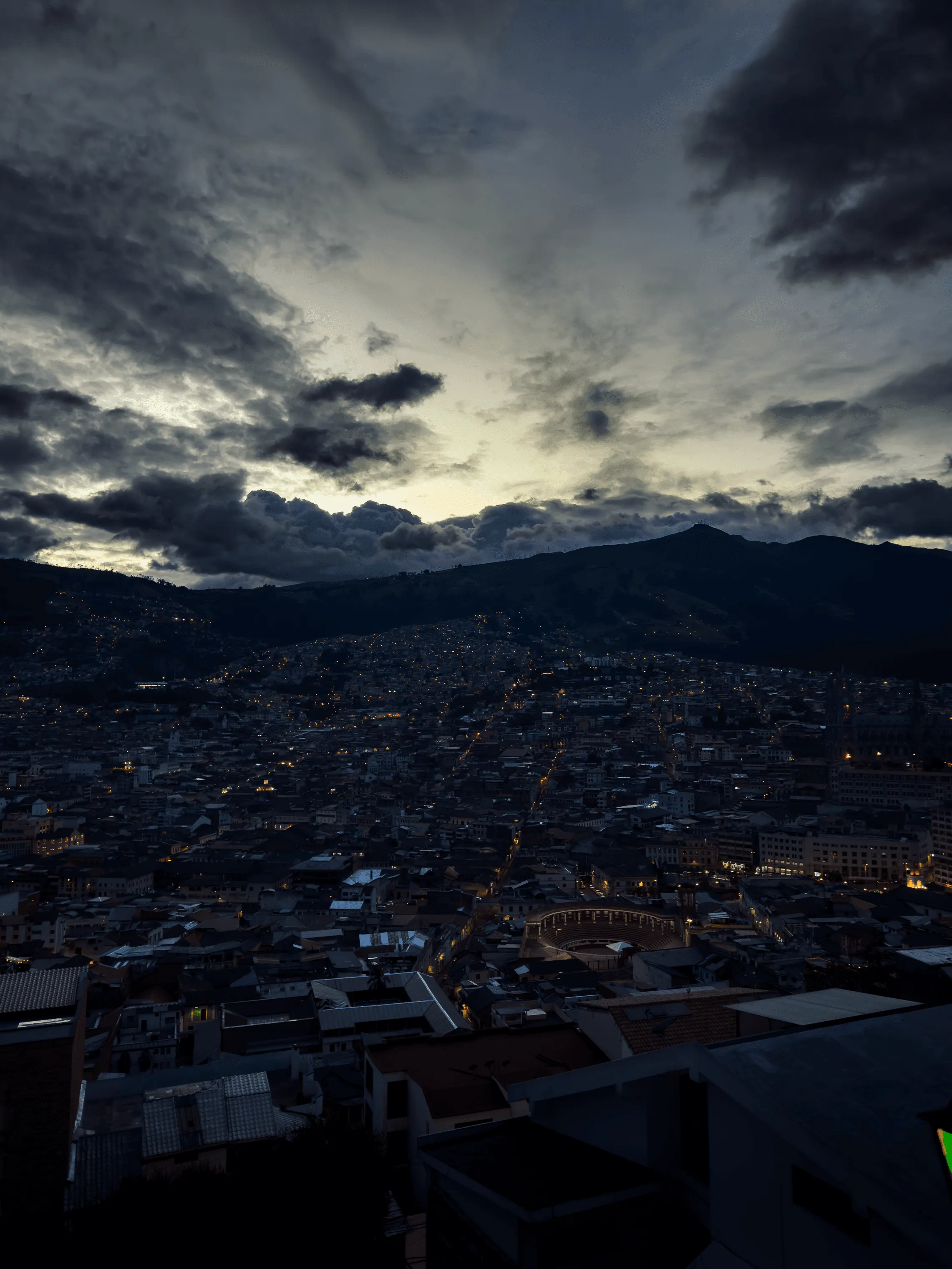
If you've read our article on the 10 000 ans de civilisations pré-colombiennes à Quito, you know that this city's story doesn't begin with the Spanish. But it is indeed the colonial period (1534-1822) that gave Quito the face we know today: that of a patrimoine mondial de l'UNESCO, listed since 1978, with 86 églises packed into a 3.2 km² historic center, widely considered the best-preserved in Latin America.
Why such a concentration of architectural wealth in a city so far from Madrid? Because Quito held a strategic position in the Spanish empire, between the silver mines of Potosí to the south and the ports of Cartagena to the north. And because the evangelization of the indigenous populations sparked a massive artistic output, driven by mestizo artisans whose talent transcended European models.
The Conquistadors in Quito: Rebuilding on Inca Ashes
On December 6, 1534, the conquistador Sebastián de Benalcázar officially founded San Francisco de Quito with 204 Spanish settlers. But the city where he laid the first stone was nothing but a field of ruins. Just a few weeks earlier, the Inca general Rumiñahui had burned Quito to the ground rather than surrender it to the Spanish, taking with him Atahualpa's treasure, estimated at six tons of gold.
The conquistadors rebuilt the city using the grid plan typical of Spanish colonial towns: a central square (the current Plaza Grande) around which civil, religious, and military power was organized. The four main religious orders (Franciscans, Dominicans, Augustinians, and Mercedarians) established themselves in the four corners of the city, often on top of ancient indigenous ceremonial sites. The Convent of San Francisco, with construction starting in 1535, was built right on the Inca road network, the Qhapaq Ñan. This layering is classic Spanish colonization: it doesn't just destroy the architecture, it replaces it with new symbols.
ECUADOR
Quito
In 1563, the Spanish crown established the Real Audiencia de Quito, a territorial and judicial jurisdiction stretching from Pasto (now Colombia) in the north to Piura (now Peru) in the south. Quito was no longer just a garrison town: it became a major administrative, religious, and commercial hub in the Spanish Empire. For travelers exploring the historic center on a free walking tour, the traces of this colonial setup are everywhere: in the layout of the streets, the hierarchy of the buildings around the plaza, and the coats of arms carved above the doorways.
Colonial society was structured around a rigid hierarchy. At the top, the peninsulares (Spaniards born in Spain) held the keys to power. Below them, the criollos (descendants of Spaniards born in the Americas) owned the land and businesses but were excluded from the highest offices. Next came the mestizos (people of mixed heritage), indigenous populations, and African slaves. This social divide, which fueled growing tension between criollos and peninsulares, would eventually become one of the main drivers for independence three centuries later.
The Escuela Quiteña: where Baroque art meets indigenous craftsmanship
While the conquistadors imposed the Catholic religion by force, it was the indigenous and mestizo artisans who gave it its visual form in Ecuador. The Escuela Quiteña (the Quito School) refers to the artistic movement that flourished in the Real Audiencia de Quito between the 16th and 18th centuries. From painting and sculpture to gilding and woodwork, this art was almost exclusively religious, created as part of the effort to evangelize local populations.
What makes the Escuela Quiteña so unique is its mestizo nature. Local artisans, trained by European religious orders, did not just copy Spanish and Italian Baroque models. Instead, they wove in their own elements: faces with Andean features, local flora carved into the gilded wood, and colors inspired by traditional indigenous textiles. The result is a hybrid style you won't find anywhere else in the world.

Among the most famous artists, Miguel de Santiago (around 1620-1706) takes center stage. The grandson of indigenous people and an orphan adopted by a Spaniard, he became the official painter for the Augustinians and created cycles of paintings for the temple of San Francisco and the church of Guápulo. His canvases go far beyond simply copying European Baroque: in some of his works, he experimented with rapid brushstrokes and dabs of color that, centuries later, would be associated with Impressionism.
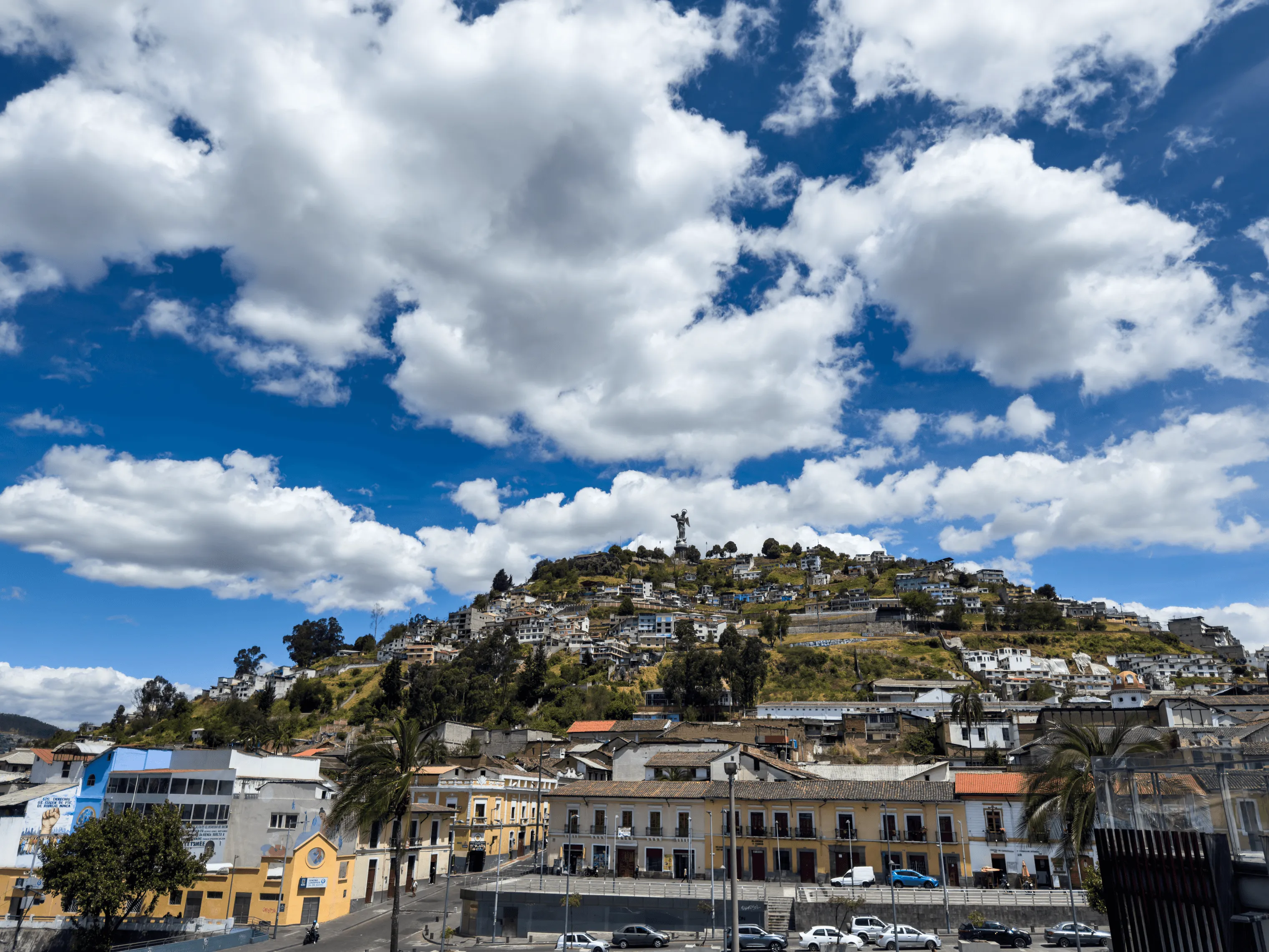
Another major artist, Bernardo de Legarda (18th century), is famous for his sculpture of the Virgin of Quito (Virgen alada), a winged representation of the Immaculate Conception that inspired the monumental 30-meter statue standing at the top of El Panecillo. It is the only winged representation of the Virgin in Catholic art. You can see these works in the churches of the historic center and at the City Museum, which dedicates several rooms to colonial art.
A third name well worth mentioning is Manuel Chili, known as Caspicara (around 1723-1796), an indigenous sculptor whose polychrome wood carvings achieve a level of anatomical and emotional detail that rivals the best European workshops of the era. His series on the Passion of Christ, preserved in the Quito Cathedral, remains one of the finest achievements of South American colonial sculpture. These three artists show us a paradox of colonization: a system that oppressed indigenous populations also, unintentionally, created the conditions for their talent to shine and transform the religious art imported from Europe.
Obrajes and cofradías: the colonial economy and society
Behind the splendor of the golden churches, the economic reality of colonial Quito relied on a well-oiled system of exploitation. The obrajes (textile workshops) were the backbone of the economy of the Real Audiencia de Quito from the 16th to the 18th century. Lacking gold or silver mines in the region (unlike Potosí in Bolivia), the Spaniards turned their attention to the fertile lands of the Andean highlands and an abundant resource: indigenous labor.
The obrajes were manufactories where local populations, subjected to the encomienda system (a form of serfdom), wove wool and cotton fabrics under harsh conditions: endless workdays, poor ventilation, and physical punishment. By the early 17th century, Quito had become the leading textile center in South America. The textiles produced here were shipped to Lima and Potosí in exchange for silver from the Bolivian mines. This trade loop generated immense wealth for Quito and funded the construction of its churches.
At the same time, the cofradías (religious brotherhoods) provided indigenous and mestizo communities with a space for expression within colonial society. Organized around devotion to a patron saint, they allowed members to take part in religious life while keeping alive certain cultural practices inherited from pre-Columbian times. These cofradías also funded artistic production, commissioning paintings, sculptures, and altarpieces for the chapels they cared for. It was through these commissions that local indigenous and mestizo artisans were able to develop their craft, helping shape the rich legacy of the Escuela Quiteña.
The City Museum dedicates an entire section to this economic and social system, featuring reconstructions of daily life in the obrajes and explanations of the colonial hierarchy. If you are interested in how these structures still echo in contemporary Ecuador, the indigenous Andean markets are a living testament to the continuity between colonial craftsmanship and modern-day skills. Similarly, the Panama hat, with a history reaching back to colonial times, shows how a local craft evolved into a world-famous export.
Quito, a UNESCO World Heritage site: 86 churches in one historic center
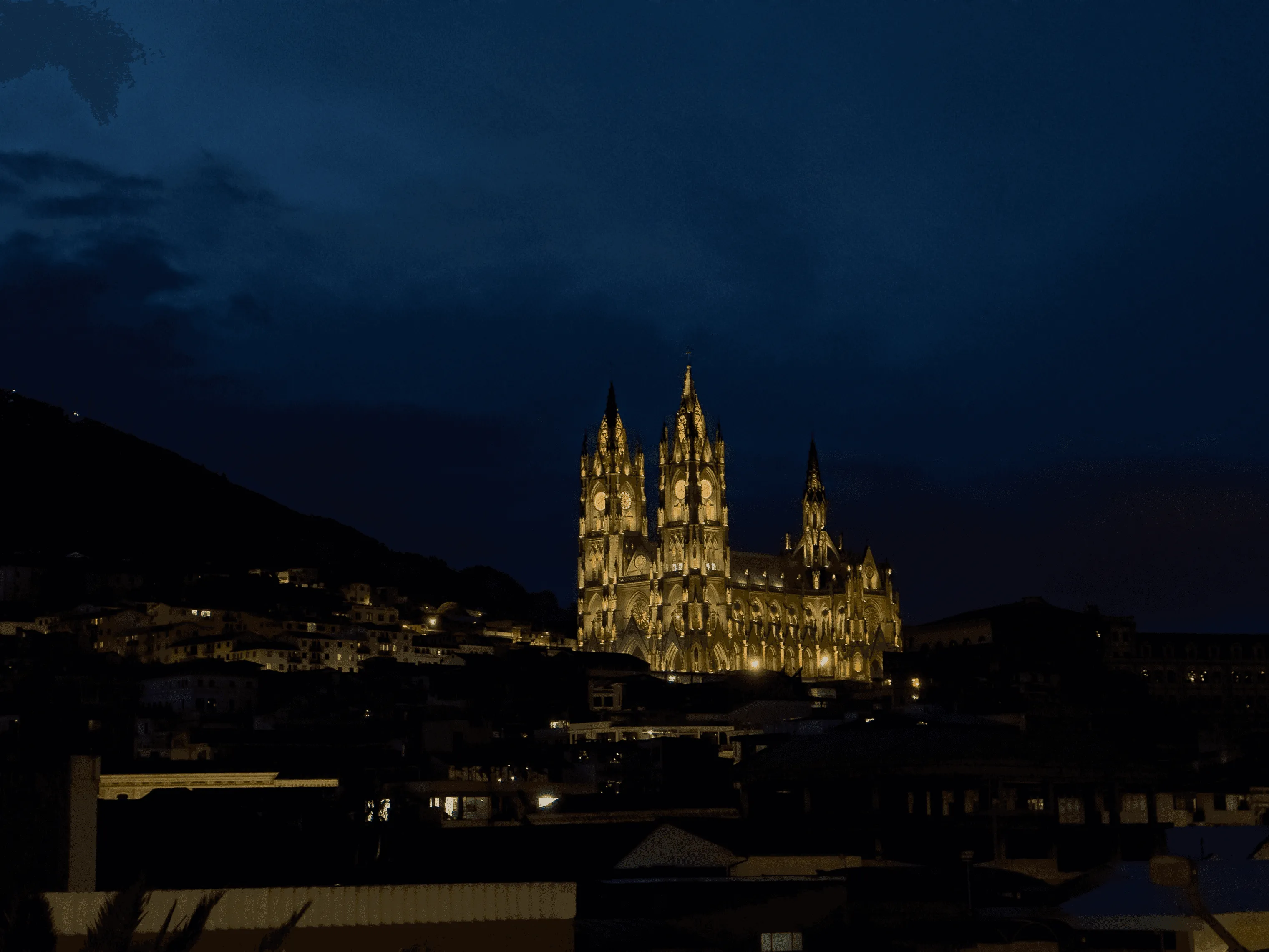
In 1978, Quito and Kraków (Poland) became the first cities ever to be inscribed as UNESCO World Heritage sites. This designation recognizes the remarkable preservation of the historic center, the largest in Latin America spanning 3.2 square kilometers. The 86 churches concentrated here represent the highest density of colonial religious architecture on the continent.
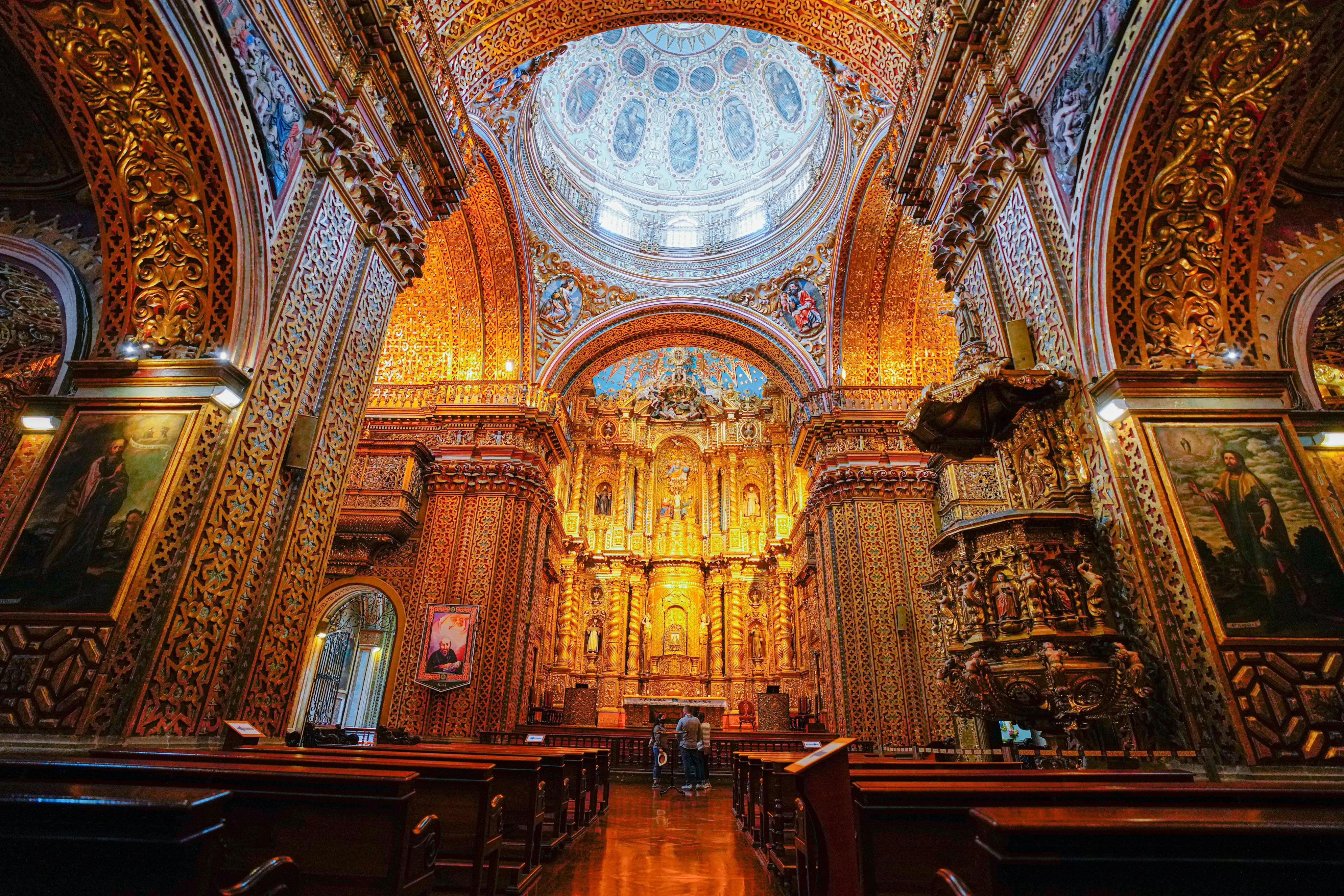
Among these buildings, the church of the Compañía de Jesús is often cited as the ultimate masterpiece of baroque art in Latin America. Its interior is completely covered in 24-karat gold leaf. Its construction took 160 years (1605-1765), bringing together generations of artisans who covered every single inch of wall, column, and vault. A little detail often shared by guides: if you were to melt all this gold into a single block, it wouldn't even weigh 50 kilograms. It just goes to show how much the art of gilding relies on delicate craftsmanship rather than the quantity of metal.
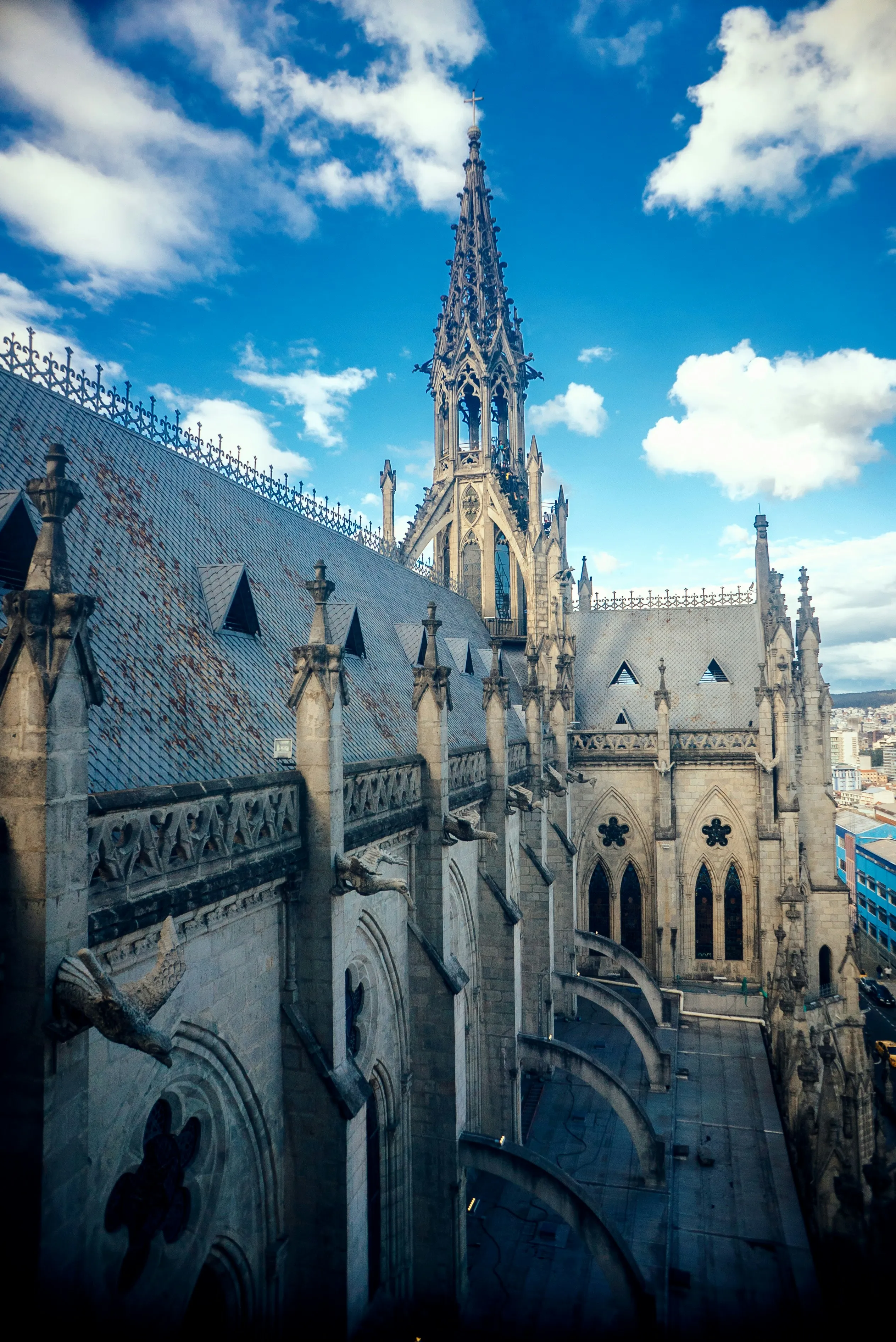
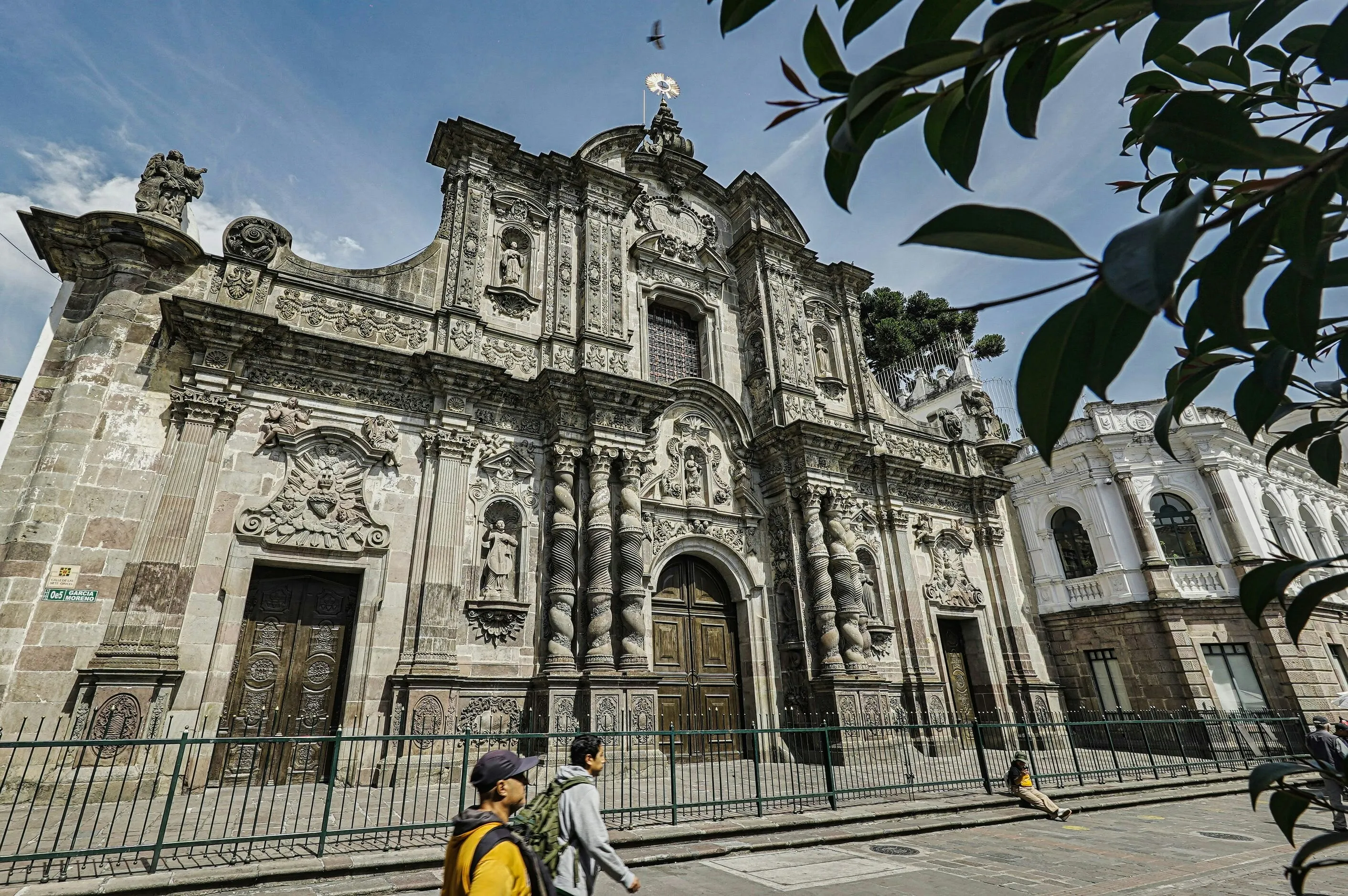
Why so many churches in Quito? Well, each religious order wanted to make its mark, and converting the local indigenous communities meant building a place of worship in every single neighborhood. On top of that, local brotherhoods (cofradías) funded their own chapels, adding to the sheer number of churches. Joining a free walking tour of the historic center is a great way to see the most iconic ones in just a few hours, from San Francisco to La Compañía and Santo Domingo.
If you are looking to explore further, the city of Cuenca in southern Ecuador joined Quito as a UNESCO World Heritage site in 1999. Its colonial center is smaller but just as beautifully preserved, making for a wonderful side trip. While you are there, the Pumapungo Museum is well worth a visit, beautifully blending colonial art with ancient Inca ruins.
The path to independence: from the first cry of freedom to Simon Bolivar
The late 18th century brought the winds of change to Quito. In 1736, the French Geodesic Mission arrived in Ecuador to measure the shape of the Earth. Charles de La Condamine, Pierre Bouguer, and Louis Godin spent several years in the Andes, measuring a meridian arc near the equator. Beyond their scientific contribution (their work would eventually help define the meter), this mission opened Quito to the ideas of the European Enlightenment.
In 1765, the Revolt of the Estancos shook Quito. When the Spanish crown imposed a monopoly on aguardiente (sugar cane alcohol) and introduced new taxes, the working-class neighborhoods of San Roque, Santo Domingo, and San Blas rose up. Rioters tore down the customs house and the estanco, drove out royal officials, and ran a parallel government for several weeks.
The viceroy of Bogotá had to negotiate and grant pardons. This marked the very first popular uprising against Spanish authority in Quito, a clear sign of things to come.
On August 10, 1809, a group of Criollos gathered at the home of Manuela Cañizares and declared a Junta Soberana (Sovereign Junta), deposing the president of the Royal Audiencia. This historic moment is known as the Primer Grito de Independencia (First Cry of Independence), recognized as the first formal act of defiance against Spanish colonial rule in Latin America. Although the rebellion was quickly crushed and its leaders imprisoned and executed, news of the massacre sparked uprisings across the entire region.
It would take another thirteen years for independence to finally become a reality. On May 24, 1822, General Antonio José de Sucre won the decisive bataille de Pichincha on the slopes of the volcano overlooking Quito, defeating the royalist forces of General Aymerich. The very next day, the Spanish army surrendered. On June 16, Simon Bolivar entered Quito and integrated the territory into Grande Colombie. In 1830, Grande Colombie dissolved, and Ecuador became an independent republic, with Quito as its capital.
How to visit colonial Quito responsibly
Quito's historic center is best explored entirely on foot. In fact, it's the absolute best way to take it all in: the cobblestone streets, the hidden courtyards tucked behind carriage gates, and the stunning views of volcanoes peeking between church steeples. Instead of booking a private driving tour, opt for a free walking tour with a local guide. You will be supporting the local economy while getting great, insider context.
When it comes to eating, head to the small neighborhood spots: the almuerzos (lunch menus) cost between 2.50 and 4 USD and include soup, a main dish, fresh juice, and dessert. It's home-cooked food made with local ingredients, and it is far more authentic than the touristy restaurants in La Mariscal. To take things a step further, our article on responsible tourism and cultural immersion offers practical tips for traveling while supporting local communities.
If you have a few days in Quito, combine your visit of the colonial center with a trip to the Andean communities of the Quilotoa Loop or a day in the village of Patate, where local crafts and food reflect a heritage at the crossroads of indigenous and colonial cultures. To get your bags ready, check out our travel gear checklist.