The story of Peru's tropical glaciers
Peru is home to 75% of the world's tropical glaciers. While hiking the Salkantay Trek, our guide explained what they mean to the locals, as well as the natural disasters they can cause.
The story of Peru's tropical glaciers
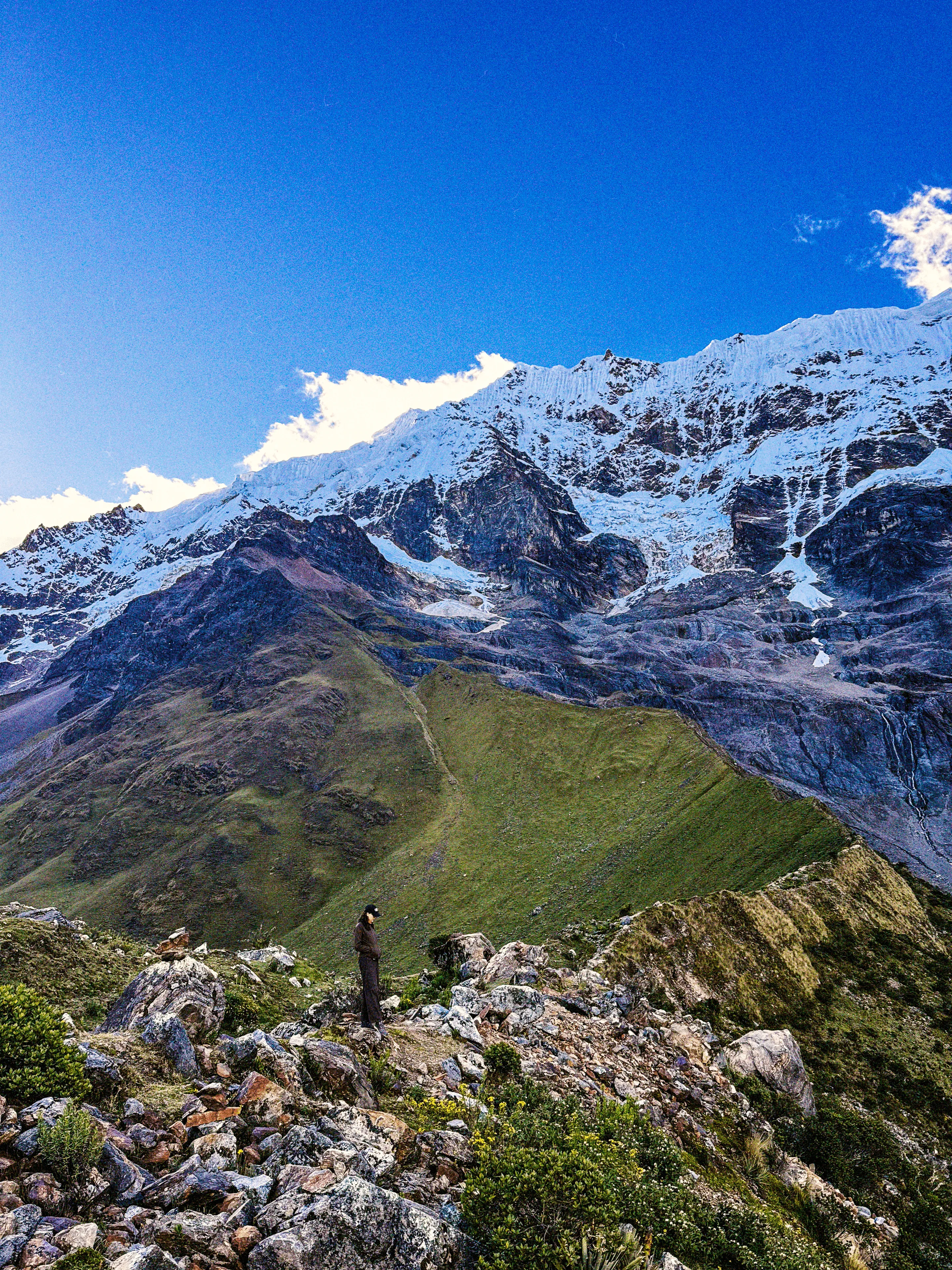
As you climb towards the Salkantay Pass, you pass just a few hundred meters from one of the most imposing glaciers in the tropical Andes. Our guide explained to us what these massive ice sheets truly represent for the people living at their foot. A source of life. And sometimes, of death.
Peru is home to 75% of the world's tropical glaciers
Tropical glaciers are those located near the equator, in a zone where average temperatures are much higher than at polar altitudes.
Peru is home to 75% of all the tropical glaciers on the planet. This figure is hard to picture, but it says everything about this country's unique geography.
The largest tropical glacier in the world used to be Quelccaya, in the Cusco region, spanning an area of 70 km². We say "used to be" because its melting, documented for several decades, has significantly reduced its size. In the early 2000s, a ski resort was even built there before being quickly abandoned, mainly due to environmental regulations and the accelerating retreat of the glacier.
Salkantay itself is surrounded by towering glaciers. The pass of the same name at 4,630 meters marks the divide between the eastern Andes and the Amazon basin, and the surrounding glaciers directly feed the rivers that irrigate the valleys below.
Essential sources of life at 13,000 feet
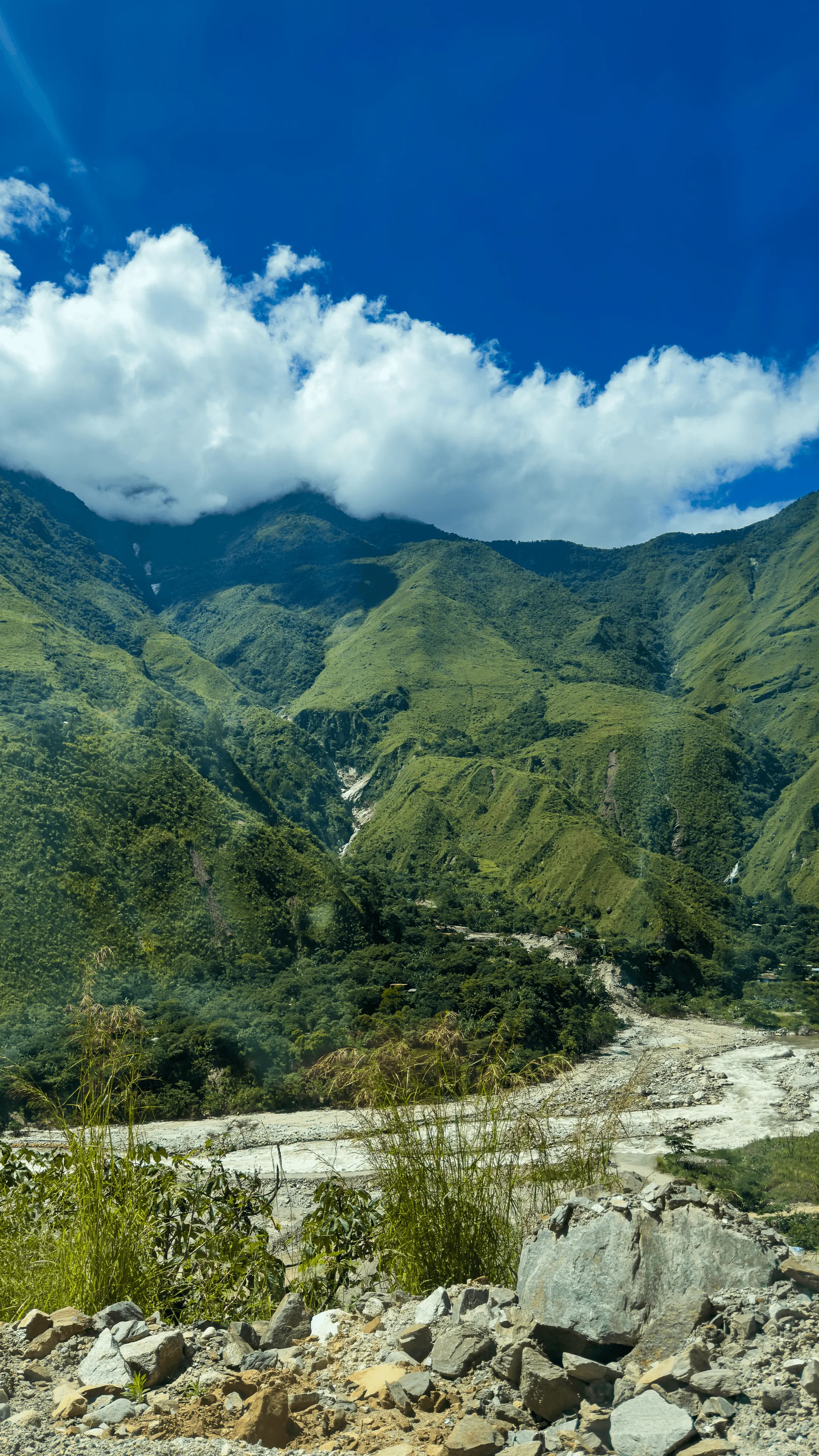
For the communities living between 3,500 and 4,000 meters above sea level in the Andean valleys, glaciers are more than just a beautiful view. They are their source of drinking water and the very lifeblood of their agriculture.
Peru has only two seasons: the rainy season and the dry season. During the dry months, glaciers are what feed the rivers, irrigation systems, and natural reservoirs. Without them, crops fail, herds die out, and entire communities are forced to move on.
This vital connection is exactly why the Apus are so deeply revered in Andean cosmology. A mountain that has sustained an entire valley for millennia is far more than just geographical scenery: it’s a living entity to which people owe their very existence.
When glaciers trigger disasters: understanding the Huaycos
A Huayco (pronounced “Way-co”) is what we would call a mudslide, or a "tsunami of ice and rock." It is the most feared natural phenomenon in the Andean valleys.
The way it happens is simple but devastating: a block of a glacier breaks off the mountain face, crashes into a high-altitude lagoon or river, and triggers a shockwave. This causes the water to overflow, sweeping away everything in the valley below. Homes, crops, roads, infrastructure—a Huayco leaves nothing behind.
Peru is one of the countries in the world that experiences the highest number of these natural disasters. The reason is geological: the country sits right on the Pacific Ring of Fire, where the Nazca and South American plates collide. These two plates are constantly grinding against each other, causing 85% of the region's seismic activity. And each earthquake can trigger Huaycos in the glacial valleys.
On May 31, 1970, a magnitude 7.9 earthquake struck northern Peru. What followed was one of the deadliest natural disasters of the 20th century.
The quake caused a massive chunk of the North glacier of Huascarán—Peru's highest peak at 6,768 meters—to break away. Millions of cubic meters of ice, rock, and mud tore down the mountain at an estimated speed of 200 to 300 km/h.
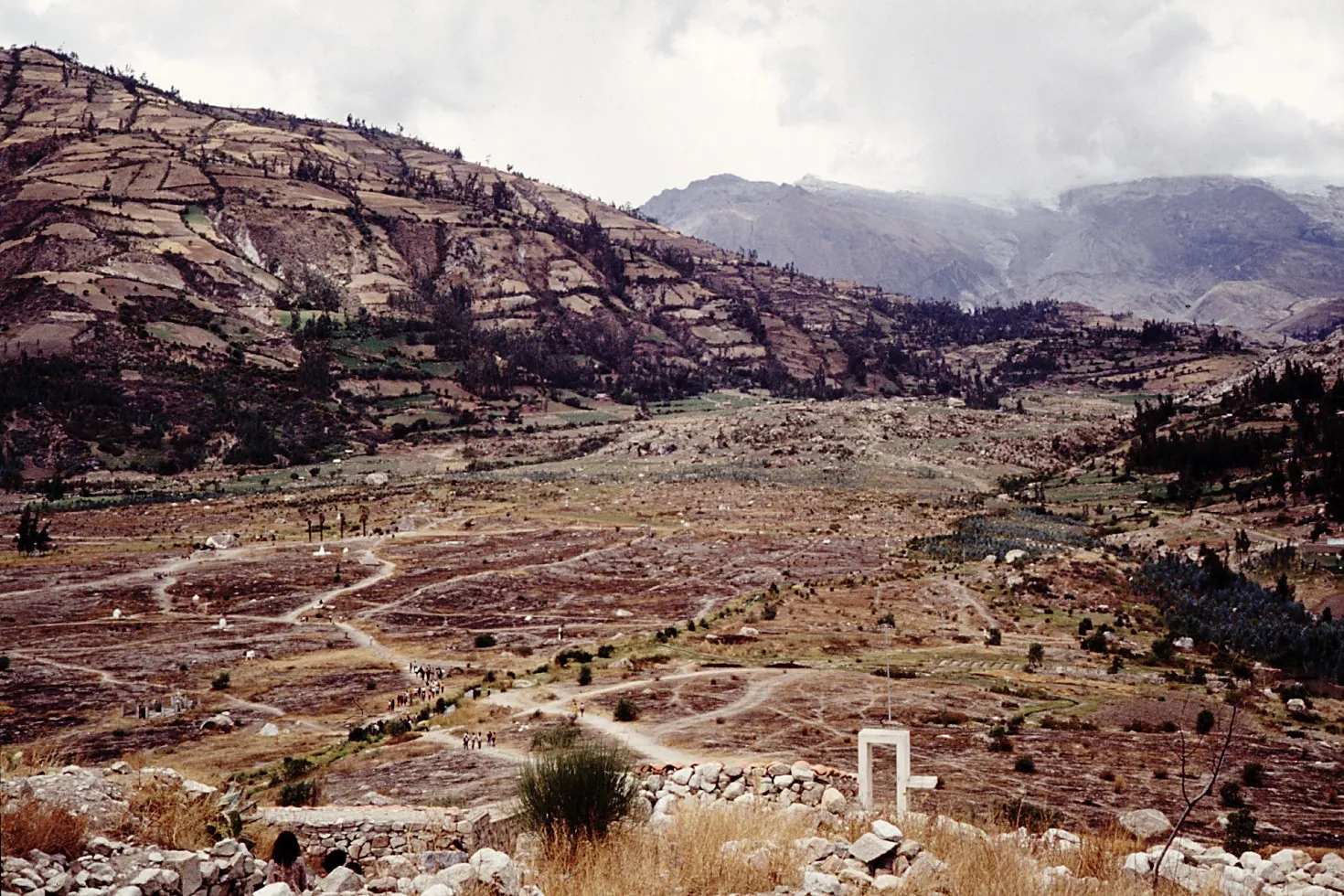
The town of Yungay, home to 69,000 residents, lies in the valley below. A natural barrier completely blocked their view of what was coming. In less than four minutes, the town was entirely buried under several meters of mud and rock. The only survivors from the town center were a few locals who happened to be on a slightly elevated hill, and a handful of children who were away that day for a sporting event.
Today, the modern Yungay is a rebuilt town right next to the original site. The former town center has been turned into a national cemetery. You can still see the top of the church's bell tower poking out from beneath the mud.
Traveler's tip : The town of Yungay and the Campo Santo memorials, which mark the site of the old town, are easily reachable from Huaraz, about a 1-hour drive away. It is a deeply moving place of remembrance that is often missed by standard tourist itineraries.
Recent news from the Salkantay region
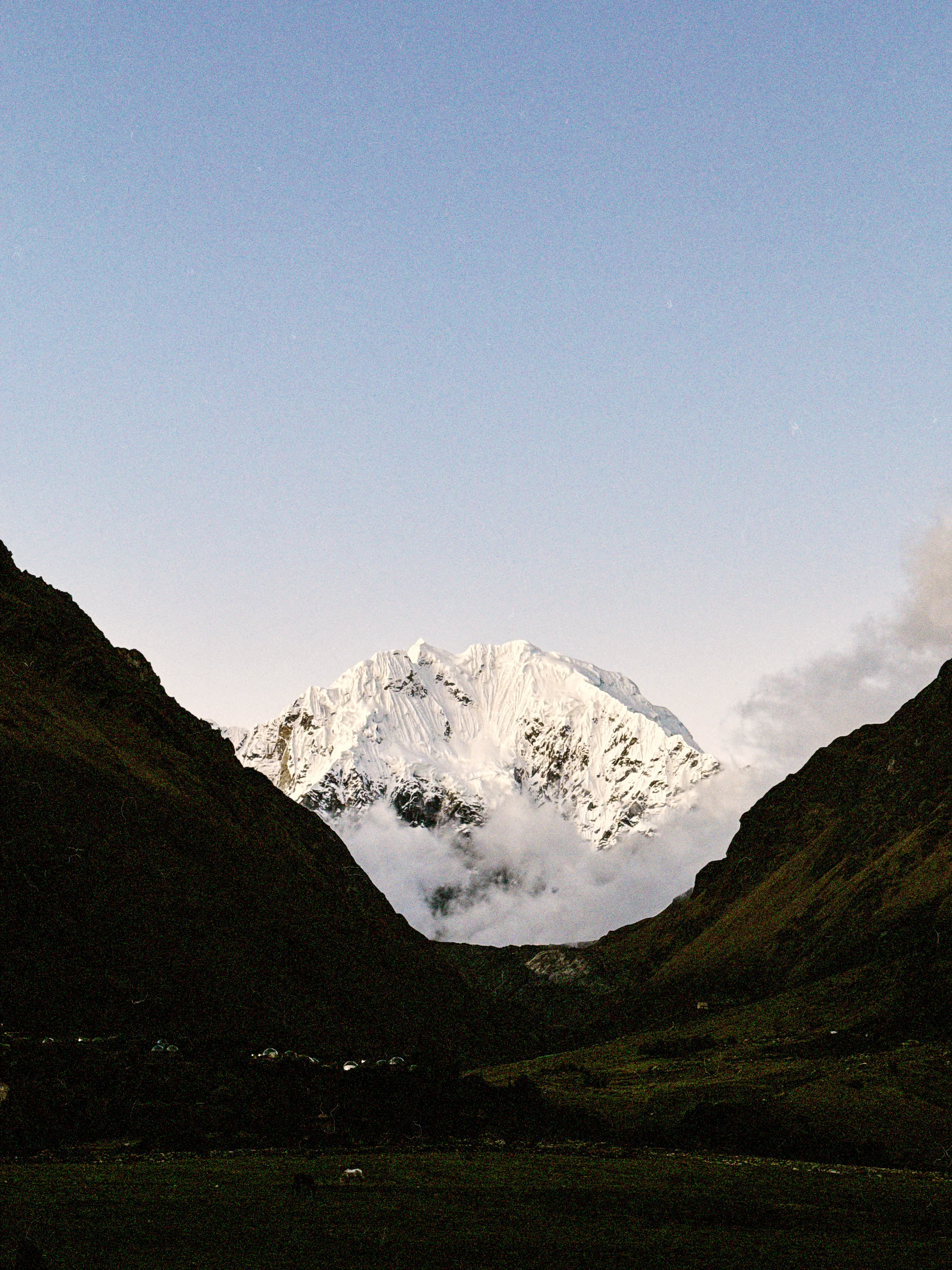
The Salkantay region itself has experienced several major events in recent decades.
In 1993, a section of the southern glacier of Salkantay broke off and crashed into the Aobamba River, causing it to overflow and wiping out the town of Santa Teresa below.
In 2002, another block fell into a tributary of the same river, sweeping through the Machu Picchu hydroelectric plant. Half of the infrastructure was torn away, and worst of all, the train tracks connecting Cusco to Aguas Calientes—the main trade route for the region's fruit and coffee—were never rebuilt.
In March 2020, right as the global lockdown began, a massive chunk of the glacier broke off on the far side of the valley along the trek. Within just a few hours, the river in the Lucmabamba Valley surged by 180 meters, sweeping away homes, crops, trails, and roads. The local community was completely cut off from the world for nine months, relying solely on army helicopters for supplies. Two years of the pandemic without tourism followed, leaving locals with no resources to rebuild.
If you do the Salkantay trek, your guide will point out the scars of the 2020 landslide on the valley slopes. These marks are a powerful reminder that the mountains, as beautiful as they are, deserve our deepest respect.
The accelerating melt and its consequences
The Andean glaciers are melting at a documented and worrying pace. This retreat has two main consequences that, on the surface, seem to contradict each other.
In the short term, it boosts river flows, which can temporarily benefit local agriculture. But in the long run, once the glaciers have retreated too far, these rivers will run dry during the dry season, robbing local communities of their primary water source.
The melting ice is also revealing Inca mummies and other archaeological artifacts preserved in the ice for centuries. These discoveries are scientifically invaluable, but they come hand-in-hand with the gradual loss of an irreplaceable natural heritage.
Lastly, retreating glaciers naturally increase the risk of Huaycos. You have less stable ice masses clinging to more exposed rock faces, glacial lagoons that fill up at a rapid pace, and downstream valleys whose infrastructure simply wasn't built to handle floods of this scale.