Crossing the Ecuador-Colombia border by bus: a practical guide for 2026
How to cross the land border from Ecuador to Colombia by bus from Quito. Route: Quitumbe-Tulcán-Rumichaca-Ipiales, including prices, border formalities, and practical tips for backpackers.
Crossing the Ecuador-Colombia border by bus: a practical guide for 2026
Taking the bus in Quito: Quitumbe terminal and Carcelén terminal
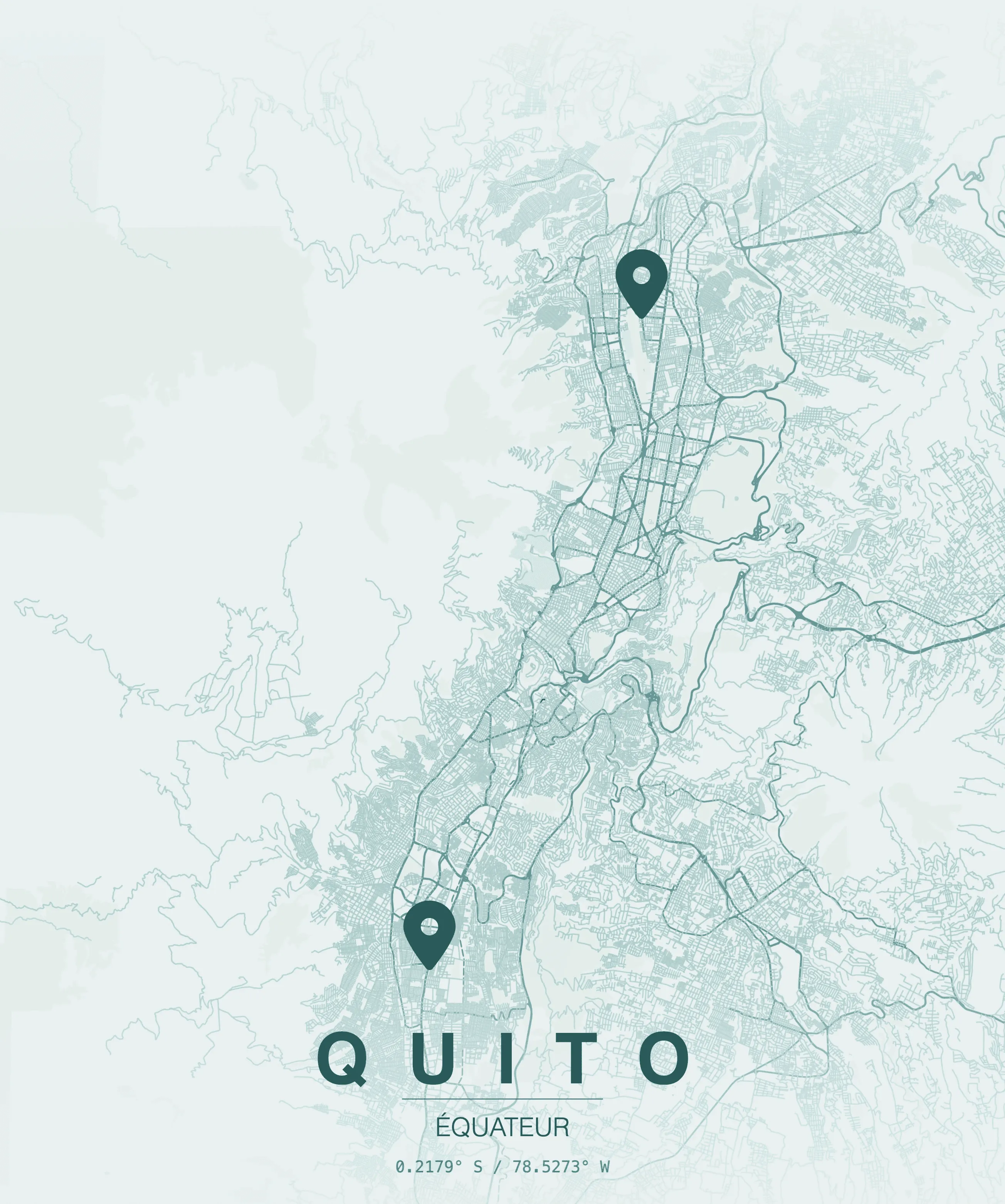
Quito has two long-distance bus terminals: Quitumbe to the south and Carcelén to the north. Both offer regular departures to Tulcán, the border town with Colombia. But one of them has a key advantage that other travel guides don't mention.
The Quitumbe terminal is the final stop of the Quito Metro (Line 1), which was inaugurated at the end of 2022 and has been fully operational since December 2023. This means that from any point in the city served by the metro (El Labrador in the north, San Francisco in the historic center, or La Carolina in the business district), you can reach Quitumbe in just 15 to 30 minutes for only 0,45 dollar. It is simple, cheap, and very convenient. Just keep in mind that the metro does not open until 7 a.m. on weekends.
The only downside is that if you leave from Quitumbe, the bus to Tulcán has to cross the city northward before hitting the Pan-American Highway. Plan on about an extra hour of travel time compared to departing from Carcelén. On the plus side, departures are frequent and the ticket counters are easy to find right as you enter the terminal.
The Carcelén terminal (in northern Quito) offers more bus company options and a shorter ride to Tulcán. You can get there by city bus or taxi, but not directly by metro. If you are staying in the north of Quito, this is your best starting point. If you are based in the center or south, Quitumbe is much more convenient.
No matter which terminal you choose, the Quito-Tulcán bus ticket costs about 20 dollars depending on the company. The journey takes between 4.5 and 6 hours (5 hours from Quitumbe, 4.5 hours from Carcelén). Buses run throughout the day, with more frequent departures in the morning.
From Quitumbe to Tulcán: journey, prices, and the shuttle system
Once you arrive at the Quitumbe terminal, the first two glass booths at the entrance of the boarding area offer trips to Tulcán. You can buy a standard ticket to Tulcán only, or opt for a package that includes the shuttle to Ipiales on the other side of the border. We highly recommend this second option.
For 25 dollars per person, the package covers the Quitumbe-Tulcán bus and the shuttles from Tulcán to the border, and then from the border to Ipiales. This all-inclusive rate saves you from negotiating with taxi drivers and independent shuttles at the border. Your overland trip to Colombia starts right here.
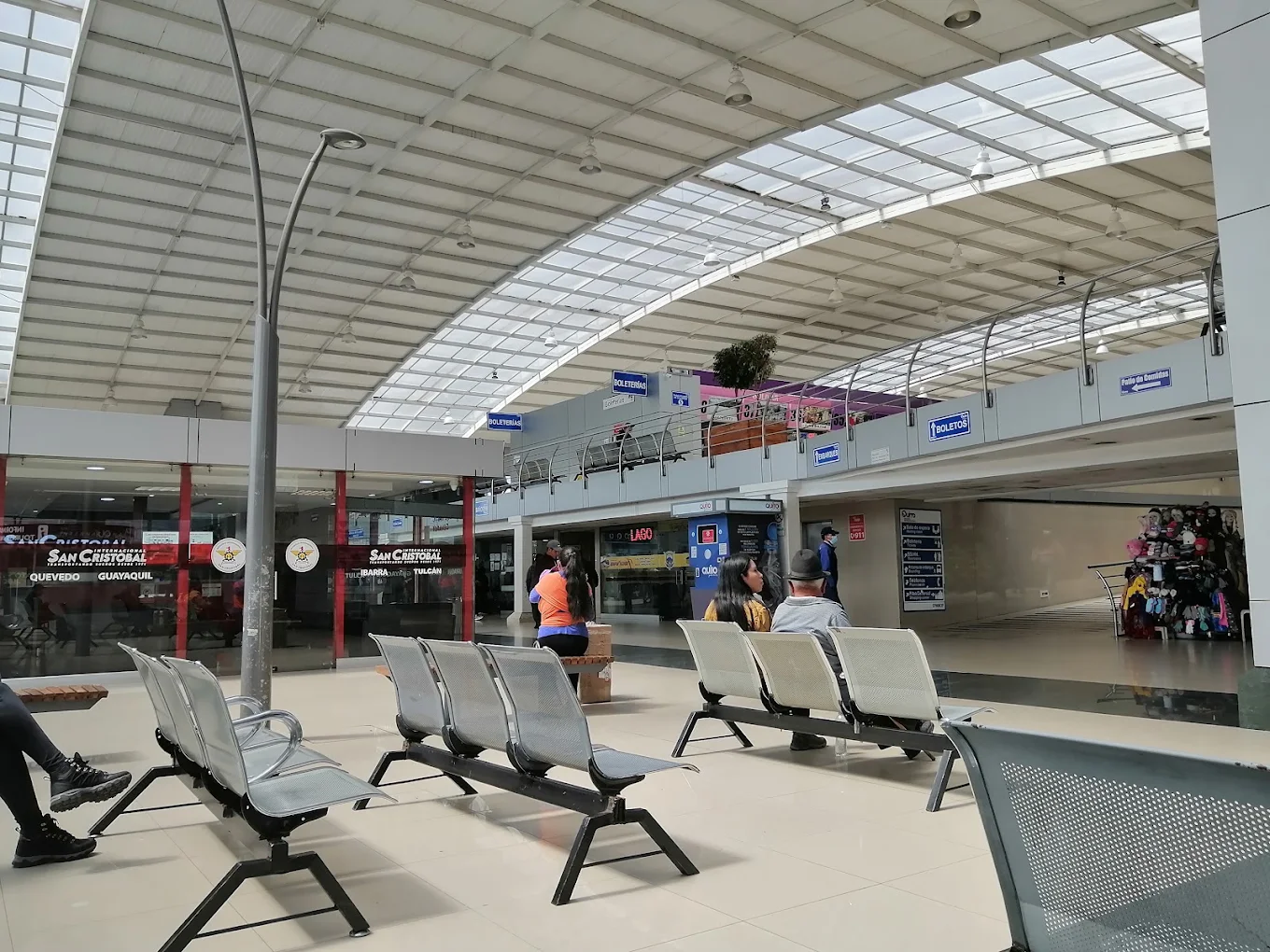
The system is incredibly well-organized. When you buy your ticket, the agent at the counter takes your photo and sends it to their contact in Tulcán. Once you arrive at the Tulcán terminal, this contact will spot you using your photo, confirm who they are by showing it to you on their phone, and then guide you to the shuttle heading to the border.
Here is what the shuttle to the border looks like:
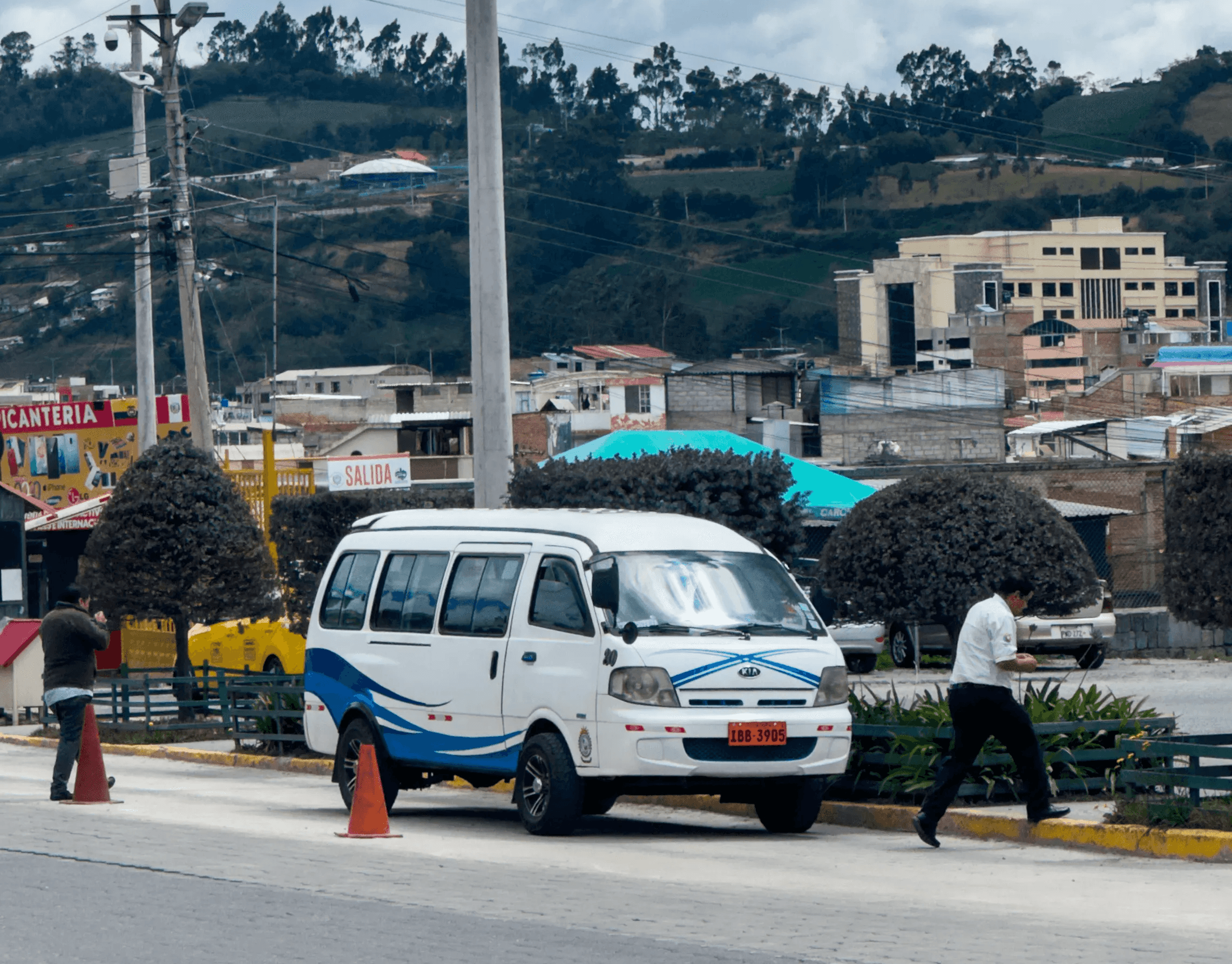
Keep in mind, long-distance buses do not cross the border. The journey between Tulcán and the Rumichaca border (about 7 kilometers) is made by micro-bus, which are small blue shuttles operating on the Ecuadorian side. The contact in Tulcán will get you settled into the shuttle, which is already paid for since you bought the package deal in Quitumbe.
They will also hand you 1.25 dollars in cash: this covers the shuttle on the Colombian side (the easily recognizable red Supertaxis) that will take you from the border to the Ipiales bus terminal.
When you pull into the Tulcán terminal, don't hesitate to ask your bus driver where to find the contact. They are usually waiting near the booth right opposite the bus exit. The transfer is quick: the blue shuttle generally heads out within 10 to 15 minutes.
Crossing the border at Rumichaca: steps for a smooth crossing
The Rumichaca border is the only recommended land border crossing between Ecuador and Colombia. Located on the bridge spanning the Rio Carchi, it separates the Ecuadorian province of Carchi from the Colombian department of Nariño. The Ecuadorian and Colombian immigration offices face each other on either side of the bridge.
The blue shuttle drops you off right at the border post on the Ecuadorian side. From there, you make the crossing on foot and on your own. Here are the steps in order:
First step: the Ecuadorian immigration office. Head to the building on the Ecuador side and go to the counter, letting them know you are leaving the country. The border officer will stamp your passport with your exit stamp. It is a quick process: no questions asked, no bag searches (they will just ask you to leave your bags in front of the building while you get stamped). If the agent asks for your destination, simply answer "Colombia" or "Ipiales".
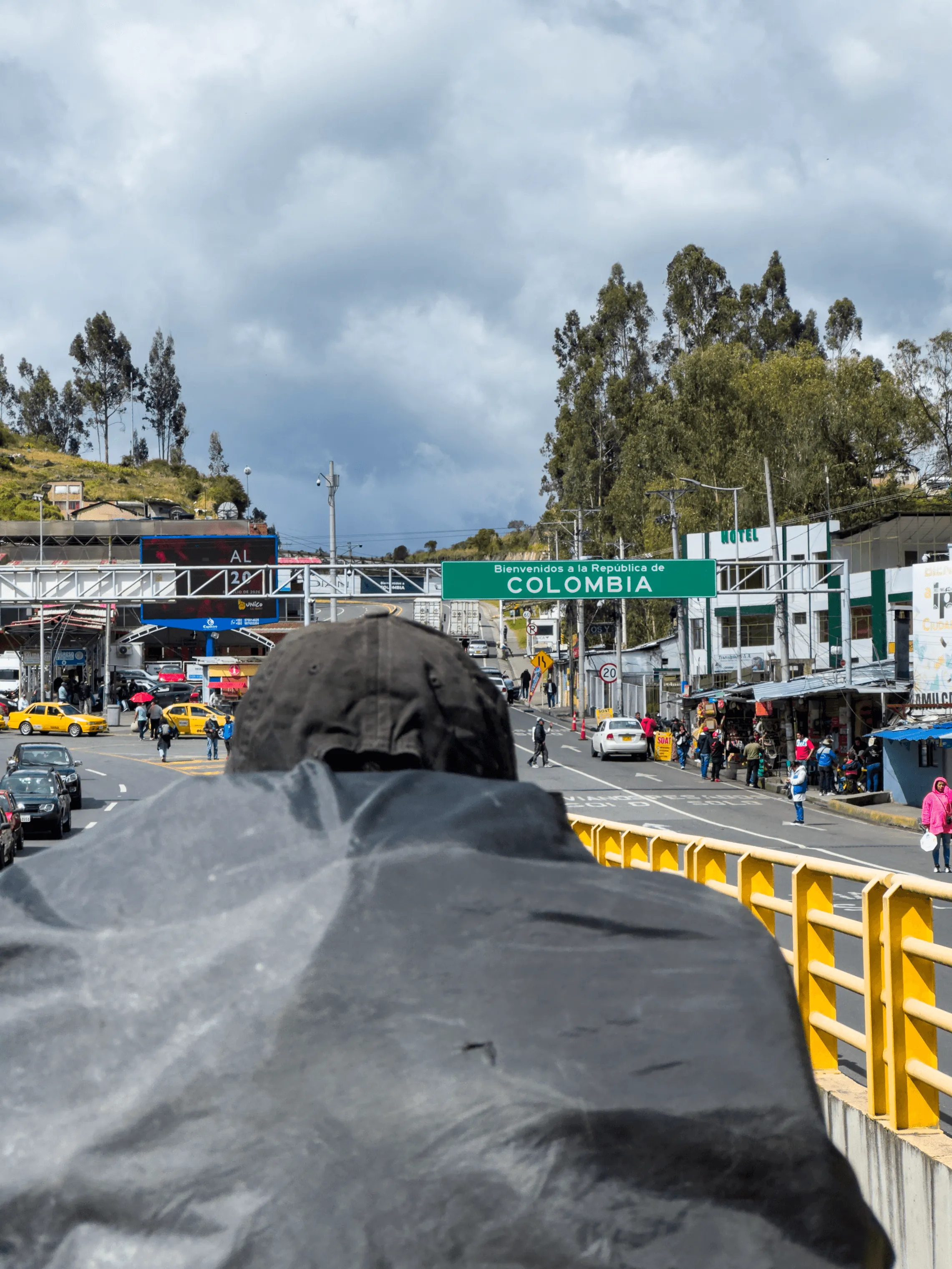
Step two: crossing the bridge. The Rumichaca Bridge is just a few dozen meters long. You'll find yourself crossing from one country to the next in under two minutes. Informal money changers are on hand right on the bridge to swap your dollars for Colombian pesos. While their rates aren't the best, they're handy if you just need a bit of pocket change. For larger amounts, it's best to wait until you reach Ipiales, where you'll find plenty of ATMs.
Step three: the Colombian immigration office. Head into the building just opposite the bridge and let them know you're entering Colombia. The immigration officer will stamp your passport with your entry stamp. The tourist visa grants you a 90-day stay in Colombia. The officer might ask which hotel you plan to stay at. When we crossed, they didn't even ask to see an onward ticket. However, if you want to be prepared just in case, check out our article on how to travel without a return ticket for some practical solutions.
How long this all takes really depends on the crowds. On weekday mornings, you can expect it to take about 30 minutes to an hour to get both stamps. On weekends and during school holidays (both Colombian and Ecuadorian), the wait can stretch to several hours. Older articles from 2018 mentioned massive queues due to the Venezuelan migration crisis. Things have settled down a lot since then, but the golden rule remains the same: arrive early in the morning to beat the crowds.
A quick safety tip: we highly recommend crossing the border during the day. Border areas always attract people trying to sell you services or offer to carry your bags. Just give a polite "no, thank you" and keep your belongings close. During daylight hours, the crossing is straightforward and well-monitored by officials on both sides.
From the border to Ipiales and beyond: Cali, Bogota, Popayán

Once you have your passports stamped on the Colombian side, head back to the parking lot where the shuttles and taxis are parked. Look out for the Supertaxi (red shuttles): this is the shared transport that connects the border to downtown Ipiales and the bus terminal. This is where you will use the 1,25 dollar handed to you by the agent in Tulcán.
You have two options. First: get off in centre-ville d'Ipiales if you want to explore the town or head to the sanctuaire de Las Lajas, located in a gorge 7 kilometers outside Ipiales. This neo-Gothic church, built right against the cliffside above the Guáitara River, is one of the most photographed religious sites in Colombia. Entry to the sanctuary is gratuite. From downtown Ipiales, a shared taxi will take you there in 10 to 15 minutes for about 2 500 pesos colombiens (around 0,60 dollar) per person.
The second option: stay on the Supertaxi shuttle all the way to the Ipiales bus terminal and keep heading straight north. From Ipiales, you can catch buses to all the major Colombian cities. Destinations include Pasto (1.5 hours, around 15,000 COP), Popayán (6 to 7 hours, around 45,000 COP), Cali (10 to 12 hours, around 70,000 COP), or Bogota (20 to 24 hours, around 120,000 COP). The Bolivariano and Flota Magdalena companies run the most frequent services.
If you would rather not link a border crossing with a long overnight journey, you can easily find accommodation in Ipiales for about 45,000 COP (12 euros) a night in the city center. It is a comfortable way to break up the trip and gives you a chance to visit Las Lajas before moving on.

Border crossing quick guide
Here is the budget breakdown for crossing the Ecuador-Colombia border by bus from Quito:
Quito Metro to Quitumbe: 0.45 dollars. Quitumbe-Tulcán bus + Tulcán-border and border-Ipiales shuttles (package): 25 dollars. Total: about 25.50 dollars per person. If you leave from Carcelén instead of Quitumbe, the package price is similar.
Ecuador uses the US dollar as its official currency. Colombia uses the Colombian peso (COP). At the border crossing, you can exchange small amounts of cash with the money changers on the bridge, but the rate is not as good as in town. ATMs in Ipiales accept Visa and Mastercard. To keep bank fees to a minimum, we recommend using travel apps that offer cards with no foreign transaction fees.
A few tips from our own experience. Keep your passport handy throughout the journey, as you will need it several times. Have some small change in US dollars for last-minute purchases on the Ecuadorian side (food, water). Ecuadorian long-distance buses are air-conditioned and can get very cold, so bring an extra layer with you. If you are traveling with a backpack, keep it with you in the shuttle and while crossing the border. Do not hand it over to anyone offering to carry it for you.
For travelers coming from Otavalo or the indigenous market region, you can catch the bus directly on the Pan-American Highway without having to go back through Quito.
On the Colombian side, if you plan on staying two weeks in Colombia or more, remember to get travel insurance. Entry into Colombian territory is free for European and Canadian citizens (90 days visa-free), but medical care is not covered without insurance. The Colombian healthcare system is of good quality but can turn out to be expensive in case of hospitalization.
Responsible travel between Ecuador and Colombia
Choosing the bus over a flight to connect Ecuador to Colombia is a great choice for responsible travel. A flight from Quito to Bogota emits around 180 kg of CO2 per passenger. The same journey by bus produces between 15 and 25 kg, which is seven to ten times less. Beyond the carbon footprint, taking the bus lets you travel through the landscapes of the Ecuadorian Sierra, watch the potato fields and volcanoes roll past your window, and arrive in Colombia with a real sense of having crossed a border.
The journey between Quito and the Colombian land border runs along part of the Avenue of the Volcanoes, an Andean valley lined with peaks rising above 4,000 meters. Travelers who have explored the historic center of Quito or who are returning from a trek in the Ecuadorian Andes will recognize this beautiful geography right from their bus window.
In Ipiales and the Nariño region, small local restaurants and markets offer cuisine that blends Ecuadorian and Colombian influences. The empanadas de pipián (with a savory peanut sauce), cuy (roasted guinea pig, also found in the Ecuadorian Andes), and Nariño coffee are well worth a stop. Opt for fondas (small, family-run restaurants) rather than chains: the prices are lower and your money goes directly to local families.
Crossing the border overland is also a wonderful opportunity to experience the real South America. Border zones are places of daily life and trade for local communities, not tourist attractions. Crossing Rumichaca by bus, exchanging a few words in Spanish with your fellow passengers, and watching the landscape and currency change: this is travel at its most human, far from the packaged tours.